

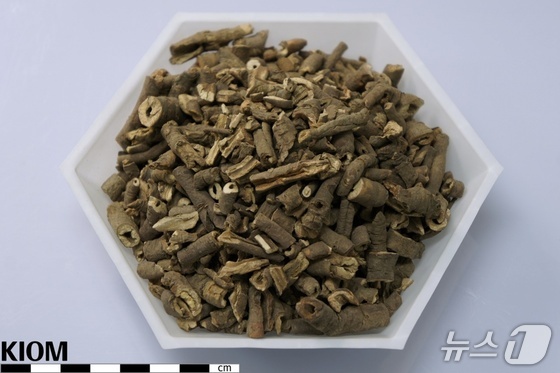
The Korea Institute of Oriental Medicine announced on Tuesday that a research team led by Dr. Park Gi-seon has discovered promising results from peony root bark extract, known as Moutan Cortex.
The extract was found to reduce intestinal inflammation and tissue damage in animal models of colitis while also alleviating associated brain inflammation and anxiety-depression-like behaviors.
The gut and brain are known to exchange immune, neural, and hormonal signals. Prolonged intestinal inflammation can trigger a systemic inflammatory response, potentially affecting brain function and emotional states.
With the increasing prevalence of anxiety and depression in patients with inflammatory bowel disease, recent treatment strategies have focused on regulating the gut-brain axis, which represents the interaction between these two systems.
The research team analyzed the effects of Moutan Cortex extract on intestinal inflammation and brain responses using colitis-induced mice and human-derived intestinal epithelial cell lines.
Results showed that mice treated with Moutan Cortex extract experienced less weight loss and colon shortening due to colitis. Improvements were also observed in brain-related changes and behaviors associated with intestinal inflammation.
The team identified the inhibition of necroptosis in intestinal epithelial cells as the key mechanism behind these effects. Necroptosis is a regulated cell death process where cell membrane rupture releases inflammatory substances, potentially amplifying inflammatory responses in surrounding tissues.
Cell experiments revealed that Moutan Cortex extract reduced reactive oxygen species production and decreased necroptosis in intestinal epithelial cells.
Component analysis identified five major constituents of Moutan Cortex, including paeoniflorin and paeonol. Paeoniflorin protects cells by blocking membrane destruction signals, while paeonol complements this action by reducing inflammation and allergic reactions in surrounding tissues.
This study highlights the potential of multi-target natural substances in regulating both gut and brain function, providing valuable groundwork for developing health supplements and pharmaceuticals aimed at alleviating anxiety and depression symptoms.
However, the research team cautioned that this study has not yet confirmed therapeutic effects in humans, emphasizing the need for further research.
Dr. Park emphasized the significance of the study, stating that the findings demonstrate the potential of Mokdanpi extract to inhibit inflammatory cell death in the gut and alleviate brain inflammation and behavioral changes associated with colitis. He added that moving forward, it plans to conduct more detailed analyses of gut permeability, the blood-brain barrier, gut microbiota, and metabolites to elucidate the specific pathways connecting the gut and brain.
This research, supported by the Ministry of Science and Information and Communiactions Technology (ICT) and the Korea Institute of Oriental Medicine, has been published online in the international journal Inflammopharmacology.