

It has been revealed that the range of Seoul attractions popular among foreign tourists is expanding beyond traditional hotspots like Myeong-dong and Gyeongbokgung Palace to include K-culture filming locations, traditional markets, and K-hiking spots. According to an analysis of last year’s foreign visitor traffic data at 16 major Seoul attractions conducted by the Seoul Artificial Intelligence (AI) Foundation, the number of foreign tourists at each location increased by 9.2% to 12.1% last year. The analysis covered locations such as N Seoul Tower, Bukchon Hanok Village, and Naksan Park—which served as backdrops for the K-pop drama Kpop Demon Hunters—as well as traditional markets like Namdaemun and Gwangjang Markets, and hiking spots including Mount Bukhan, Mount Gwanak, Mount Bukak, and Mount Achasan. The analysis utilized foreign visitor flow data from the telecommunications provider SKT and Google Maps review data. Based on the average daily foreign visitor count, Myeong-dong had the highest number at 100,910. This was followed by N Seoul Tower (57,370), Samsung Station and COEX (46,813), Gangnam Station (41,210), and the Hongdae area (40,213). The Dongdaemun Design Plaza (DDP) saw the largest increase at 12.1%. This was followed by the Hongdae area and Naksan Park at 10.5% each, and Gwangjang Market at 10.4%. Among the total foot traffic, the proportion of foreign visitors was highest at N Seoul Tower at 55.7%, while Myeongdong also reached 47.1%. Namdaemun Market (28.0%), Samsung Station and COEX (26.4%), and the DDP (19.6%) also had relatively high proportions of foreign tourists.
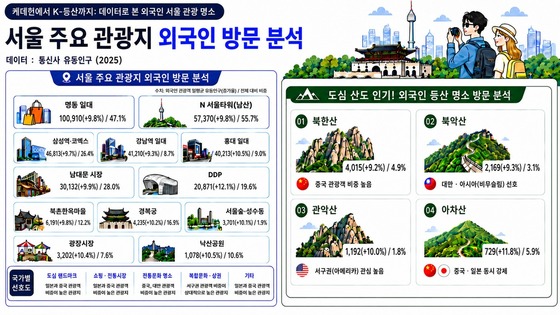
Tourist preferences varied by country. While historical sites such as Gyeongbokgung Palace and Bukchon Hanok Village were popular among tourists from Southeast Asian countries like Vietnam, the Philippines, and Singapore, shopping hotspots such as Myeongdong, Namdaemun, and Gwangjang Market saw a higher proportion of Japanese and Chinese tourists.
Local attractions like Seoul Forest and Seongsu-dong drew a relatively higher proportion of tourists from the Americas, while Bukchon Hanok Village attracted a relatively higher proportion of European tourists. This suggests that foreign tourists sought out different locations based on their travel purposes and interests, rather than treating Seoul as a single tourist destination. The “K-hiking” craze was also evident. An analysis of foot traffic on the hiking trails of four mountains in central Seoul—Bukhansan, Bukaksan, Gwanaksan, and Achasan—revealed that the average daily number of foreign tourists visiting Bukhansan reached 4,015. Bukak Mountain (2,169), Gwanak Mountain (1,192), and Achasan Mountain (729) also saw a steady stream of foreign tourists. The rate of increase was particularly notable at Achasan Mountain (11.8%) and Gwanak Mountain (10.0%). The Seoul Metropolitan Government assessed that the trend is shifting from tourism centered on shopping and culture to tourism focused on everyday experiences.
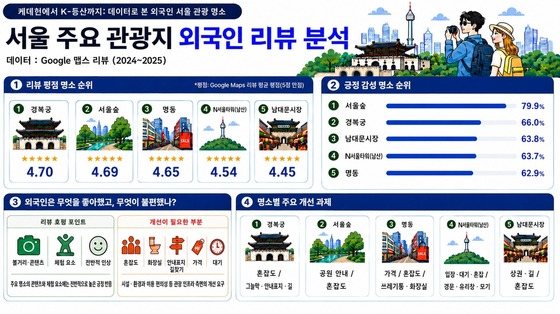
In the 2024–2025 Google Maps review analysis, Gyeongbokgung Palace received the highest rating of 4.70, while Seoul Forest ranked first in AI sentiment analysis with a 79.9% positive response rate. However, some respondents noted that on-site convenience—including foreign-language guidance, wayfinding, and amenities—still needs improvement.
The results of this analysis can be found in the report titled, From Kedeheon to K-Hiking: Foreigners’ Seoul Tourist Attractions Through Data, available under the Research Reports section of the Seoul AI Foundation’s website. Kim Man-ki, Chairman of the Seoul AI Foundation, stated that it is meaningful to examine through data which parts of Seoul foreign tourists visit and how they experience them,” adding that it will continue to conduct analyses based on diverse data to interpret changes in Seoul and support policy-making.
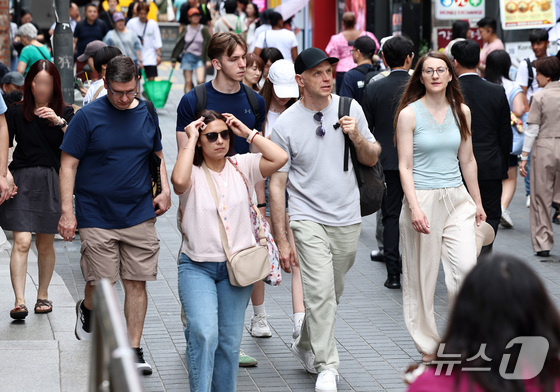
Myeong-dong is a popular Seoul attraction among foreign tourists.
Gyeongbokgung Palace to include
K-
culture filming locations, traditional markets
, and ‘K-
hiking
‘
spots
.
The Seoul
AI
Foundation analyzed foreign visitor data from
16
major attractions in the city last year,
revealing a
9.2~12.1%
increase in foreign tourists at these locations
.
The study included popular spots like
N
Seoul Tower
,
Bukchon Hanok Village,
Naksan Park (filming locations for ‘
K-pop Demon Hunters
‘)
, traditional markets like Namdaemun
and
Gwangjang Market
, and hiking destinations such as
Bukhansan
·
Gwanaksan
·
Bukak Mountain
·
Achasan
.
The analysis utilized foreign visitor data from telecom provider
(SKT)
and Google Maps reviews
.
Myeongdong topped the list with an average of
100
,910
daily foreign visitors
.
Following were N
Seoul Tower
(57
,370
),
Samsung Station
·
COEX
(46
,813
),
Gangnam Station
(41
,210
), and the
Hongdae area
(40
,213
)
.
Dongdaemun Design Plaza
(DDP)
saw the largest increase at
12.1%
.
The Hongdae area and Naksan Park followed with
10.5%,
while Gwangjang Market saw a
10.4%
increase.
N
Seoul Tower had the highest proportion of foreign visitors at
55.7%
, with Myeongdong close behind at
47.1%
.
Namdaemun Market
(28.0%),
Samsung Station‧
COEX
(26.4%), and DDP(19.6%)
also showed relatively high percentages of international tourists
.
Tourist preferences varied by nationality
.
Historical sites like Gyeongbokgung
,
Bukchon Hanok Village attracted many Southeast Asian visitors from Vietnam
·
Philippines
·
Singapore, while shopping hotspots like Myeongdong
·
Namdaemun·
Gwangjang Market were popular among Japanese
and
Chinese tourists
.
Seoul Forest
·
Seongsu-dong, trendy local spots, drew more American visitors
,
while Bukchon Hanok Village was a hit with European tourists
.
This suggests that foreign visitors are exploring Seoul based on their specific interests rather than treating it as a single destination
.
The ‘K-hiking
‘
trend is also gaining momentum
.
Analysis of hiking trails on four downtown Seoul mountains – Bukhansan
·
Bukak Mountain
·
Gwanaksan
·Achasan – showed an average of
4,015
daily foreign visitors to Bukhansan
.
Bukak Mountain
(2,169
)
, Gwanaksan
(1,192
), and
Achasan
(729
)
also saw significant foreign foot traffic
.
Achasan
(11.8%)
and Gwanaksan
(10.0%)
experienced the most notable growth
.
Seoul City officials noted a shift from traditional shopping
and
cultural tourism towards more immersive, experiential travel
.
Google Maps reviews for
2024-2025
ranked Gyeongbokgung highest with a
4.70
rating
, while AI
sentiment analysis showed Seoul Forest leading with a
79.9%
positive response rate.
However, improvements in foreign language guidance, navigation, and on-site facilities were still deemed necessary
.
The full report, titled ‘
From K-Demon Hunters to
K-
Hiking
:
A Data-Driven Look at Foreign Tourist Attractions in Seoul
,’
is available on the Seoul
AI
Foundation’s website
.
Kim Man-ki, director of the Seoul
AI
Foundation, stated,
that this data-driven analysis provides valuable insights into foreign tourists’ preferences and experiences in Seoul,
.
it will continue to use diverse data to track Seoul’s evolving tourism landscape and inform policy decisions