

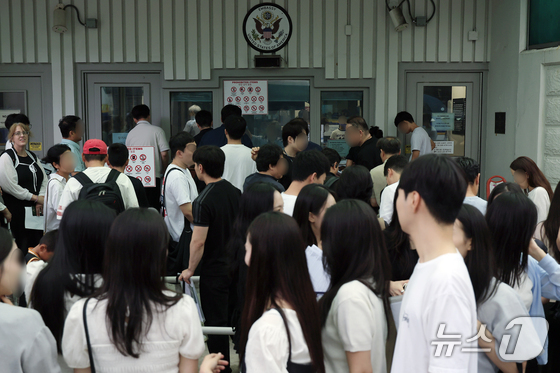
The U.S. government’s introduction of a new visa system, which generally limits international students’ stay to a maximum of four years, is reshaping academic strategies for those planning to study in America. Students who once exclusively targeted U.S. universities are now broadening their horizons, considering institutions in Canada and other countries, and even exploring pathways to U.S. permanent residency.
In response to this shift, the study abroad industry is adapting its services. Firms are now offering seminars that go beyond U.S. college admissions counseling, providing guidance on strategies for obtaining permanent residency and admission to Canadian universities.
Education sources reported on Thursday that the U.S. Department of Homeland Security (DHS) announced a regulation on July 16 that alters the stay status for F (student) and J (exchange visitor) visa holders. The change moves from the previous Duration of Status (D/S) to a fixed stay limit of four years.
Once implemented, this new regulation will require students to undergo a stay extension review to continue their studies. The change is set to affect current international students in the U.S. starting this September.
Consequently, prospective international students are increasingly aware of the need to consider not only their choice of school but also their long-term plans for staying in the country post-graduation.
One student preparing for U.S. university admission shared that initially, it was only looking at U.S. colleges. But with these visa changes, it’s now exploring Canadian universities too. When you factor in potential employment or long-term residency after graduation, it’s crucial to compare the systems of different countries.
More students are developing Plan B options, such as applying to schools outside the U.S., mindful of potential graduation delays due to factors like taking a leave of absence or changing majors.
However, industry experts note that U.S. degrees still hold significant prestige. Rather than abandoning plans to study in the U.S., many students are adopting strategies to diversify their options.
A representative from a U.S. study abroad consulting firm told News1 that they’re not seeing students give up on studying in the U.S. entirely. Instead, they’re considering Canada alongside the U.S. or inquiring about permanent residency options.
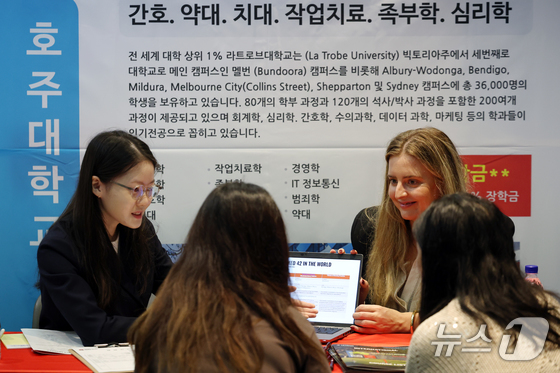
The representative added that while undergraduate programs typically fit within the four-year limit, students often ask, What if I graduate late? Doctoral programs, which can take five to six years or more, are particularly vulnerable to these regulatory changes.
As international students’ priorities evolve, so too are the counseling methods in the study abroad industry.
New seminars are emerging that cover not just U.S. college admissions but also pathways to permanent residency and strategies for attending Canadian universities. This comprehensive approach addresses both studying at U.S. universities and options for long-term residency in the country.
Despite these changes, the industry maintains that overall demand for U.S. higher education remains strong.
The industry representative noted that many students still recognize the high value of a U.S. degree, especially if they plan to return to Korea. However, it’s seeing a clear trend towards more diverse strategies, with students considering other countries alongside the U.S.
In response to these developments, South Korea’s Ministry of Education is taking proactive steps to minimize confusion among Korean international students affected by the U.S. visa system changes.
The Ministry stated that they’re collaborating closely with the Ministry of Foreign Affairs to provide timely and accurate information to Korean students in the U.S. The goal is to ensure the students can make informed decisions. Additionally, it’s intensifying efforts to attract and retain top international talent.