

“We will reinforce the downward trend in the suicide rate. As the government defines suicide as a social disaster and mobilizes a whole-of-government response, the number of suicide deaths continues to decline.”
That was how Health and Welfare Minister Jung Eun-kyeong summarized the government’s suicide prevention efforts during a recent presidential policy briefing.
Her remarks were based on recently compiled figures. According to the Ministry of Health and Welfare, the annual number of suicide deaths (preliminary) fell from 14,872 in 2024 to 13,900 in 2025, a decrease of 972. The number of suicides during the first four months of this year also declined by an average of 12.9% compared with the same period last year, leading the government to conclude that its cross-government efforts have begun to establish a sustained long-term decline in the suicide rate.
However, Prof. Jeon Sang-won, a psychiatrist at Kangbuk Samsung Hospital and chair of the General Affairs Division of the National Life Safety Committee, cautioned against interpreting the overall decline as evidence of a lasting downward trend. While suicides among older adults have decreased, the crisis among adolescents and young adults remains unresolved.
According to Statistics Korea’s 2024 Causes of Death Statistics, suicide was the leading cause of death among people in their teens through their 40s. Notably, among people in their 40s, suicide overtook cancer for the first time since records began, becoming the leading cause of death.
Even during the year in which total suicides declined, the numbers among adolescents and young adults showed no improvement. According to the National Data Portal, 396 teenagers died by suicide in 2025 (preliminary), the highest number ever recorded. Separately, Ministry of Education data showed that 243 elementary, middle, and high school students died by suicide, also a record high.
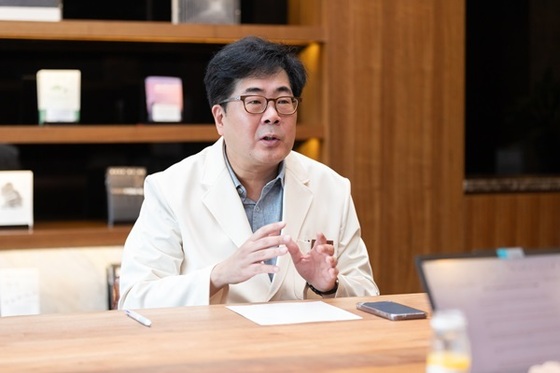
Behind the apparent decline reflected in the overall statistics, the crisis facing adolescents and younger adults continues. News1 spoke with Prof. Jeon about the reasons behind this disconnect and what must be done to address it.

—The government says the number of suicides is steadily declining. What’s your assessment?
▶ The numbers are certainly encouraging. But if you look more closely, the picture is different. The biggest change is the sharp decline in suicides among older adults.
To some extent, this reflects the government’s sustained investment in addressing elderly poverty and chronic disease management.
Among people in their 20s and 30s, as well as adolescents, however, suicides have actually increased. Because older adults account for such a large share of total suicide deaths, the overall figures have fallen while a new problem has emerged beneath the surface.
If we fail to address suicides among younger people now, the overall suicide rate could rise again over time.
The difference is that suicide among older adults often has relatively identifiable causes, allowing targeted policies to be effective. Economic hardship and chronic illnesses are major risk factors, so addressing those issues can make a meaningful difference.
For younger people, the causes are far more complex. Financial concerns are only part of the picture. Anxiety about the future, broken relationships, and social isolation are all intertwined. It’s not a problem that can be solved with just a handful of policies.
—What do you believe is driving the increase in suicides among adolescents and young adults?
▶ For adolescents, school bullying, social exclusion, and difficulties with peer relationships have a major impact.
In the past, schools and local communities were more involved in protecting vulnerable children. Today, the focus is often on disciplinary action after incidents occur, while preventive support has weakened.
The situation is different for people in their 20s and 30s.
Many feel that no matter how hard they work, they cannot see a stable future. Homeownership, marriage, and long-term security all seem increasingly out of reach, making even minor setbacks feel overwhelming.
Social media also plays a significant role. People post only their happiest moments online. Constant exposure to those images can create the impression that everyone else is thriving while you alone are falling behind.
What worries me most is the breakdown of human relationships.
In the past, family members, relatives, neighbors, or friends were often there to provide support during difficult times. Today, extended families have largely disappeared, and growing individualism means many people have fewer people they can turn to for help.
The recent rise in unattended funerals reflects this broader trend. Cost may be one factor, but some people simply believe there is no one to notify or no one who would come.
When social networks collapse, people facing a crisis are more likely to make irreversible decisions alone. That is why suicide among young people cannot be solved through welfare policies alone.

—What changes are needed to reduce suicides among young people?
▶ We first need to change the way society thinks about suicide.
Among older adults, suicide is often driven by a desire not to burden their families. Reducing financial hardship can therefore have a meaningful preventive effect.
Young people are different. Many believe that “the world will continue just fine without me.”
But in reality, the death of one person leaves profound emotional wounds for family members, friends, and everyone around them. In my clinic, I frequently see patients struggling with depression and overwhelming guilt after losing a friend or loved one to suicide.
Our society also tends to respond by saying, “They must have been suffering terribly.” Compassion is important, but we also need broader public awareness of the immense pain that suicide leaves behind for others.
Suicide prevention should not rely solely on policies and systems. Education that reflects the unique challenges faced by different age groups should be part of the solution.
—So you’re suggesting we also need to teach people why life is worth living?
▶ Exactly.
Anyone can find themselves asking, “Why should I keep living?” during difficult times.
But people who already have their own answers—or what we call protective factors—are much better equipped to endure those crises.
When I assess patients at high risk of suicide, one of the first things I look for is those protective factors. They may be family, personal goals, or cherished memories.
Having even one meaningful reason often helps people step back from making an irreversible decision.
The problem is that neither schools nor society have taught us how to find meaning in life or cope with hardship.
We have taught people how to study and compete, but not why life matters or how to deal with failure.
These lessons should begin in childhood and continue throughout life, rather than waiting until someone is already in crisis.
Meaning is also built through relationships. Talking with others and experiencing different perspectives is essential.
Today, as people spend more time consuming videos and social media, opportunities for genuine conversation and shared experiences are disappearing.
The meaning of life is not something we discover alone—it develops through our relationships with others.
—The new government has launched the National Life Safety Committee. What direction should it take to achieve meaningful results?
▶ Suicide prevention is not something that can be accomplished in two or three years.
It should be approached as a national project with a 10- to 20-year horizon.
Raising the barriers on Mapo Bridge may help achieve short-term results, but it will not solve the underlying problem. People may simply choose another location.
The real challenge is understanding why someone reached the point of wanting to die in the first place.
That requires analyzing the causes across different age groups while consistently investing in long-term priorities such as rebuilding social connections and changing public attitudes.
If every change in government also replaces policies and experts, it becomes impossible to sustain a long-term strategy.
Suicide prevention should not be treated as the signature achievement of any one administration. It should be a national project supported by a stable system in which expert-led policies continue regardless of political changes.