

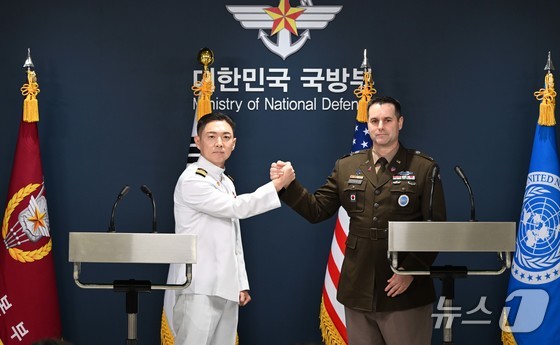
South Korea and the U.S. are set to conduct their biannual joint military exercise, Ulchi Freedom Shield (UFS), from August 17 to 27.
The Joint Chiefs of Staff reports that approximately 18,000 South Korean troops will participate, matching previous years’ involvement. This year’s exercise will include activities to verify Full Operational Capability (FOC), a crucial step in the second phase of assessing readiness for the transfer of wartime operational control.
Notably, the exercise will not feature training led by a four-star South Korean general, which had been a point of interest in the lead-up to the operational control transition. The Joint Chiefs of Staff indicated that the timing for South Korean-led training will be determined following the FOC verification.
During UFS, both nations will conduct the Warrior Shield exercise to bolster combat readiness. This field training exercise (FTX) aims to enhance joint operational capabilities and will involve forces at the battalion level and above.
UFS comprises command post exercises (CPX) centered on simulations and FTX using actual forces. This year’s schedule includes 14 FTX events, down from 22 last year. Military officials stress that this reduction doesn’t indicate scaled-back training, but rather a redistribution of exercises throughout the year.
The exercise scenarios will incorporate lessons from recent conflicts, including U.S.-Iran tensions. Additionally, the drill will integrate government agency readiness exercises to strengthen the nation’s overall war-fighting capabilities.
Seventy personnel from 11 United Nations (UN) Command member countries will join UFS. They’ll assess how to integrate specialized capabilities like intelligence and cyber operations with existing defense systems, and review crisis response protocols. The UN Command’s Neutral Nations Supervisory Commission will monitor compliance with the armistice agreement during the exercise.
North Korea’s reaction to the drills remains a concern. Historically, Pyongyang has denounced such exercises as invasion rehearsals, often responding with provocative military actions.
In March, during the Freedom Shield exercise, North Korea test-fired strategic cruise missiles from its latest destroyer and launched multiple ballistic missiles into the East Sea. More recently, it conducted missile tests on August 6 and 12, just days before the start of UFS.
On August 14, a North Korean Foreign Ministry spokesperson declared that this joint exercise differs significantly from those of the past five years, focusing on modern warfare capabilities. The statement warned of a new level of deterrence in response to perceived new threats.