

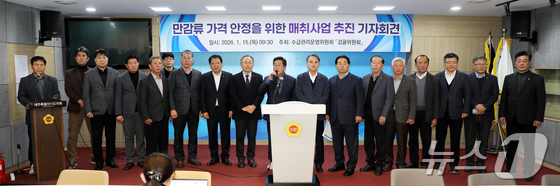
In response to the duty-free import of U.S. mandarins starting this year, a large-scale procurement program for 10,000 tons of late-harvest citrus varieties (including Hallabong and Cheonhyehyang) is set to launch.
The Citrus Commission announced this initiative during a press conference held at the provincial council’s public cafe on Thursday. This organization, comprising individual farmers, producer groups, processors, merchant associations, academics, and government officials, oversees crucial aspects of Jeju’s citrus industry, including product quality standards, processing specifications, purchase prices, and production control.
The Commission acknowledged that the duty-free import of U.S. mandarins, resulting from the gradual tariff elimination under the 2012 Korea-U.S. Free Trade Agreement, presents a significant challenge to Jeju’s citrus industry. However, they cautioned against succumbing to fear-driven marketing tactics due to excessive concern.
The Commission outlined three strategic measures to address the situation.
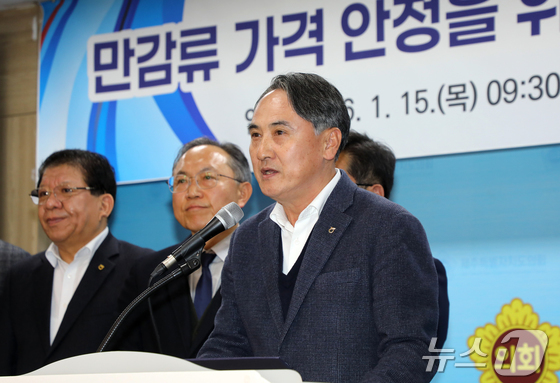
Firstly, they plan to implement a direct purchasing program for late-harvest citrus varieties that coincide with the U.S. mandarin season. This initiative, led by local agricultural cooperatives and the Jeju Citrus Agricultural Cooperative, aims to regulate market supply. The target purchase volume is approximately 10,000 tons, representing about 10% of off-island shipments. The purchase price will be determined soon, based on the average of the past three years.
Additionally, the Commission will actively promote consumer awareness campaigns, issue consumer coupons, expand discounts for agricultural and livestock products, and encourage the sale of fully ripened fruit.
The Commission emphasized that these measures are not just short-term market defenses but a stepping stone for Jeju’s citrus industry to evolve into a quality and trust-centered structure. They pledged to work responsibly with local authorities, agricultural cooperatives, and producers to safeguard farmers’ incomes and secure the future of Jeju’s citrus industry.
The tariff rate on U.S. mandarins has gradually decreased from 144% to 0% over 15 years, as stipulated by the Korea-U.S. FTA, with annual reductions of 9.6 percentage points. This tariff reduction has led to a dramatic increase in mandarin imports, from a mere 0.1 tons in 2017 to 529.3 tons in 2022, 586.8 tons in 2023, and 2,875.7 tons in 2024. As of August last year, imports had already reached 7,619.3 tons. Projections suggest that this year’s import volume could soar to 16,000 tons.