As international oil prices stabilized, U.S. stocks rallied across the board, lifting semiconductor shares and pushing the semiconductor index up nearly 2%.
This development could spark a sharp rebound in the South Korean stock market, which had been in freefall since the outbreak of hostilities between the U.S. and Iran.
On Wednesday, Wall Street saw gains across major indices, with the Dow Jones Industrial Average rising 0.49%, the S&P 500 climbing 0.78%, and the Nasdaq jumping 1.29%.
The rally was fueled by stabilizing oil prices. As of 5:20 p.m. on Wednesday, West Texas Intermediate (WTI) crude futures were trading at 76.11 USD per barrel, up 2.08%.
Brent crude futures also rose, reaching 82.57 USd per barrel, a 1.44% increase.
Just an hour earlier, both West Texas Intermediate (WTI) and Brent futures had been slightly down. This marks the first dip in global oil prices since the U.S.-Iran conflict erupted.
The shift followed President Donald Trump’s pledge to escort commercial vessels through the Strait of Hormuz, and Treasury Secretary Scott Bessent’s announcement that the administration would support tankers in the strait and unveil additional measures in the coming days.
These assurances helped stabilize oil prices, triggering a broad market rally.
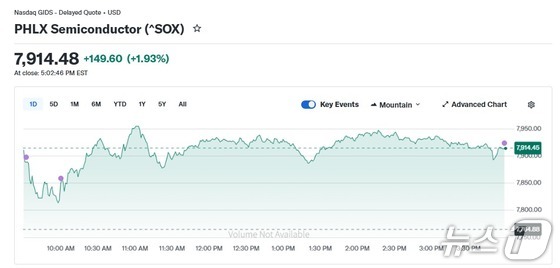
The upswing lifted semiconductor stocks, with the sector index closing nearly 2% higher.
Nvidia gained 1.66%, AMD surged 5.82%, Intel Corporation jumped 5.75%, Micron Technology soared 5.55%, Broadcom added 1.18%, and Taiwan’s TSMC rose 1.22%.
Micron’s 5.55% surge was particularly noteworthy, as it nearly erased the previous day’s 7.99% plunge, which had been driven by fears of rising operating costs due to higher oil prices.
Today’s rally in chip stocks was fueled by bargain hunters, pushing the semiconductor index up 1.93% at the close.
This positive momentum could spill over to the South Korean market.
The previous day saw South Korea’s KOSPI index plummet 12.06%, exceeding even the 12.02% drop following the September 11 attacks – the largest single-day decline in the market’s history.
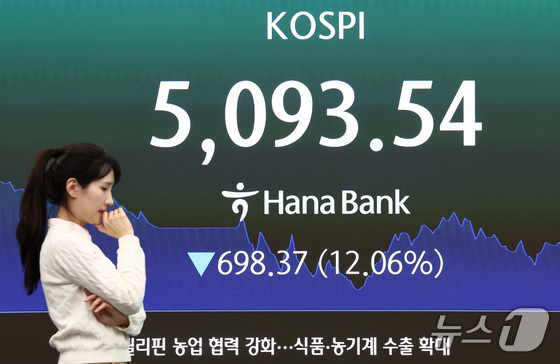
The day before that, the KOSPI had already tumbled 7.24%.
However, with oil prices stabilizing and semiconductor stocks rallying in the U.S.,
The South Korean market could be poised for a sharp rebound, especially if bargain hunters move in after the recent steep declines.