The U.S. Supreme Court invalidated mutual tariffs based on the International Emergency Economic Powers Act (IEEPA). However, the Donald Trump administration continues its tariff policy by imposing a temporary 10% global tariff on all imports under Section 122 of the Trade Act. As Section 122 only grants temporary authority for 150 days, analysts predict the administration may soon pivot to Section 301, which allows targeting specific countries.
In this context, U.S. investors in Coupang have renewed their petition for a Section 301 investigation into the South Korean government’s handling of the Coupang data breach. This has sparked concerns that South Korea could become the first Section 301 Target following the invalidation of mutual tariffs. The Office of the United States Trade Representative (USTR) must decide by March 7 whether to initiate an investigation.
Coupang Incident Emerges as Trade Risk; USTR Decision Deadline Set for March 7
On March 1, industry sources report that as Section 301 gains prominence as a new tariff tool, there are growing concerns that last year’s Coupang data breach could escalate into a significant trade issue.
On January 22, before the Supreme Court’s ruling on mutual tariffs, U.S. Coupang investors petitioned the USTR, alleging unfair and discriminatory treatment by South Korea regarding the Coupang incident.
While the Ministry of Trade, Industry, and Energy initially maintained that tariffs and the Coupang incident were separate issues, the intervening Supreme Court ruling has reignited the Coupang incident as a potential trade risk linked to Section 301.
The USTR is required to decide on initiating an investigation within 45 days of receiving a Section 301 petition, with the deadline for this particular petition set for March 7.
USTR: Global Tariffs to Increase to 15%, Preparing Section 301 Investigation into Unfair Practices
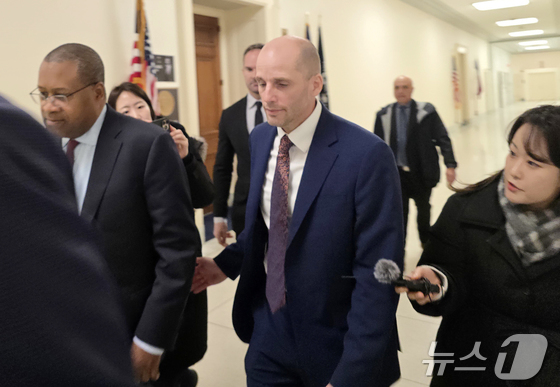
In a Fox Business Radio interview on February 25, USTR representative Jamieson Greer stated that it currently impose a 10% global tariff, but it will increase to 15% for some items. It could rise even higher for other countries. He added that they’re preparing to investigate various countries’ unfair trade practices under Section 301, including forced labor and overcapacity, and they’re already reviewing several cases.
This statement suggests that the current 10% global tariff, imposed for 150 days under Section 122, could be raised to a maximum of 15% on a country-specific basis. Furthermore, the USTR might introduce additional tariff increases for specific countries through Section 301 investigations.
Section 301 empowers the President to take broad retaliatory measures, including increasing tariffs, withdrawing concessions, and imposing import restrictions, if the USTR determines that a foreign action is unjust, unreasonable, or discriminatory.
Greer also indicated that they are preparing to initiate a Section 301 investigation under existing trade authorities in the coming days or weeks.
Digital Regulations Morphing into Product Tariffs: Fears of a Second French Scenario
The concern is that even if petitioners target specific companies in a Section 301 investigation, the USTR has broad discretion to design tariff targets, rates, and non-tariff measures based on the scale of damage and negotiation goals.
The Section 301 investigation into China, initiated in 2017, targeted forced technology transfers, intellectual property violations, and discriminatory regulations. As a result, the U.S. imposed additional tariffs of 7.5% to 25% on 370 billion USD worth of Chinese imports, ranging from industrial items like semiconductors and machinery to consumer goods such as clothing and shoes.
Similarly, the Section 301 investigation into France’s digital services tax began by addressing digital industrial policies but ultimately included unrelated items like French wine, cheese, and handbags in the tariff list.
The French case demonstrates that investigations starting with digital issues can expand to entirely different products for tariffs. Analysts warn that the Coupang Section 301 investigation could similarly broaden to include unexpected items during negotiations.
Experts Urge Government to Open Communication Channels to Address Misconceptions About Discriminatory Treatment
The government is reportedly focusing on strengthening communication with the U.S. to clarify that actions taken against Coupang are not discriminatory sanctions against a specific company, but rather law enforcement in response to the data breach incident.
Professor Heo Yoon from Sogang University’s Graduate School of International Studies expressed concern, stating that if the Coupang Section 301 investigation materializes, it may not be limited to Coupang alone but could expand to include the entire online service sector or related logistics areas. He added that while Section 301 investigations typically take time, the Trump administration may make unilateral decisions without fully considering South Korea’s position if they proceed quickly.
He advised that it’s crucial for the government to actively engage in dialogue now to dispel any misconceptions about unfair treatment of Coupang.