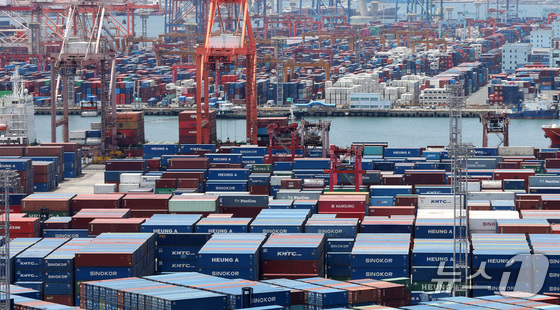
The Donald Trump administration’s second term is ramping up efforts to verify import declarations and enforce high tariffs, prompting experts to urge U.S. export companies to respond meticulously.
On June 21, the Korea International Trade Association (KITA) announced that its International Trade and Commerce Research Institute released a report titled, Trends in Strengthening U.S. Responses to Tariff Evasion.
The report reveals that recent U.S. import declaration verifications and tariff evasion crackdowns have become significantly more stringent, resulting in hefty compensation liabilities for violating companies. Following President Trump’s signing of an executive order on enhanced customs enforcement on June 3, importers are expected to face even stricter responsibilities and requirements for declarations and documentation.
This executive order aims to expand trade enforcement and investigations at the border to block illegal imports and protect intellectual property rights. It primarily focuses on preventing the influx of counterfeit goods and regulatory violations while tightening import customs procedures and penalties to safeguard domestic industries.
The Trump administration’s intensified crackdown is believed to be a response to the rise in attempts to evade tariffs through various means, including false origin declarations, undervaluation, misclassification of items, and origin laundering through transshipment in third countries.
While the U.S. government has historically enforced measures against tariff evasion, previous actions mainly involved administrative sanctions by Customs and Border Protection (CBP), such as tariff collections and fines. Recently, cases have emerged where civil lawsuits or criminal prosecutions have followed, depending on the circumstances. The report notes that under the second Trump administration, agencies like CBP and the Department of Justice are actively cooperating to enhance enforcement, leading to a diversification of sanctions.
KITA also highlighted that tips from insiders, such as competitors or current and former employees, have become a crucial channel for detecting tariff evasion.
Whistleblowers can file civil lawsuits on behalf of the government under the False Claims Act (FCA). Violating companies may face liabilities amounting to three times the government’s damages. Recent tariff evasion cases have emphasized that whistleblowers can receive 15% to 30% of the compensation recovered by the government, increasing the incentive to report.
However, KITA advised that not all errors in tariff declarations lead to civil lawsuits or criminal prosecutions, emphasizing the need for calm preparation rather than excessive concern.
Criminal prosecutions typically target intentional trade fraud, such as submitting false documents or laundering origin through third-country transshipment, with many cases involving products from China. Even if errors occur, the level of sanctions will depend on whether the company exercised reasonable care and its level of cooperation during the investigation, making it crucial to respond diligently even if allegations arise.
Yoo Jin, a senior researcher at KITA, explained that the U.S. government has ample motivation to ensure the effectiveness of existing tariff measures to compensate for revenue losses resulting from tariff refunds under the International Emergency Economic Powers Act (IEEPA).
IEEPA tariff refunds refer to the process by which the U.S. government returns tariffs collected under IEEPA after the Supreme Court deemed them unconstitutional, resulting in significant refunds to importers.
The senior researcher emphasized that it is crucial for our companies to thoroughly check key declaration items such as classification, origin, and taxable price in advance, and to promptly correct any errors found. Even if they become subjects of investigation, they should actively utilize remedial procedures, such as submitting supporting documents and requesting leniency, to minimize damage.