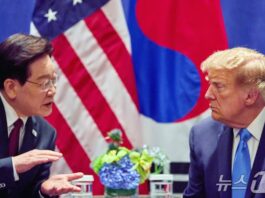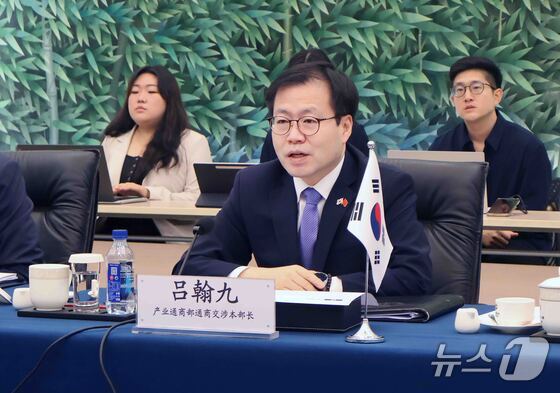
The U.S. has ramped up pressure on South Korea to promptly announce investment projects, escalating trade negotiations. In this context, Yeo Han-koo, the chief trade negotiator at the Ministry of Trade, Industry, and Energy, was unexpectedly dismissed.
With crucial final adjustments pending in investment implementation and tariff talks between the U.S. and South Korea, the sudden vacancy in the trade leadership role has sparked concerns about negotiation continuity and responsiveness.
Yeo Han-koo’s Abrupt Removal Coincides With Renewed U.S. Pressure on South Korean Investments.
The Ministry of Trade, Industry, and Energy reported on August 15 that President Lee Jae Myung exercised his authority to dismiss Yeo at midnight. While such unilateral dismissals of political appointees are uncommon, the specific reasons for Yeo’s removal were not disclosed.
Yeo stated that he has no specific comments on the reasons, adding that he hopes this decision is accepted as is.
The Ministry commented that appointments for political positions fall under the appointing authority’s discretion, making it inappropriate for the ministry to discuss the background. They assured that measures are in place to prevent disruptions to trade issues following this decision.
Yeo had previously served as Director of Trade Policy and head of the Trade Negotiation Headquarters during the Moon Jae-in administration. He returned to lead trade negotiations under the new government, overseeing key issues including U.S.-South Korea tariff talks. With no immediate successor named, his sudden departure raises concerns about a potential gap in trade negotiations.
The timing of the dismissal is critical, as the U.S. has intensified pressure on South Korea to fulfill its investment commitments. Reports suggest that the U.S. government warned South Korea of potential tariff increases if investments are not expedited, heightening tensions in bilateral trade relations.
In response, the Blue House stated that discussions are ongoing through various channels between the two countries. They assured that the government is maintaining close internal communication on U.S. trade issues, but noted no current plans for Trade Minister Kim Jeong-kwan to make an emergency U.S. visit.
The U.S. has reportedly expressed frustration over the lack of progress on the 200 billion USD investment projects outlined in last year’s summit’s Korea-U.S. Joint Fact Sheet (JFS). Reports indicate that the U.S. Department of Commerce sent multiple emails urging the South Korean government to swiftly announce these investment projects.
With renewed pressure linking investments to tariffs and Yeo’s departure from overseeing trade operations, attention now turns to the government’s ability to respond swiftly in future U.S. negotiations. The Ministry aims to minimize disruptions by activating an emergency operational system led by Deputy Minister Park Jeong-seong.
Tariffs Set at 12.5% as Overcapacity Section 301 Investigation Results Loom
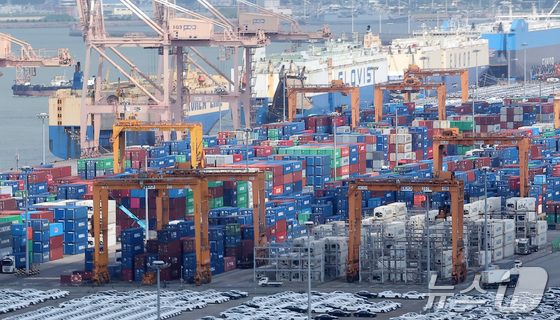
Tariffs remain the primary focus in U.S.-South Korea trade talks. The U.S. Trade Representative (USTR) has decided to impose additional tariffs of 10% to 12.5% on countries deemed insufficient in blocking imports of goods produced with forced labor. South Korea, along with the European Union (EU), Japan, Taiwan, and Switzerland, falls into the 12.5% tariff category.
This measure leaves South Korea just 2.5 percentage points shy of the 15% mutual tariff ceiling secured in last year’s negotiations. While the forced labor-related tariffs are separate from Section 301 measures, the potential for additional tariffs could significantly impact South Korean exporters to the U.S.
The government is particularly concerned about the ongoing Section 301 investigation into ‘structural overcapacity’ targeting South Korea. The U.S. is examining overcapacity issues among major trading partners, with results expected by month’s end.
The government’s urgent priority is to defend against additional tariffs, as any decision could potentially exceed the 15% level agreed upon in last year’s U.S.-South Korea negotiations.
Trade Minister Kim Jeong-kwan has made multiple U.S. trips to emphasize South Korea’s commitment to bilateral shipbuilding cooperation and investment implementation. Ye has also been instrumental in advocating South Korea’s position to U.S. administrations and Congress.
The leadership change at this critical juncture, with investment implementation and tariff defense intertwined, raises questions about the government’s ability to quickly fill the vacancy and manage both U.S. investment negotiations and the Section 301 investigation response. This transition emerges as a significant factor in shaping future U.S.-South Korea trade relations.