


A 25-year oil agreement between the United States and Venezuela has emerged as a new factor in the global oil market. The U.S. refining industry is closely monitoring this development, as it could potentially reduce dependence on Middle Eastern oil.
If American refiners increase their use of Venezuelan crude, existing supplies from Canada, Mexico, and the Middle East may shift to Asia, potentially boosting the bargaining power of U.S. refiners. Moreover, if Venezuela significantly ramps up production, it could help stabilize global oil prices, which would be a positive outcome for the industry.
However, Venezuelan crude is heavy oil, which isn’t well-suited for many U.S. refining facilities. When factoring in transportation costs, any increase in Venezuelan production is unlikely to directly lead to cost reductions or improved profitability for American refiners.
U.S. Secures Control Over 65 Billion Barrels of Venezuelan Oil, Aims to Boost Production
Industry sources reported on the 1st that President Donald Trump announced on August 28 that the U.S. has signed an energy agreement to gain majority control over Venezuela’s confirmed oil reserves of 65 billion barrels.
The 25-year agreement targets 17 oil fields, including the Orinoco Belt. The 65 billion barrels represent about 21% of Venezuela’s total confirmed reserves of approximately 304 billion barrels. The Venezuelan government anticipates attracting around 100 billion USD in private investment and securing 209 billion USD in tax revenue through this deal.
Venezuela currently produces about 1.25 million barrels of oil per day. Interim President Delcy Rodríguez has set a goal to increase production to over 1.5 million barrels per day.
In July, Venezuela’s average daily oil exports reached 1.16 million barrels, with exports to the U.S. increasing to 786,000 barrels, nearly tripling from 284,000 barrels in January.
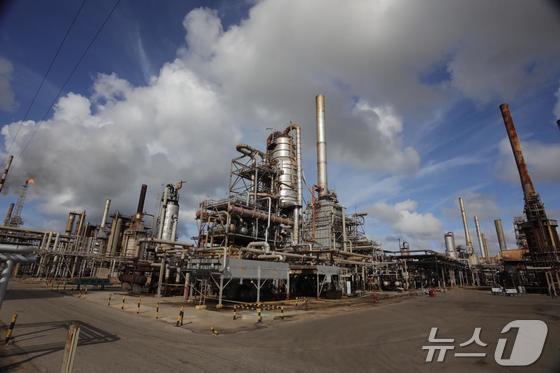
Ramping Up Production Will Take Time; Short-Term Impact on Oil Prices Likely Limited
Experts predict that it will take time for the agreement to lead to a significant increase in production. Venezuela’s oil output currently accounts for about 1% of global supply. Years of underinvestment mean that substantial improvements are necessary for infrastructure such as oil fields, pipelines, and refineries.
Industry insiders believe that with political stability and proper investment, Venezuela could boost its production to between 1.3 million and 1.4 million barrels per day within two years, potentially reaching 2.5 million barrels over the next decade. However, they see limited potential for a rapid increase to 2-3 million barrels per day in the short term.
Venezuela’s potential exit from the Organization of the Petroleum Exporting Countries (OPEC) is not expected to immediately increase supply. Currently exempt from OPEC’s production cuts, Venezuela’s withdrawal would likely have minimal short-term impact on production. This move appears to be a long-term strategy in anticipation of future production recovery and potential reapplication of quotas.

U.S. Refiners Currently Import Minimal Venezuelan Crude; Economic Viability Remains Key
The U.S. refining industry is examining Venezuelan crude as a potential alternative to Middle Eastern oil, closely monitoring U.S.-Venezuelan cooperation.
Earlier, a major U.S. refiner tested the quality and yield of Venezuelan crude by importing 110,000 barrels in June, marking the first significant import in about 20 years. Other major refiners are also exploring import possibilities.
The 110,000-barrel test import represents a fraction of typical U.S. monthly crude imports. This amount is not expected to significantly impact domestic oil supply or refiners’ cost structures.
Assessing economic viability remains crucial. Venezuelan crude is a heavy oil with high sulfur content and viscosity. While it may suit some U.S. refiners with advanced processing facilities, long transportation distances mean freight costs must be carefully considered.
However, industry experts believe that if U.S. refiners increase their use of Venezuelan crude, existing supplies from Canada, Mexico, and the Middle East may shift to other markets, potentially increasing global supply competition. This scenario could enhance the purchasing power of U.S. refiners.
An industry representative stated that Venezuelan crude is one option to reduce dependence on Middle Eastern oil, so it’s closely monitoring U.S.-Venezuela cooperation. To actually expand imports, it needs to comprehensively review prices, transportation costs, and compatibility with the facilities.