A Chinese investor’s attempt to overturn a 2.6 billion KRW (approximately 1.93 million USD) international investment dispute (ISDS) ruling against the South Korean government has been rejected, solidifying the government’s victory.
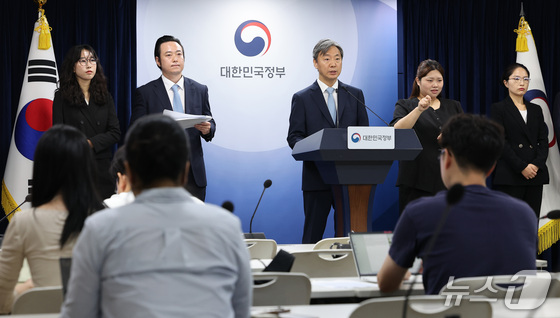
On September 13, the Ministry of Justice announced that the International Centre for Settlement of Investment Disputes (ICSID) dismissed all requests by Chinese investor Peng Zheng Min to cancel the ISDS ruling, resulting in a win for South Korea. The ICSID also ordered Min to pay approximately 1.5 billion KRW (about 1.11 million USD) in cancellation proceeding costs and about 530 million KRW (about 394,117 USD) in arbitration fees.
The case stems from October 2007, when Min established a domestic corporation to acquire the Huafu Building in China, securing a loan from a financial institution. Woori Bank later acquired the loan receivables, placing a lien on the shares as collateral.
Despite Woori Bank extending the repayment deadline six times, Min defaulted on the loan, leading to the sale of all company shares to a foreign firm.
Min challenged the legality of Woori Bank’s actions in court but lost his case in the Supreme Court in July 2017. He was also convicted of embezzlement, breach of trust, and fraud, receiving a six-year prison sentence confirmed by the Supreme Court in March 2017.
In 2020, Min filed an ISDS claim, arguing that Woori Bank had unlawfully executed its collateral rights, causing him to lose all share ownership. He also alleged that South Korea had failed to protect Chinese investors as required by the Korea-China Investment Agreement. Min initially sought about 2 trillion KRW (about 1.5 billion USD), but the final claim was set at approximately 264.1 billion KRW (about 196 million USD).
The ICSID arbitration tribunal ruled in favor of South Korea in May 2024, dismissing Min’s claims entirely. The tribunal agreed with the government that Min’s actions constituted an illegal scheme to secure loans through bribery, disqualifying it as a protected investment under the agreement. Consequently, they declared a lack of jurisdiction and ordered Min to pay about 49.126 billion KRW (about 36.56 million USD) in litigation costs to South Korea, plus interest.
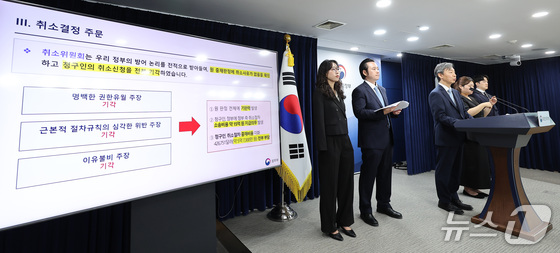
Dissatisfied with the outcome, Min sought to cancel the arbitration ruling, claiming the tribunal had overstepped its authority, violated procedural rules, and failed to provide adequate reasoning.
Min’s legal team argued that he had legally acquired the shares and that the tribunal had misinterpreted both the investment agreement and domestic laws. They also alleged procedural violations and claimed the tribunal had unjustly favored South Korea in its interpretation of the agreement.
The South Korean government maintained that there were no grounds for cancellation of the original ruling.
After a two-year legal battle, the ICSID cancellation committee sided with South Korea, rejecting Min’s cancellation request.
The committee found the interpretation of the Korea-China Investment Agreement reasonable and concluded that Min had been given ample opportunity to present his case. They also determined that the reasons for denying jurisdiction were clearly articulated and without contradiction.
This case marks the first time South Korea has won an ISDS case after a full hearing, with the victory in the cancellation proceedings effectively preventing the possibility of a second arbitration.
Kang Jun-ha, Director of the Ministry of Justice’s International Legal Affairs Bureau, highlighted the significance of the case, noting it was the first instance where a foreign investor directly challenged South Korea’s judicial procedures under an investment agreement. He credited the government’s success to close collaboration between the International Investment Dispute Response Team, legal representatives, and academics, emphasizing that the victory saved taxpayers approximately 2 trillion KRW (about 1.5 billion USD).
Kang added that the Ministry of Justice will thoroughly review the decision and remain prepared to respond to any potential future proceedings.
Currently, the South Korean government is pursuing enforcement proceedings in Chinese courts to recover the costs owed by Min as determined by the original arbitration ruling.