South Korea’s battery material companies are ramping up their shift to lithium iron phosphate (LFP) production systems. This move aligns with Samsung SDI and SK On’s efforts to kickstart mass production of batteries for energy storage systems (ESS) in the U.S. While these companies have primarily focused on producing nickel-cobalt-manganese (NCM) cathodes for electric vehicles (EVs), they’re now diversifying their product portfolios by securing contracts for LFP cathodes for ESS applications.
Chinese firms have essentially dominated the global LFP material market. However, U.S. supply chain restrictions against China have created new opportunities for domestic material companies. As U.S.-based cell manufacturers seek materials that meet tax credit requirements, non-Chinese suppliers are playing an increasingly crucial role.
POSCO Future M, L&F Secure Trillion-Won LFP Cathode Material Deals… Switching Lines from Ternary to LFP, Expanding Plants
On September 22, Posco Future M inked a deal with SK On to supply LFP cathodes worth approximately 1.1 trillion KRW (about 819 million USD). These materials will be used in ESS batteries produced at SK On’s Georgia plant from 2027 to 2029, with an option to extend for two years.
In August, Posco Future M also agreed to supply over 190,000 tons of LFP cathodes for ESS to a domestic battery company from 2027 to 2032, marking their entry into the LFP cathode market. The companies plan to finalize the contract after ironing out specific terms.
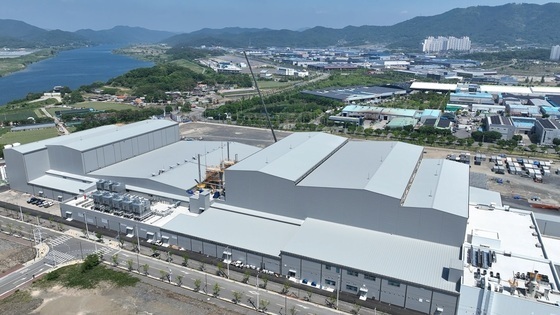
To meet increased demand, Posco Future M will convert part of its NCM high-nickel cathode production line in Pohang to LFP production, aiming to start mass production by year-end. They’re also building a dedicated joint plant for LFP cathodes in Pohang, targeting mass production next year with an expected annual output of up to 50,000 tons.
LG Energy Solution also secured a 160 billion KRW (about 119 million USD) contract with SK On on September 17 to supply LFP cathodes through 2028. In March, they landed a 1.6 trillion KRW (about 1.2 billion USD) LFP supply contract with Samsung SDI, covering 2027 to 2029 with an option for three additional years.
LG Energy Solution is expanding its production capacity. Its LFP-focused subsidiary, LG Energy Plus, opened a dedicated factory in Daegu in May and shipped its first pilot products in July. Starting with an annual capacity of 30,000 tons of LFP cathodes, they plan to double this to 60,000 tons by mid-next year.
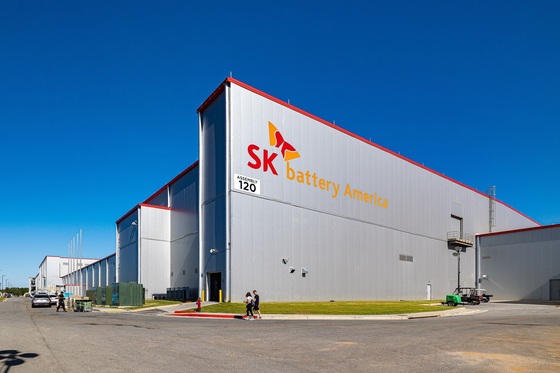
Samsung SDI and SK On are set to begin mass-producing LFP batteries in the U.S. this year, having secured multi-trillion KRW ESS contracts from local energy firms. Samsung SDI will start mass-producing LFP batteries for ESS this month at the StarPlus Energy (SPE) factory, a joint venture with Stellantis in Indiana. They’ve retooled part of their existing EV battery line for this purpose and plan to supply customers with their integrated ESS product, the Samsung Battery Box (SBB) 2.0, by year-end.
Samsung SDI has already locked in significant ESS contracts. Last December, they signed a 2 trillion KRW (about 1.5 billion USD) deal to supply LFP batteries for ESS to a U.S. energy infrastructure company over three years starting next year. In March, they secured another 1.5 trillion KRW (1.1 billion USD) contract with a U.S. energy firm to supply NCA and LFP batteries from 2026 to 2029.
SK On will also launch mass production of LFP batteries for ESS at its Georgia plant this year, repurposing part of its EV battery line to meet local demand. They announced their first ESS LFP battery supply contract with Flatiron Energy Development for 1 GWh last September. This August, they secured a 9 GWh LFP battery contract with Neovolta Power for 2024-2031, with talks underway for an additional 9 GWh collaboration.
To qualify for tax credits, battery makers must increase their use of non-Chinese raw materials annually, making it crucial to reduce dependence on Chinese supplies from the get-go. While LFP batteries offer lower output than NCM batteries, they’re more cost-effective and long-lasting. The recent ESS demand surge, driven by AI data center expansion and affordable EV growth, is boosting LFP adoption. However, China still dominates the LFP material market, producing about 98% of global LFP cathodes last year, according to the International Energy Agency (IEA).
Meeting U.S. tax credit requirements means battery companies must source more non-Chinese materials, creating a golden opportunity for Korean suppliers. Under the Inflation Reduction Act, U.S.-made batteries must meet the Material Cost Ratio (MACR) to qualify for the Advanced Manufacturing Production Tax Credit (AMPC). MACR measures the proportion of battery materials not sourced from prohibited foreign entities (PFE) like China.
The MACR requirement starts at 60% this year, rising by 5 percentage points annually to reach 85% by 2030. Failure to replace Chinese-sourced materials will make it increasingly difficult to claim the AMPC. Currently, Korean-made products are practically the only viable alternatives to Chinese materials globally.
Choi Jae-hee, a China specialist at the Korea Institute for International Economic Policy, notes that without the AMPC, Korean battery firms face losses in the U.S. market. They’re opting for non-Chinese suppliers to meet PFE requirements. However, as MACR thresholds increase yearly, Korean battery material comFLpanies must reduce Chinese material dependence from the raw material stage and rapidly expand LFP cathode production to meet booming U.S. ESS demand.