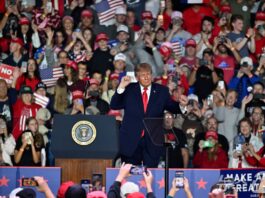
The U.S. midterm elections on Tuesday have the domestic automotive and battery industries closely watching for potential shifts in trade and industrial policies under the Donald Trump administration. Analysts predict that even if Democrats gain control of Congress, key policies like auto tariffs and battery supply chain localization are likely to remain largely unchanged. However, there’s potential for increased policy uncertainty due to further negotiations on auto tariffs and trade tensions.
Today, Americans head to the polls to elect all 435 House seats and 35 Senate seats. Recent surveys show Democrats leading in House races, while the Senate battle remains tight.
This election’s hot-button issues include inflation, manufacturing jobs, and voter assessment of Trump’s tariff policies. With growing concerns about tariffs’ impact on car prices and business costs, the domestic auto industry is keenly observing possible post-election trade policy changes.
Industry insiders don’t expect the election results to trigger major policy shifts, such as revising the Korea-U.S. Free Trade Agreement (FTA) or scrapping auto tariffs. While the FTA eliminated tariffs on Korean passenger vehicles, the Trump administration imposed separate tariffs under Section 232 of the Trade Expansion Act. Last year’s Korea-U.S. agreement adjusted the auto tariff to 15%, but it’s likely to remain a key trade issue post-midterms.
Even if Democrats take Congress, immediately withdrawing tariffs would be challenging. A tariff removal bill could face a presidential veto, requiring a two-thirds majority in both chambers to override.
The battery sector also foresees limited major policy changes. The electric vehicle tax credit, which lapsed last September, is unlikely to be easily reinstated even under Democratic control. Meanwhile, the Advanced Manufacturing Production Credit (AMPC) for domestic battery production remains in place.
Both parties support restricting Chinese battery materials and components. The U.S. Department of Energy recently announced plans to establish a domestic integrated battery supply chain by 2030, underscoring the ongoing importance of local production and supply chain diversification.
Cho Sung-dae, head of the Korea International Trade Association’s Trade Research Institute, believes that even if Democrats regain both houses, the Trump administration’s America First trade policy, implemented through executive orders, is likely to persist.
With U.S. industrial policy expected to remain largely stable, experts advise domestic companies to stick to existing investment plans while bolstering local production and supply chain competitiveness.
Hyundai Motor Group plans to invest 26 billion USD in the U.S. from 2025 to 2028. The company will inject an additional 2.7 billion USD into its Georgia Meta plant, boosting annual production capacity from 300,000 to 500,000 vehicles, aiming to increase North American parts localization to 80% by 2030.
While expanding U.S. production helps reduce tariffs on finished vehicles, experts warn that impacts on domestic production bases must be considered. As U.S. production share grows, balancing domestic production and export volumes becomes crucial.
Professor Lee Ho-geun of Daedeok University’s automotive department stresses the importance of maintaining equilibrium to prevent U.S. expansion from weakening domestic production bases. He adds that even U.S.-based factories aren’t exempt from all tariffs and trade regulations, advising comprehensive management of parts origin, supply chains, and steel and aluminum sourcing.
Battery makers are pivoting to the U.S. energy storage system (ESS) market as electric vehicle demand slows. Growing ESS demand, driven by artificial intelligence (AI) data center and power grid investments, is spurring conversion of existing electric vehicle (EV) production lines to lithium iron phosphate (LFP) battery manufacturing for ESS.
LG Energy Solution is expanding North American ESS production, while Samsung SDI recently started mass-producing LFP batteries for ESS at its Indiana Star Plus Energy plant. With supply chain localization policies likely to continue, reducing reliance on Chinese materials and improving cost competitiveness are key challenges.
Experts emphasize the need to honor U.S. investment commitments regardless of election outcomes to build trust and improve local business conditions.
Shin Won-kyu, head of the Korea Chamber of Commerce and Industry’s Global Economy Team, stresses maintaining a long-term investment mindset despite differing methods, as both parties agree on reviving U.S. manufacturing in economic security industries.
He advises highlighting the Korea-U.S. relationship’s transcendence of election-based political interests to ensure smooth implementation of existing investments and secure U.S. cooperation on skilled labor visas and permits.