As the U.S. holds its midterm elections on November 8, South Korea’s economy is closely watching the potential impacts on artificial intelligence (AI) investments, interest rates, and tariff policies. The election results could significantly influence semiconductor and electrical equipment exports, as well as corporate financing and import costs for Korean businesses.
A Democratic sweep of both chambers could lead to tougher data center regulations, potentially challenging South Korean exports. However, it might also bring lower interest rates and a weaker dollar, easing corporate cost burdens. On the flip side, if Republicans maintain control, expected AI investment boosts could benefit exports, but also increase pressure on interest rates and exchange rates.
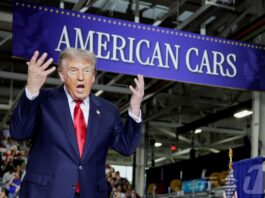
Tariff relief remains unlikely even with a Democratic victory. With President Donald Trump still in office and a potentially divided Congress, trade tensions could escalate, particularly through tariff-based pressure on trading partners.
Stricter Data Centre Regulations Possible if Democrats Regain Control of Both Chambers of Congress, Raising Uncertainty for South Korea’s Semiconductor Exports
Initial vote counts are expected to trickle in during Korean market hours on November 9. Starting at 8:00 a.m. (KST) with parts of Indiana and Kentucky, followed by Georgia and Virginia at 9:00 a.m. (KST), the Korean won and semiconductor stocks may fluctuate based on early results from competitive districts, even before the final majority is determined.
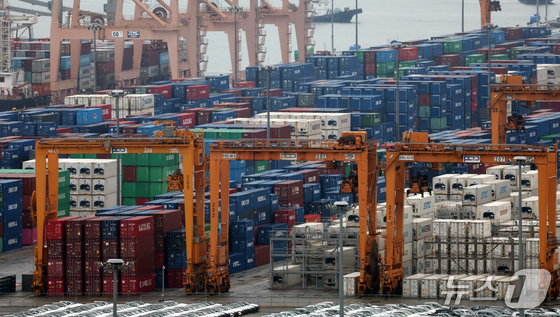
The Ministry of Trade, Industry and Energy reports that October semiconductor exports hit 56.44 billion USD, accounting for a whopping 49.0% of total exports (115.28 billion USD). From October 1-25, semiconductor exports to the U.S. skyrocketed by 497% year-over-year to 5.8 billion USD. Computer and electrical equipment exports to the U.S. also surged by 816% and 160%, respectively, during the same period.
Major U.S. tech companies’ data center investments are driving demand not only for server memory and storage devices but also for power infrastructure like transformers and cables. This demand pushed South Korea’s electrical equipment exports to a record 1.99 billion USD in October.
A Democratic-controlled Congress might move swiftly to increase costs for data center operators or investigate AI companies’ market dominance. While the president could veto such measures, the uncertainty around potential cost increases might lead to delayed investments, subsequently slowing deliveries from South Korean semiconductor and electrical equipment suppliers.
U.S. asset manager Raelian Global Advisors told Bloomberg that Democratic control could dampen investor sentiment towards AI-related stocks in Asian markets, including South Korea, due to concerns over data center costs and AI regulations. However, UK-based Aberdeen Investments believes demand for core components from South Korean and Taiwanese semiconductor firms will persist regardless of the election outcome.
State gubernatorial races in 36 states on election day could have a more direct impact on data center construction. KB Securities reports that candidates in nearly 20 states have pledged to temporarily halt new construction or permits. In Michigan, for instance, Democratic candidate Jocelyn Benson proposed pausing new developments until safeguards are in place, while Republican John James emphasized enhancing community decision-making power.
KB Securities suggests that states are more likely to impose conditions like shared electricity costs or self-power generation rather than completely halting projects, given the need for revenue and investment. This approach could delay data center operations but potentially increase investments in power facilities and grid infrastructure.
Dollar-Won Exchange Rate Seen at 1,360–1,400 if Republicans Retain Control of Both Chambers, While Divided Congress Could Trigger December Budget Negotiations
A Democratic sweep could ease burdens on Korean companies through lower U.S. interest rates and a weaker dollar, potentially reducing upward pressure on domestic market rates and lowering import costs for dollar-denominated goods like oil and gas.
Republican control could maintain momentum for tax cuts and increased defense spending, potentially accelerating data center construction through streamlined energy infrastructure permitting. This could benefit South Korean semiconductor and electrical equipment suppliers. However, increased U.S. government spending through Treasury bond issuance could put upward pressure on Korean market interest rates.
Daishin Securities predicts that Republican control of both chambers could increase 10-year U.S. Treasury yields by 0.15-0.30 percentage points and push the dollar-won rate to 1,360-1,400 KRW (about 1.02-1.05 USD). While a stronger dollar would boost export revenues, it would increase costs for energy and raw material importers. The firm maintains a Q4 KOSPI range of 5,200-6,700 if Democrats win or Congress is split, but lowers the bottom to 4,950 if Republicans retain control.
The Bank of Korea reports that major investment banks expect minimal short-term impact on U.S. interest rates and dollar value if Republicans keep the Senate and Democrats take the House.
The first post-election challenge will be the December 11 expiration of the temporary U.S. federal budget. The current Congress will handle negotiations to avoid a shutdown, as new members don’t take office until January 3.
A divided Congress doesn’t guarantee reduced spending. KB Securities suggests both parties might push for increased spending in their preferred areas, potentially leading to higher deficits and sustained high Treasury yields, making it difficult for Korean companies to reduce borrowing costs.
Tariff Repeal Unlikely Even if Democrats Win; Divided Congress Could Heighten Trade Tensions
South Korean exporters are unlikely to see tariff relief even if Democrats win, as President Trump retains trade authority regardless of congressional control.
Allison J. Smith, Deputy Director at the Council on Foreign Relations’ Geoeconomic Center, believes significant trade policy changes are unlikely even if Democrats take either chamber. Protected U.S. industries will resist tariff repeals, and the president retains veto power.
BNP Paribas Securities’ China division suggests a divided Congress could intensify trade conflicts, as President Trump might rely more on tariffs as a negotiating tool when facing reduced congressional cooperation.