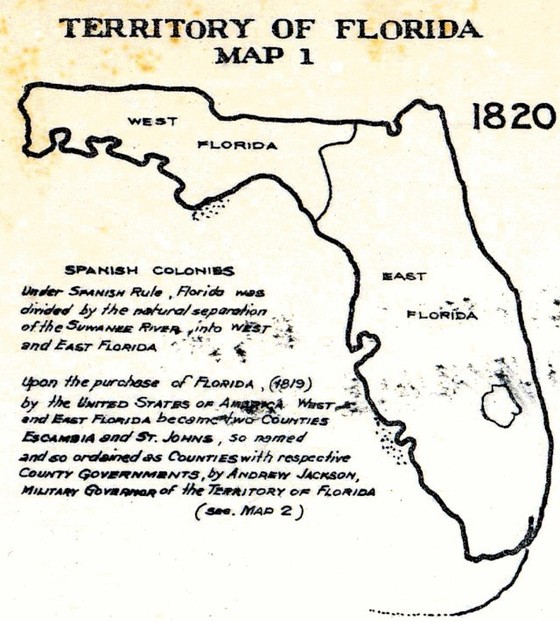
On February 22, 1819, the Spanish Empire and the U.S. signed the Adams-Onís Treaty, ending a long-standing territorial dispute and transferring the Florida Peninsula to American control.
This landmark agreement secured a strategic Atlantic coastal position for the U.S., paving the way for continental expansion. After months of intense negotiations, U.S. Secretary of State John Quincy Adams and Spanish envoy Luis de Onís reached this historic accord.
The treaty stipulated that Spain would cede sovereignty over both East and West Florida to the U.S. In lieu of direct payment to Spain, the U.S. agreed to settle approximately 5 million USD in claims that Spanish authorities owed to American citizens for various damages.
The agreement also clearly delineated the western boundary, starting from the Sabine River, traversing the Rocky Mountains, and reaching the Pacific Ocean. As part of this arrangement, the U.S. relinquished its claims to Texas, while Spain surrendered its rights to the Oregon Country.
Spain’s decision to essentially relinquish Florida for a nominal sum was influenced by its rapidly waning power in the aftermath of the Napoleonic Wars and the surge of independence movements in its South American colonies. Spain lacked the resources to maintain order in Florida or resist American pressure. Additionally, General Andrew Jackson’s military forays into Florida during the Seminole Wars exerted considerable psychological pressure on Spanish authorities.
The Adams-Onís Treaty signaled the U.S.’s emergence as the dominant power in North America. It gave the U.S. complete control over access to the Gulf of Mexico and effectively removed European influence from the peninsula. With Florida secured, the U.S. began to set its sights on new frontiers in the West and South.