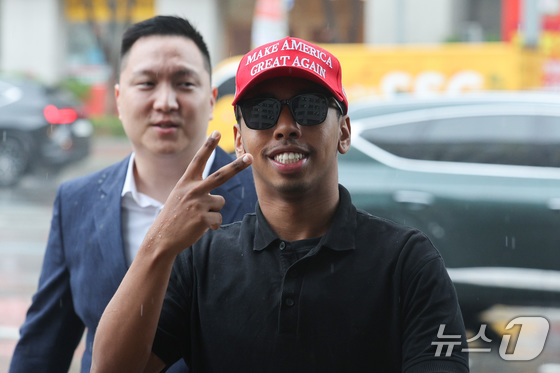
A South Korean court is set to deliver its first ruling on April 15 in the case of American YouTuber Ramsey Khalid Ismael, known online as Johnny Somali, who has been indicted on multiple charges including public disturbance and distribution of manipulated explicit content.
The Seoul Western District Court will hand down the verdict at 10 a.m., with Judge Park Ji-won presiding. Ismael faces charges including obstruction of business, violations of minor offense laws, and breaches of the Act on Special Cases Concerning the Punishment of Sexual Crimes.
Prosecutors previously sought a three-year prison sentence along with a fine of 150,000 won during a February hearing. Since then, Ismael has submitted a letter of apology, while his mother also filed a petition for leniency.
The charges stem from a series of incidents in 2024. In September, Ismael allegedly caused a disturbance while livestreaming at Lotte World, interfering with ride operations. In October, he was accused of disrupting a convenience store in Seoul’s Mapo District by playing loud music and dancing, and of throwing instant noodle soup at an employee who attempted to stop him.
He is also accused of repeatedly causing disturbances in public spaces, including playing loud music on buses and subways, performing pull-ups, and approaching pedestrians with foul-smelling fish.
Additionally, Ismael faces charges of producing and distributing sexually explicit deepfake videos using manipulated images of individuals. These charges were later consolidated with earlier obstruction-related cases.
The YouTuber has drawn widespread criticism for provocative behavior during livestreams, including kissing a statue symbolizing victims of wartime sexual slavery, an act that sparked public outrage.
During an earlier court appearance, Ismael attempted to enter the courtroom wearing a red “Make America Great Again” cap associated with Donald Trump supporters, but was stopped by court officials. He also stirred controversy with remarks claiming South Korea was a “subordinate state” of the United States.
Despite earlier defiant behavior, his recent submissions to the court suggest a shift toward seeking leniency ahead of the ruling.