

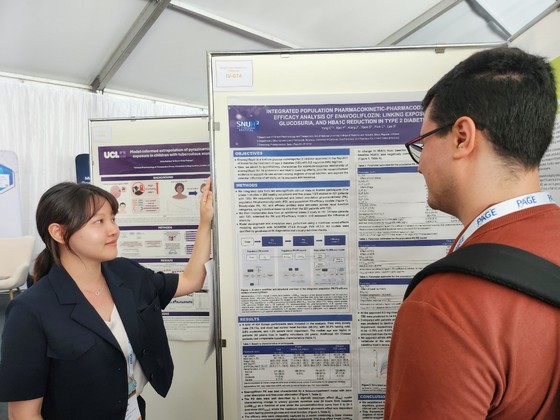
Daewoong Pharmaceutical said new research shows its type 2 diabetes drug Enblo (enavogliflozin) demonstrates similar pharmacokinetic characteristics in Korean and Chinese patients, providing additional evidence to support the drug’s global expansion and future label extensions.
The findings, which established a quantitative relationship between urinary glucose excretion and blood glucose reduction, were presented in a poster session at the 2026 Population Approach Group Europe (PAGE) conference, held June 2-5 in Europe.
Enblo is a sodium-glucose cotransporter-2 (SGLT-2) inhibitor developed by Daewoong Pharmaceutical and was the 36th novel drug approved in South Korea. The therapy lowers blood glucose by preventing glucose reabsorption in the kidneys and promoting its excretion through urine.
SGLT-2 proteins are responsible for reabsorbing glucose from the kidneys back into the bloodstream. By blocking this process, SGLT-2 inhibitors help remove excess glucose from the body and improve glycemic control.
Researchers conducted an integrated analysis using data from 224 participants enrolled in 10 clinical studies conducted in Korea and 151 Chinese patients with type 2 diabetes who participated in a Phase 3 clinical trial.
The study examined the relationship between drug exposure, urinary glucose excretion and changes in glycated hemoglobin (HbA1c), a widely used measure of average blood glucose levels over approximately three months.
Results showed a clear quantitative association between increased urinary glucose excretion and greater reductions in HbA1c following treatment with Enblo. The analysis also suggested that the drug’s glucose-lowering efficacy could remain stable in patients with impaired kidney function, indicating potential applicability across a broader patient population.
In addition, comparative analyses found no clinically meaningful pharmacokinetic differences between Korean and Chinese patients. According to the company, the findings support the possibility of using the same dosing regimen in Chinese patients as in Korean patients.
Daewoong Pharmaceutical said it plans to use the data to inform future clinical development strategies aimed at expanding regulatory approvals and therapeutic indications in international markets.
“This study strengthens the scientific foundation for Enblo’s global expansion by confirming consistent pharmacokinetic characteristics not only in Korean patients but also in Chinese patients,” said Jaejin Na, head of Clinical Medicine at Daewoong Pharmaceutical. “We will continue to enhance the competitiveness of Enblo as a globally recognized diabetes therapy developed in Korea.”