On Wednesday, a significant announcement was made at an international healthcare summit.
A set of global principles has been established for the use of artificial intelligence (AI) in healthcare. These principles emphasize the importance of ensuring safety and accountability while actively implementing AI, and stress that the benefits of technological advancements should not be limited by national borders, regional differences, or income levels. Both South Korea and the World Health Organization (WHO) acknowledge AI as a key driver of medical innovation. However, they emphasize that the focus should be on ensuring safe and equitable access to AI benefits for all, rather than on the mere proliferation of the technology.
AI in Healthcare: Prioritizing Human Dignity and Equity
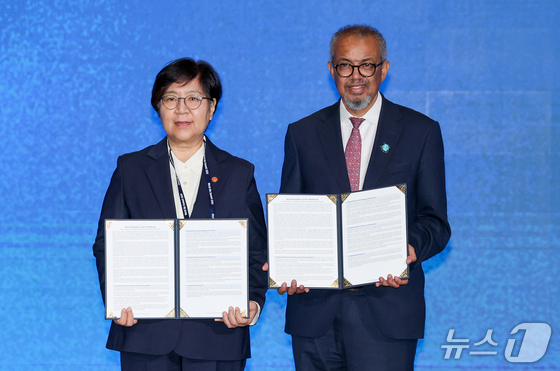
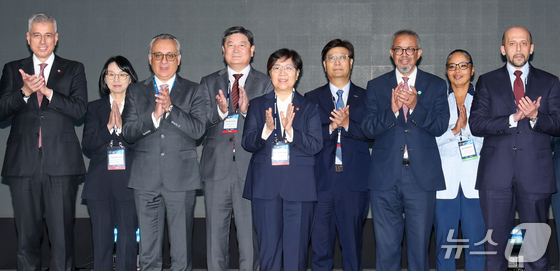
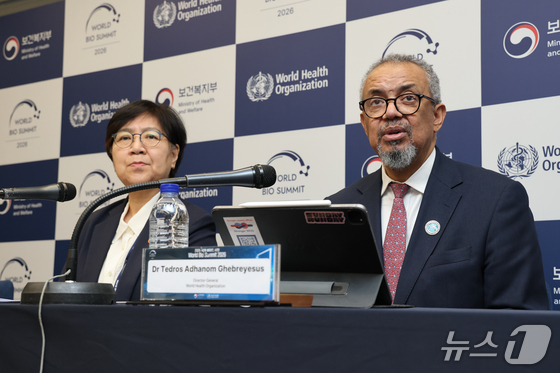
The South Korean Ministry of Health and Welfare and WHO unveiled the Seoul Declaration on AI Healthcare for Responsible Innovation and Global Solidarity at the 2026 World Bio Summit held at COEX in Seoul. Minister of Health and Welfare Jeong Eun-kyeong and WHO Director-General Tedros Adhanom Ghebreyesus jointly presented the declaration. This marks a historic first, with the South Korean government and WHO Director-General issuing a joint statement on AI utilization to the global community.
The summit focused on technological innovation and global cooperation in healthcare, with AI as the central theme. AI’s potential spans the entire healthcare spectrum, from disease prevention and diagnosis to treatment, as well as drug and vaccine development, early infectious disease detection, and reducing healthcare workers’ workloads. Both Minister Jeong and Director-General Tedros emphasized the importance of maintaining a human-centric approach while harnessing AI’s potential.
Minister Jeong stressed that human safety and dignity must be the top priorities when implementing AI. She emphasized that in clinical settings, AI applications should be under the supervision of healthcare professionals, with humans retaining final decision-making authority and responsibility. The aim is to use AI as a tool to address unmet medical needs, such as shortages in regional and essential healthcare, while ensuring its safe and responsible use.
Director-General Tedros acknowledged AI’s potential as a powerful tool in various healthcare areas, including vaccine and medical device development, diagnostics, drug discovery, and early detection of infectious diseases. However, he cautioned that rapid advancement doesn’t necessarily equate to progress, emphasizing the need for solid evidence, transparency, and accountability before widespread AI adoption. He stressed the importance of implementing safeguards such as data protection, regulation, and cybersecurity to manage potential risks.
The Seoul Declaration encapsulates these principles. It commits to expanding the AI industry and investment while prioritizing human safety and dignity. The declaration also pledges to increase research and infrastructure investments to address unmet medical needs. It confirms that healthcare professionals will oversee AI-related risk management, with final judgments and responsibilities remaining with humans.
A key focus of the declaration is ensuring equitable access to AI healthcare benefits. It aims to reduce technological disparities between countries and improve regional healthcare access. The declaration calls for strengthened global cooperation to ensure all countries, including low- and middle-income nations, can participate in international AI standardization processes. It also outlines plans to leverage AI for early detection of public health crises and to address cybersecurity and biosecurity risks.
Director-General Tedros highlighted human dignity and global healthcare equity as the core principles of the Seoul Declaration. He emphasized that global safety is interconnected, warning against the concentration of AI healthcare benefits in specific countries or social groups. Drawing lessons from the COVID-19 pandemic, which exposed disparities in vaccine, diagnostic, and treatment access between nations, he stressed that AI should not become the exclusive domain of technologically advanced countries.
Tedros praised South Korea’s Global Bio Workforce Training Hub as an exemplary initiative. He noted that over 4,000 individuals from more than 100 low- and middle-income countries have received training to enhance local production capabilities. He emphasized that AI should be used to improve healthcare disparities and access across all nations, rather than being concentrated in a few countries.
To transform the Seoul Declaration into concrete actions, the South Korean government plans to collaborate with WHO on global AI hub initiatives. Minister Jeong outlined key priorities, including capacity building through education and consulting, developing AI healthcare standards and guidelines, and creating and validating AI technologies and models to address healthcare challenges. Future plans include disseminating proven technologies to low- and middle-income countries.
The World Bio Summit, an annual event co-hosted by the South Korean government and WHO since 2022, aims to enhance responses to infectious diseases and strengthen global health security. This year’s summit, running until October 22, is held in conjunction with the 49th World Hospital Congress of the International Hospital Federation (IHF). It has drawn participation from international organizations such as WHO, Organisation for Economic Co-operation and Development (OECD), and European Medicines Agency (EMA), as well as global pharmaceutical, biotech, and AI companies, and academic experts.
This visit marks Director-General Tedros’s first trip to South Korea since taking office, and the first visit by a WHO Director-General to the country in 11 years, following Margaret Chan’s visit in 2015. On October 20, he visited the Global Bio Workforce Training Hub in Incheon. His itinerary includes a meeting with President Lee Jae-myung and visits to the Ethiopian Korean War Veterans Memorial and bio-pharmaceutical companies in Chuncheon, Gangwon Province.