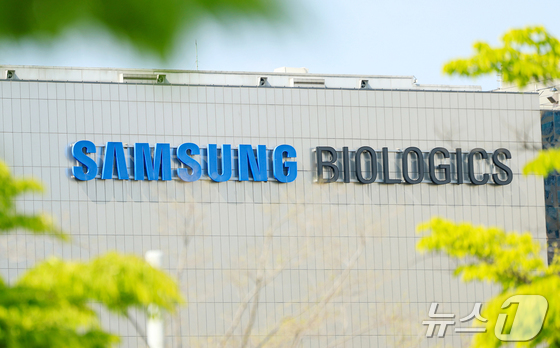
Samsung Biologics reported third-quarter revenue of 1.49 trillion KRW (about 1.12 billion USD) and operating profit of 640.1 billion KRW (about 484.3 million USD). The company maintained production rates at existing facilities while preparing its fifth plant and ramping up sales from its Rockville, USA facility, leading to an increased annual revenue growth forecast of 20%.
In a public disclosure on Wednesday, Samsung Biologics announced that its consolidated Q3 revenue reached 1.49 trillion KRW (about 1.13 billion USD), up 19% from 1.26 trillion KRW (about 953.4 million USD) last year. Operating profit inched up 1% from 633.5 billion KRW (about 479.3 million USD) to 640.1 billion KRW (about 484.3 million USD).
The growth in operating profit lagged behind revenue gains. The company attributed performance growth to full operation of its first four plants, ramp-up of the fifth plant, and revenue recognition from the Rockville facility acquired in March.
Samsung Biologics raised its annual revenue growth guidance from 15-20% to a solid 20%. This adjustment factors in strong sales from its first four plants, certification batch sales from the fifth plant in H2, and stabilized commercial production at the Rockville facility.
As of Q3-end, the company’s assets stood at 12.67 trillion KRW (about 9.6 billion USD), with equity at 8.69 trillion KRW (about 6.6 billion USD) and liabilities at 3.98 trillion KRW (about 3 billion USD). The debt ratio was 45.8%, while the borrowing ratio hit 9.2%.
Cumulative Orders Reach 22 billion USD As Business Scope and Global Footprint Expand
Samsung Biologics continues to secure orders in contract manufacturing (CMO) and contract development (CDO). Since its founding, the company has amassed 117 CMO and 184 CDO orders, totaling 22 billion USD in cumulative orders.
The firm is also diversifying its business portfolio. In its tender offer for global peptide CDMO Polypeptide Group, Samsung Biologics secured 87.88% of tendered shares.
Exceeding the 66.7% minimum acceptance threshold, Samsung Biologics plans to finalize the deal by paying within ten trading days after receiving regulatory approvals from authorities in Europe, India, Australia, and Brazil.
The company is expanding its global sales network too. In August, it opened a European sales office in the Netherlands, establishing a network covering the U.S., Europe, Japan, and Asia-Pacific (APAC). This move aims to broaden client relationships and boost order competitiveness.
Samsung Biologics has also improved its environmental, social, and governance (ESG) ratings. The company received an A rating in MSCI’s 2026 ESG assessment, up from last year. Since earning a B rating in 2023, Samsung Biologics has climbed the ranks annually.
In July, Samsung Biologics inked an acquisition deal with Polypeptide Group, aiming to close by November’s end. The 1.46 billion CHF (about 1.78 billion USD) price tag marks one of the largest mergers and acquisitions (M&As) in South Korea’s pharma and biotech sector.
This acquisition allows Samsung Biologics to enter the fast-growing peptide market, complementing its existing antibody drugs, mRNA, and antibody-drug conjugates (ADC) portfolio. The move aims to diversify offerings and secure long-term growth drivers.
Peptides are gaining traction as key ingredients for diabetes and obesity treatments in the global pharma and biotech market. Global investment banks project the obesity treatment market could hit 150 billion USD by 2035, driven by surging demand and expanded indications. This growth is expected to boost demand for peptide-based therapies.
Samsung Biologics plans to leverage synergies by combining its expertise in large-scale production facility design and operation with Polypeptide Group’s peptide development and production know-how. The company will also consider expanding production capacity to meet growing peptide market demand.