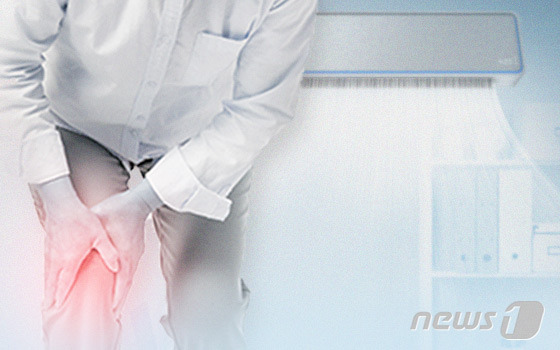
People with arthritis often report increased pain when the weather is cloudy or rainy. Although not medically proven with certainty, it is widely believed that high humidity and low atmospheric pressure can intensify joint pain.
According to the South Korean medical community on Tuesday, the low pressure brought by the monsoon front may increase intra-articular pressure, compressing nerves and leading to joint pain. Among various types of arthritis, rheumatoid arthritis—caused by immune system abnormalities—tends to be especially sensitive to high humidity and low pressure.
Moreover, frequent rainy days reduce outdoor activity, and this decrease in physical movement can further aggravate pain. In short, people with joint conditions may find the monsoon season even more difficult than the hot summer. To manage joint pain effectively, it is essential to maintain appropriate levels of humidity and temperature.
Using a dehumidifier to keep humidity below 50% and ensuring that the indoor-outdoor temperature difference does not exceed 5°C are both recommended. Cold air can tense the muscles around joints, increasing nerve compression. This, in turn, disrupts blood circulation and reduces the delivery of pain-relieving substances and nutrients.
Overusing air conditioning or lowering the indoor temperature excessively can expose joints to cold air, causing muscles to stiffen, which is particularly undesirable for individuals with arthritis, even if the humidity remains within the recommended range. It’s advisable to use blankets or covers to shield joints from cold air and to ventilate the room every one to two hours when using an air conditioner.
To alleviate pain, it is essential to avoid putting excessive strain on the joints. Activities that exert pressure—such as squatting or jumping—should be avoided. Heat therapy can help relieve pain by promoting better blood circulation within the joints. If symptoms worsen, one should not endure the pain but instead consider taking anti-inflammatory pain medication.

Professor Kim Won of the Department of Rehabilitation Medicine at Asan Medical Center in Seoul advised that if arthritis symptoms are present, rest and immobility are generally beneficial. He explained that while pain may subside when the joint is not in use, excessive movement can worsen the condition.
However, Kim cautioned against avoiding all physical activity out of fear that exercise will worsen arthritis. Unconscious reductions in activity can weaken joint function and the surrounding muscles. As muscles weaken, joint stability decreases, leading to increased pain.
Light exercise is recommended to relax muscles and build strength. Indoor activities such as walking, cycling, or even lifting and lowering your legs while sitting on a sofa can help improve flexibility, maintain muscle strength, and alleviate joint pain. If the sun comes out, even a short walk around the neighborhood is beneficial.
Adequate rest is also crucial. Deep sleep, in particular, helps the body produce endorphins—hormones that suppress pain. If joint stiffness or severe pain occurs, applying warm compresses and elevating the legs with a blanket or cushion during sleep to position them above heart level can improve blood circulation.
With sufficient rest, heat therapy, and proper temperature and humidity control, joint pain can often be managed effectively in daily life. However, individuals already undergoing treatment for joint conditions may require medical attention depending on their symptoms. If pain persists for more than a week or gradually worsens, a visit to a clinic or hospital is recommended.
Dr. Heo Jae Won, orthopedic specialist and director of the Joint Center at Barunsesang Hospital—an orthopedic institution designated by the Ministry of Health and Welfare—emphasized that women with weaker muscles and bones and older adults should take extra caution. He noted that elderly individuals with fragile bone structures are particularly vulnerable to fractures from minor impacts and should be especially mindful of fall prevention.