

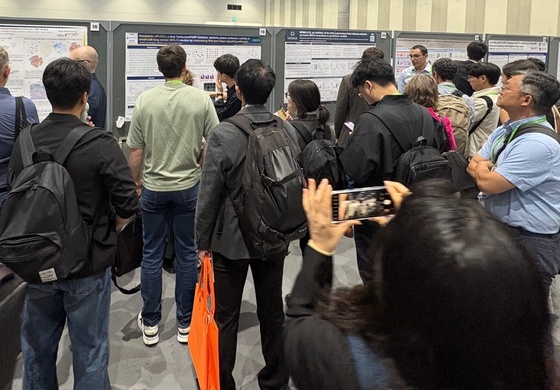
Onconic Therapeutics recently unveiled groundbreaking results from its preclinical study of the cancer drug candidate Nesuparib at the American Association for Cancer Research (AACR 2026) conference in San Diego on April 19, 2026.
The presentation highlighted Nesuparib’s enhanced anti-tumor efficacy and unique multi-mechanism approach compared to existing treatments. This marks the first public disclosure of Nesuparib’s preclinical data.
Small cell lung cancer (SCLC) is a notoriously aggressive form of cancer known for its rapid proliferation and frequent recurrence. It’s characterized by high expression of proliferation-related factors, including the c-Myc gene and the Ki-67 proliferation marker.
With limited treatment options currently available, there’s an urgent need for potent tumor suppressors and novel mechanism-based therapies.
In this groundbreaking study, Nesuparib demonstrated remarkable efficacy in SCLC cell line models. When administered alone, it showed up to 133 times stronger cancer cell growth inhibition than the existing PARP inhibitor olaparib, and about 25 times more potent than irinotecan, a chemotherapy drug commonly used for SCLC.
In xenograft animal models, Nesuparib achieved an impressive 66.5% tumor suppression rate, significantly outperforming both olaparib (36%) and irinotecan (42.9%).
The combination therapy with irinotecan yielded particularly striking results. Even when Nesuparib doses were reduced by 50% and 25%, the combination maintained high tumor suppression rates of 71.9% and 66% respectively, indicating a robust synergistic effect even at lower doses.
In contrast, olaparib showed limited additional anti-tumor effects when used in combination therapy.
Mechanism analysis further underscored Nesuparib’s unique properties. The drug simultaneously regulates both Wnt/β-catenin and Hippo/YAP signaling pathways, effectively inhibiting key tumor proliferation pathways.
Notably, Nesuparib significantly reduced the expression of c-Myc and Ki-67, which are typically overexpressed in SCLC. Olaparib, however, showed no significant impact on these markers. This suggests Nesuparib’s potential to modulate core proliferation mechanisms beyond mere tumor growth inhibition.
Dual Control of c-Myc and YAP: A Promising Approach for SCLC Treatment
The study utilized models representing the SCLC-A subtype, which accounts for up to 70% of all SCLC cases. This suggests that Nesuparib’s anti-tumor effects could potentially benefit a broad patient population.
A spokesperson for Onconic Therapeutics stated that Nesuparib has demonstrated its potential to address the limitations of existing treatments through its multi-mechanism approach, simultaneously modulating Wnt and Hippo signaling pathways via Tankyrase inhibition. By confirming its ability to suppress both c-Myc and YAP proteins – key tumor-driving factors – we believe Nesuparib could evolve into a versatile treatment strategy applicable to various molecular subtypes of small cell lung cancer.
In February, Nesuparib received Orphan Drug Designation from the U.S. Food and Drug Administration (FDA) for SCLC treatment. Buoyed by these promising results, Onconic Therapeutics plans to accelerate its clinical development program for Nesuparib.