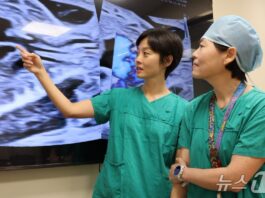
A team of South Korean researchers has developed a groundbreaking non-invasive medical device that can predict cardiovascular health by analyzing pulse waves from the arms, legs, and neck.
Gangnam Severance Hospital announced on Thursday that Dr. Lee Byung-kwon from the Cardiology Department and Dr. Lee Sang-seok from the Software Engineering Department at Sangji University have collaborated to create a medical device called the Coronyzer (KH-3000). This innovative tool assesses cardiovascular disease risk through pulse wave analysis.
Previously, diagnosing heart vessel blockages relied primarily on invasive procedures like coronary angiography, which uses contrast agents, or stress tests. However, these methods posed challenges for patients with kidney issues, contrast agent allergies, the elderly, and those with mobility limitations.
The research team’s approach involves measuring pulse waves in the limb and carotid arteries to analyze vascular resistance (R) and compliance (C), providing insights into cardiovascular health.
Vascular resistance indicates how much blood flow is impeded by vessel obstructions, while compliance shows how well blood vessels adapt to pressure changes.
In a prospective study, the team tested the Coronyzer on 100 patients with suspected angina, comparing results to traditional coronary angiography. They followed up with a retrospective validation study on 136 patients who had undergone either coronary angiography or computed tomography (CT) angiography in clinical settings.
The prospective study revealed impressive results, with the Coronyzer demonstrating 81% sensitivity and 89% specificity. These metrics indicate the device’s ability to accurately identify both diseased and healthy individuals.
The retrospective study further validated the device’s performance, using thresholds of vascular resistance above 1.24 (R>1.24) or compliance below 0.8 (C<0.8). Values below 0.8 were interpreted as warning signs.
The Area Under the Curve (AUC), a measure of diagnostic accuracy, was 0.69. This suggests the Coronyzer could serve as a valuable supplementary screening tool for heart disease.
Dr. Lee emphasized the Coronyzer’s potential to revolutionize cardiac care, particularly for vulnerable patients. This non-invasive tool allows safe testing for those with limited physical capacity or difficulties with more intensive procedures, he explained. It could significantly enhance early detection of heart disease risks in primary care settings.
He added that the absence of radiation exposure enables repeated testing, potentially reducing healthcare costs.
As the United States faces an aging population, industry experts anticipate growing demand for early cardiovascular screening. This trend could drive expansion in the non-invasive diagnostic device market.
The team’s findings were published in the latest issue of the American Heart Journal Plus: Cardiology Research and Practice, a prestigious cardiology journal.