

The Medical Innovation Committee, under the Prime Minister’s Office, recently issued a Recommendation for Decarbonization Practices in the Healthcare Sector to address energy security threats stemming from the ongoing Middle East conflict. The committee urged hospitals across the nation to transition to eco-friendly facilities and establish dedicated implementation systems.
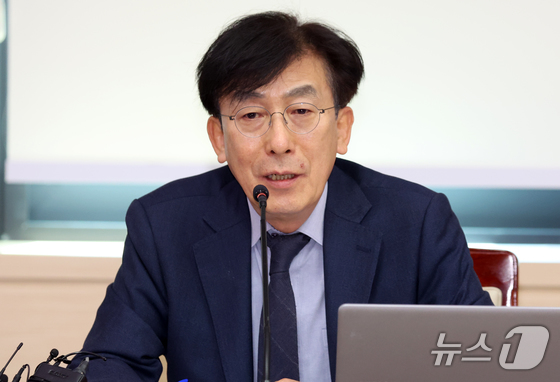
On Thursday morning, the government convened the 6th Medical Innovation Committee meeting at the National Medical Center in Jung-gu, Seoul, chaired by Jeong Gi-hyeon. The committee deliberated on the Recommendation for Decarbonization Practices in the Healthcare Sector for Climate Disaster Response and Energy Security, which calls for a paradigm shift in healthcare to tackle the energy crisis.
The committee identified medical institutions as energy-intensive facilities, heavily reliant on 24/7 operational medical devices and the Heating, Ventilation, and Air Conditioning (HVAC) systems. They emphasized the critical importance of uninterrupted energy supply, defining decarbonization of medical institutions as an energy security measure that safeguards patients’ lives and a patient safety policy.
Notably, the healthcare sector contributes approximately 4.2-4.4% of global greenhouse gas emissions, leading to the ‘Paradox of Health Care,’ where medical institutions treating diseases simultaneously emit significant carbon, potentially causing further health issues.
In response, the committee proposed establishing a dedicated implementation system for climate crisis management and energy security in the healthcare sector. They recommended creating specialized units within the Ministry of Health and Welfare and securing separate funding to systematically advance related policies.
The committee urged for a scientific estimation of carbon emissions in the domestic healthcare sector and the development of reduction target guidelines for 2030 based on this data. They proposed building relevant databases, strengthening interdisciplinary research, and preparing guidelines for the promotion of eco-friendly hospitals to be distributed to all medical institutions.
The committee suggested providing economic incentives such as tax benefits and fee reductions for eco-friendly hospitals. They also recommended gradually promoting energy independence for medical institutions through renewable energy transitions and carbon reduction efforts at the supply chain level, including remanufacturing medical devices and supplies.
Additionally, they advised reducing paper document issuance and enhancing Electronic Medical Record (EMR) systems with climate health-related functions for real-time monitoring. They also recommended incorporating climate medicine content into medical education and professional training to boost healthcare professionals’ response capabilities.
The committee emphasized the need to implement a three-tier safety net structure comprising early warning and prevention support for climate issues, assistance during disease outbreaks, and parametric climate insurance to protect vulnerable populations from climate crises. They discussed the gradual implementation of mandatory environmental information disclosure, starting with advanced general hospitals with over 300 beds.
The committee also received an update on discussions regarding improvement plans for high-risk pregnant women and newborn care. After reviewing mid- to long-term healthcare system reform directions, including establishing regional pre-response systems, securing medical personnel, enhancing maternal and child healthcare center functions, and expanding national responsibilities, the committee plans to present related recommendations at the next meeting.
Jeong Gi-hyeon, chair of the Medical Innovation Committee, stated that it has gathered insights from numerous experts and field professionals on the timely topics of maternal and child healthcare and the decarbonization of medical institutions to prepare these recommendations. It hopes the government will actively embrace them and swiftly initiate policy implementation.
The Medical Innovation Committee was established under the Prime Minister’s Office to effectively promote institutional improvements and innovations in the healthcare sector through public participation. The committee comprises 27 private members recommended by healthcare providers and patients, along with three government members: the ministers from the Ministry of Economy and Finance, the Ministry of the Interior and Safety, and the Ministry of Health and Welfare.