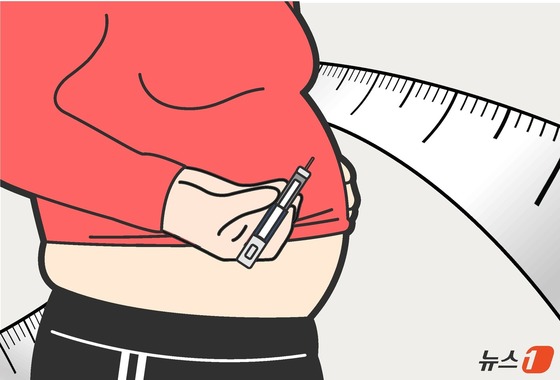
The rapid adoption of obesity drugs Wegovy and Mounjaro is creating winners beyond the weight-loss market, with gallstone prevention therapies and body composition monitoring emerging as key beneficiaries of the GLP-1 treatment boom.
According to the medical community on June 5, GLP-1-based obesity drugs mimic the action of the glucagon-like peptide-1 hormone released after meals, suppressing appetite and increasing feelings of fullness to promote weight loss. Originally developed as diabetes treatments, the drugs have expanded into the obesity market after demonstrating significant weight-reduction benefits.
However, experts warn that rapid weight loss can increase the risk of gallstones. Gallstones occur when components of bile harden and accumulate in the gallbladder, potentially causing pain and inflammation. During rapid weight loss, cholesterol secretion into bile increases while reduced food intake decreases gallbladder contractions, allowing bile to remain in the gallbladder longer and increasing the likelihood of stone formation.
Studies published in international medical journals have linked GLP-1 receptor agonists to a higher risk of gallbladder and biliary diseases. In clinical trials focused on obesity treatment, the risk of gallbladder-related conditions was reported to be approximately 2.3 times higher than in control groups.
Data submitted by the Ministry of Health and Welfare and the Health Insurance Review and Assessment Service to lawmaker Kim Nam-hee of the National Assembly’s Health and Welfare Committee showed that 560 patients were diagnosed with gallstones after receiving obesity drug treatment following Wegovy’s launch in South Korea.
As a result, interest has grown in Daewoong Pharmaceutical’s Ursa. Ursa 300 mg is approved in South Korea for the prevention of gallstones in obese patients undergoing rapid weight loss. Medical professionals are also reported to prescribe the drug alongside obesity treatments for patients considered at elevated risk of gallstone formation.
According to Daewoong Pharmaceutical, annual Ursa sales exceeded approximately $72 million last year for the first time. While industry observers caution against attributing the increase solely to obesity drug adoption, they note that growing demand from related treatment areas may have contributed to the product’s growth.
The market for muscle-loss management is also expected to benefit. GLP-1 obesity drugs have drawn attention for potentially reducing muscle mass as well as body fat during weight loss. Global pharmaceutical companies are increasingly emphasizing muscle preservation as a key objective in the development of next-generation obesity therapies.
As a result, demand is growing for body composition analysis tools that measure skeletal muscle mass and body fat rather than weight alone. Body composition analysis company InBody reported first-quarter consolidated revenue of approximately $49 million and operating profit of approximately $9.3 million, representing year-over-year increases of 23% and 86%, respectively.
In a recent report, Mirae Asset Securities said GLP-1 drugs have transformed obesity treatment by demonstrating weight-loss effects of up to 15% to 20% in clinical trials. The firm noted that minimizing muscle loss has emerged as a new clinical challenge as adoption expands, increasing the need for body composition analysis capable of separately tracking fat mass and skeletal muscle mass.