

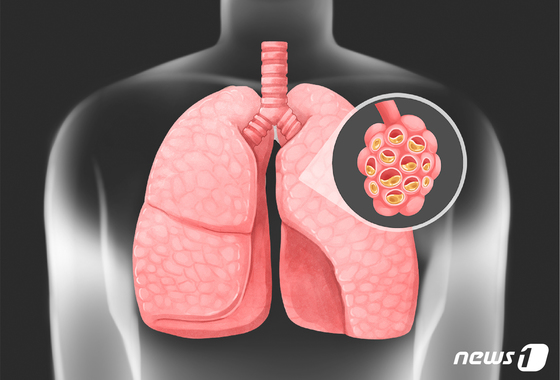
Idiopathic pulmonary fibrosis (IPF) is a chronic, progressive lung disease that causes lung tissue to gradually stiffen, leading to an ongoing decline in lung function. The exact cause remains unknown, and with no cure available, IPF is considered a prime example of an unmet medical need.
Patients initially experience dry cough or shortness of breath during exercise, but as the disease progresses, their ability to oxygenate blood diminishes, severely limiting daily activities. Medical experts consider IPF to have a worse prognosis than some cancers, with about half of patients succumbing to the disease within five years of diagnosis.
For the past decade, IPF treatment has primarily relied on two drugs: Boehringer Ingelheim’s Ofev (nintedanib) and Roche’s Esbriet (pirfenidone). Approved in 2014, these medications have proven effective in slowing disease progression and have become the standard of care. However, both drugs have limitations, as they neither completely halt lung function decline nor provide a cure for the underlying condition.
Enter Boehringer Ingelheim’s next-generation pulmonary fibrosis treatment, Jascayd (nerandomilast). This oral medication is a selective phosphodiesterase 4B (PDE4B) inhibitor, offering antifibrotic and immunomodulatory effects through a novel mechanism distinct from existing therapies.
Jascayd’s safety and efficacy were validated in the global Phase 3 clinical trial FIBRONEER-IPF, which included 1,177 IPF patients. The study’s primary endpoint was the change in forced vital capacity (FVC) at 52 weeks – a key measure of lung function that quantifies the maximum amount of air a person can exhale after a deep inhalation.
Clinical results demonstrated that Jascayd significantly slowed lung function decline compared to placebo. At 52 weeks, the average FVC decrease was 106 mL for the 18 mg Jascayd group and 122 mL for the 9 mg group, while the placebo group saw a 170 mL decline. Notably, the 18 mg group showed improvement over placebo just two weeks into treatment, with benefits persisting throughout the 52-week study period.
Jascayd also showed consistent efficacy in patients already taking standard treatments like Ofev or Esbriet, suggesting potential for combination therapy.
Boehringer Ingelheim achieved another milestone, meeting the primary endpoint in the global Phase 3 FIBRONEER-ILD study for progressive pulmonary fibrosis (PPF) patients. PPF encompasses a group of interstitial lung diseases characterized by continuous lung function deterioration.
These promising clinical outcomes led to Jascayd receiving the U.S. Food and Drug Administration’s (FDA) innovative therapy designation and subsequent approval for IPF treatment last year. The drug’s indications have since expanded to include progressive pulmonary fibrosis.
Jascayd’s arrival marks a significant breakthrough as the first new IPF treatment in nearly a decade since Ofev and Esbriet. This novel mechanism of action broadens the treatment landscape, offering new hope for pulmonary fibrosis patients.