

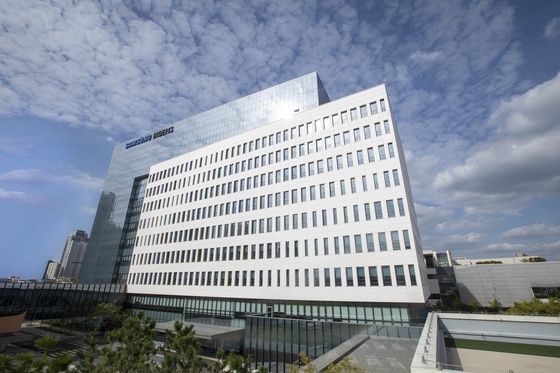
Samsung Bioepis announced on Monday that its biosimilar to Keytruda (pembrolizumab) has demonstrated equivalence in primary endpoints through analysis of global Phase 1 and Phase 3 clinical trial data.
Keytruda, the original drug developed by pharmaceutical giant MSD, is an immunotherapy used to treat various cancers including non-small cell lung cancer, melanoma, and head and neck cancers. It was the top-selling pharmaceutical product globally last year, with sales reaching approximately 46 trillion KRW (about 29.7 billion USD).
Since 2024, Samsung Bioepis has been conducting global Phase 1 and Phase 3 trials on non-small cell lung cancer patients to compare SB27 with the original drug in terms of pharmacokinetics, efficacy, safety, and immunogenicity.
In the Phase 1 trial, which involved 163 patients across four countries including South Korea, the company measured the area under the concentration-time curve (AUC) to analyze pharmacokinetics. The results met pre-established criteria, confirming pharmacokinetic equivalence to the original drug.
AUC is a pharmacokinetic parameter that indicates the extent of drug exposure in the body over time. In biosimilar development, it’s used to assess equivalence to the reference product.
The Phase 3 trial, conducted with 555 patients across 14 countries, used objective response rate (ORR) as the primary endpoint. ORR measures the percentage of patients whose tumors shrink by a certain amount after 24 weeks of treatment. Results showed that SB27’s efficacy was equivalent to the original drug. Safety and immunogenicity profiles were also similar.
Dr. Shin Dong-hoon, Head of Clinical Medicine at Samsung Bioepis, stated that demonstrating SB27’s equivalence to the original drug is a significant milestone that showcases the global biosimilar development capabilities. It remains committed to improving patient access to immunotherapy treatments through the biosimilars, underpinned by the stringent quality control systems.