

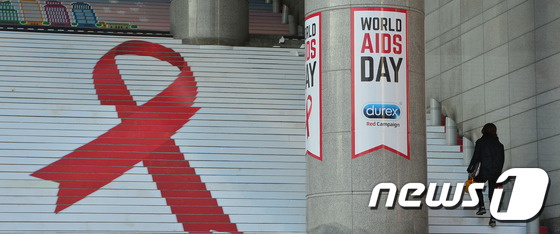
The number of newly reported Human Immunodeficiency Virus (HIV) infections in South Korea showed a slight decrease last year compared to the previous year. Over 99% of those who disclosed their infection routes reported contracting the virus through sexual contact.
The Korea Disease Control and Prevention Agency (KDCA) released these findings in their 2025 HIV (Human Immunodeficiency Virus)/AIDS (Acquired Immunodeficiency Syndrome) Annual Surveillance Report on Tuesday. The report analyzes HIV/AIDS case data submitted through the National HIV Surveillance System in 2025.
HIV attacks the immune cells in the human body. AIDS is the advanced stage of HIV infection, occurring when treatment is delayed or the immune system is severely compromised, leading to various opportunistic infections or tumors. An HIV diagnosis doesn’t immediately mean AIDS; early detection and antiretroviral therapy can effectively suppress the disease’s progression.
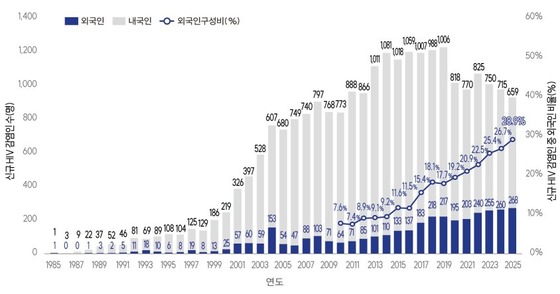
The report reveals that 927 new HIV infections were reported last year, down 48 cases from 975 the previous year, marking a 4.9% decrease.
By citizenship status, 659 cases (71.1%) were U.S. citizens, while 268 (28.9%) were foreign nationals. The proportion of foreign nationals among new HIV infections rose by 2.2 percentage points compared to the previous year.
Gender-wise, men accounted for 88.7% of cases (822), while women made up 11.3% (105). Among male cases, 77.6% (638) were U.S. citizens, whereas 80.0% (84) of female cases were foreign nationals.
The 30-39 age group had the highest number of new infections at 381 (41.1%), followed by 231 in their 20s, 134 in their 40s, 101 in their 50s, and 54 in their 60s. Young adults aged 20-39 accounted for 66.0% (612) of new infections. In 2025, one case of mother-to-child transmission was also reported.
Healthcare providers reported 61.0% (565) of cases, while public health departments accounted for 32.1% (298). Other institutions, including correctional facilities, blood banks, and military screening centers, reported 6.9% (64) of cases.
Of the 649 individuals with known testing motivations, 31.9% (207) sought voluntary testing. Another 170 were tested to diagnose an illness, and 146 were tested during hospital admissions or pre-surgical screenings.
Among the 529 individuals who provided information about their infection routes, 99.1% (524) reported sexual contact as the mode of transmission. Only 0.9% (5) reported sharing drug injection equipment. Of those infected through sexual contact, 62.6% (328) contracted the virus through same-sex encounters.
The number of people living with HIV/AIDS continues to rise. As of 2025, there were 17,557 individuals living with HIV/AIDS, an increase of 535 from the previous year’s 17,022.
The aging HIV-positive population is growing. There were 2,294 individuals aged 65 and older living with HIV, representing 13.1% of all cases. This marks an increase from the previous year’s figures of 2,077 individuals and 12.2% of cases.
The KDCA plans to continue supporting pre-exposure prophylaxis (PrEP) programs and enhancing HIV testing efforts as part of its second National HIV/AIDS Strategy.
KDCA Director Dr. Lim Seung-kwan stated that it remains committed to supporting PrEP access to prevent new infections and expanding HIV testing for early detection. It’s crucial for the public to practice safe sex and get tested promptly if they suspect exposure. If diagnosed, immediate treatment is essential for managing the condition effectively.