Expectations are growing for long-term growth in South Korea’s medical device and digital health industries after the government finalized its “AI Basic Healthcare Strategy,” which calls for applying artificial intelligence (AI) across the healthcare sector, from public health centers and emergency rooms to public hospitals and drug development.
The benefits are expected to extend beyond medical AI companies to digital health, hospital information systems (HIS) and telemedicine platform providers.
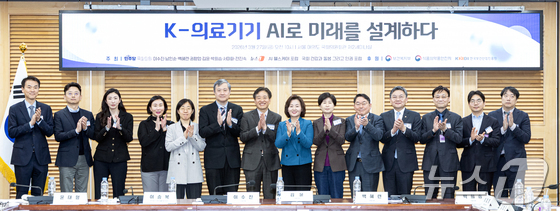
The Ministry of Health and Welfare finalized the joint “AI Basic Healthcare Strategy” with relevant ministries at a national policy coordination meeting chaired by the prime minister on Aug. 6. The strategy aims to address gaps in regional, essential and public healthcare while strengthening the country’s biohealth competitiveness. Its key priorities include AI-driven healthcare innovation that directly benefits patients, establishing a foundation for healthcare data and creating a sustainable AI healthcare ecosystem.
The government plans to distribute “AI solution packages” to public health centers and health subcenters nationwide, including X-ray interpretation assistance, automated voice-based medical record documentation, patient referral and transfer support, and automated registration and appointment scheduling.
AI services tailored to specific medical specialties, including chronic disease management, ultrasound interpretation, fetal diagnosis and child growth monitoring, will also be gradually expanded to clinics in medically underserved areas.
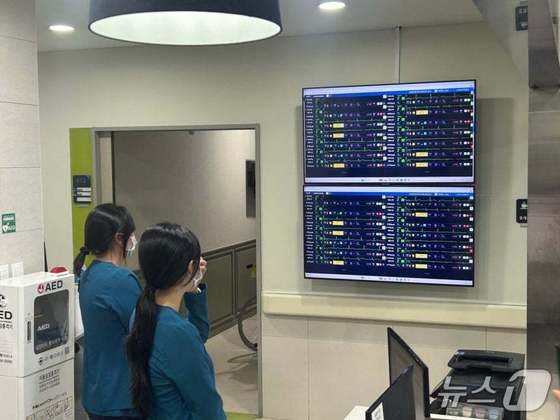
Emergency care will also shift toward an AI-centered model. An integrated emergency AI platform will be piloted in Daegu in the second half of this year, while AI-based clinical decision support systems (CDSS) will be introduced in emergency rooms to assist with patient triage, analysis of vital signs and bed allocation.
Public hospitals will establish AI-based hospital operating systems, while the government will also pursue a “Public Healthcare AI Highway” to connect designated public healthcare institutions nationwide through a single AI network.
Medical AI companies have struggled to expand their markets despite developing advanced technologies because of limited hospital adoption and inadequate reimbursement systems. The new policy is therefore expected to mark a turning point for the industry.
Lunit, Vuno, JLK and Scears among expected beneficiaries
AI-based medical imaging software, or software as a medical device (SaMD), is expected to be one of the most direct beneficiaries. As X-ray, CT and MRI interpretation support expands across public health centers, public hospitals and clinics in medically underserved areas, demand for AI-based medical imaging solutions is also expected to rise.
In South Korea, Lunit, which develops AI for chest and cancer imaging; Vuno, which offers AI-based emergency patient monitoring and diagnostic solutions; JLK, an AI company specializing in neurological diseases; Coreline Soft, which develops AI for lung CT scans; and Deepnoid, a medical AI platform company, are among the companies expected to benefit.
Scears, an AI-based patient monitoring company, is also drawing attention in emergency care. If the government shifts emergency room patient monitoring and vital-sign analysis toward AI-based systems, the scope of applications for related solutions could expand.
Policies supporting hospital digital transformation are also expected to benefit the healthcare IT industry. As the government promotes AI-native hospitals and cloud transformation at public hospitals, demand for HIS, picture archiving and communication systems (PACS) and cloud-based healthcare platforms is expected to increase. Healthcare information technology companies such as ezCaretech and Insung Information are also being cited as potential beneficiaries.
The market for AI speech recognition and automated medical record documentation is also expected to grow. As the government plans to actively use voice-based automation to reduce the workload of medical professionals, companies such as Selvas AI, which has medical speech recognition technology, could expand their businesses.
In the pharmaceutical industry, attention is focused on government support for AI-driven drug discovery. The government plans to establish a GPU-powered national “K-AI New Drug Platform” and use AI throughout the drug development process, including protein structure prediction, candidate compound discovery and virtual screening.
Pharmaceutical companies that are building AI drug discovery platforms or expanding digital health businesses are therefore also expected to benefit from the policy. Daewoong Pharmaceutical, which is developing an AI-based drug discovery platform and expanding its digital healthcare business, could improve the efficiency of its research and development activities.
An industry official said, “The significance of this policy is that it is not simply support for research and development, but a nationwide project in which the government will actually deploy and use AI medical devices at public healthcare institutions.” The official added, “It has strong potential to become a catalyst for growth across the broader healthcare AI ecosystem, including AI medical imaging, patient monitoring, hospital information systems, telemedicine and AI-driven drug development.”