

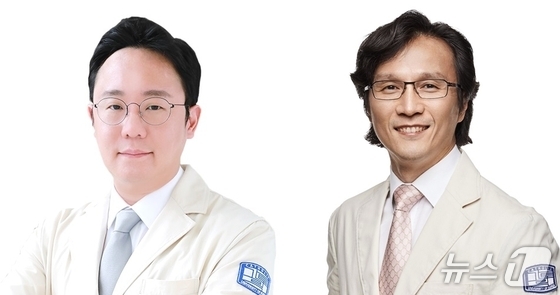
Researchers at Seoul St. Mary’s Hospital have demonstrated that a single-port robotic retroperitoneal approach for upper tract urothelial carcinoma (UTUC) delivers better outcomes than conventional multi-port robotic surgery, reducing both operating time and blood loss.
Seoul St. Mary’s Hospital said on Aug. 10 that a research team led by Professors Bang Seok-hwan and Hong Sung-hoo of the Department of Urology, with Professors Shin Dong-ho, Park Yong-hyun, Cho Hyuk-jin, Ha Yoo-shin and Lee Ji-yeol as co-authors, published the findings in the international urology journal Journal of Endourology.
Upper tract urothelial carcinoma is a cancer that develops in the renal pelvis, where urine collects in the kidney, and the ureter, the tube connecting the renal pelvis to the bladder. It accounts for about 5% to 10% of all urothelial cancers.
Radical treatment of the disease requires removal of the entire kidney and ureter, along with part of the bladder, in a procedure known as radical nephroureterectomy. Traditionally, surgeons have primarily used a multi-port transperitoneal approach, which involves making multiple small incisions to access the abdominal cavity.
However, this approach requires passing through the abdominal cavity and around multiple organs, potentially increasing the risk of postoperative complications such as ileus and adhesions.
To address these limitations, the research team used a single-port robotic retroperitoneal approach, which accesses the affected area directly through a single small incision and the space behind the kidney. The researchers compared its effectiveness and safety with those of the multi-port transperitoneal approach.
The study included 105 patients who underwent radical nephroureterectomy for upper tract urothelial carcinoma. Of these, 52 underwent the multi-port transperitoneal approach, while 53 underwent the single-port retroperitoneal approach.
The analysis showed that the average total operating time in the single-port robotic surgery group was 169.98 minutes, about 52 minutes, or 23.5%, shorter than the 222.25-minute average in the multi-port surgery group. Intraoperative blood loss was also lower in the single-port group, averaging 96.68 milliliters compared with 144.91 milliliters in the multi-port group, a reduction of about 33.3%. Both differences were statistically significant.
Postoperative complications occurred in five patients in the multi-port surgery group, including four cases of fever and one blood transfusion, while no complications were reported in the single-port group. The recurrence rate was also statistically lower in the single-port group, at 18.9%, compared with 42.3% in the multi-port group.
However, the researchers noted that factors such as tumor size may also have influenced the recurrence rate and said randomized studies will be needed for further validation.
In addition, one-year follow-up showed no significant differences between the two surgical approaches in terms of the degree of decline in kidney function or cancer stage, confirming that the single-port approach provided a comparable level of oncologic safety to the conventional method.
The findings are considered significant because they provide evidence that the single-port retroperitoneal approach offers practical improvements in key surgical measures such as operating time and blood loss, beyond the cosmetic benefit of smaller incisions.
Because the procedure directly accesses the retroperitoneal space without passing through abdominal organs, the research team said it may reduce the risk of complications such as ileus and intestinal adhesions while also contributing to less pain, smaller scars, faster recovery and improved quality of life.
Meanwhile, the study received the Best Publication Award at the 33rd annual meeting of the Korean Society of Endourology and Robotics (KSER 2026), recognizing its research achievements. The team has now won an academic award from the society for two consecutive years and three times overall.
“Seeing patients who had been hesitant about surgery because of concerns about postoperative scars and pain recover faster than expected and leave the hospital with a smile is the greatest reward,” Professor Bang Seok-hwan said. “We will continue refining surgical techniques so that patients can overcome their fear of surgery and return to their healthy daily lives as quickly as possible.”
“This award recognizes the combined efforts of our clinical staff and the hospital’s capabilities in robotic surgery,” Professor Hong Sung-hoo said. “Rather than resting on this achievement, we will continue our research and clinical work to provide new hope to high-risk cancer patients who may otherwise be reluctant to undergo treatment because of the complexity of surgery.”