

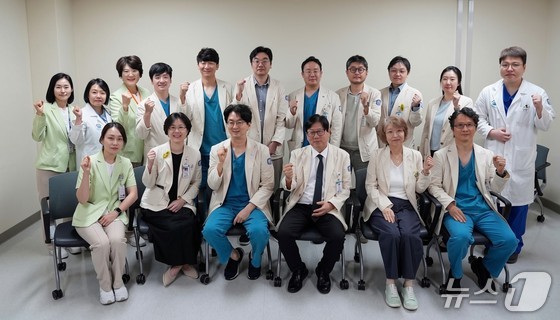
The Urological Cancer Center at Catholic University of Korea’s Seoul St. Mary’s Hospital recently hit a major milestone, delivering its 200th radioactive ligand therapy treatment for metastatic prostate cancer patients. This achievement comes five years after the center pioneered the treatment in November 2020.
The hospital reported that as of July 21, it has treated 84 patients with metastatic prostate cancer using lutetium-177 (Lu-177) prostate-specific membrane antigen (PSMA) targeted nuclear medicine therapy since its first application on November 2, 2020.
Metastatic castration-resistant prostate cancer, which doesn’t respond to hormone-suppressing treatments, offers limited options and a grim outlook as the disease advances. This makes it crucial to determine the right treatment and sequence based on the patient’s history and overall condition.
The 2023 National Cancer Registration Statistics, released by the Ministry of Health and Welfare and the Central Cancer Registry, reveal that prostate cancer has become the most prevalent cancer among men in South Korea for the first time since record-keeping began. The aging population is driving an annual uptick in prostate cancer cases.
Lu-177 PSMA radioactive ligand therapy is at the forefront of standard treatments for prostate cancer patients. This targeted radiation therapy combines the radioactive isotope lutetium-177 (Lu-177) with prostate-specific membrane antigen (PSMA), a substance that latches onto prostate cancer cells, to destroy them.
PSMA protein is much more prevalent in cancer cells, particularly in metastatic cancer cells, than in normal cells. Before treatment, doctors use imaging to confirm the extent of PSMA expression in target tumors and assess how far the cancer has spread.
They then administer a therapeutic radioactive drug combined with lutetium-177 intravenously, but only to patients whose tumors show sufficient PSMA expression. This drug circulates through the bloodstream, selectively attaching to cancer cells and emitting beta radiation that acts within a few millimeters, damaging the DNA of cancer cells.
Due to the short range of beta rays, surrounding healthy tissues are minimally affected. This approach, which uses the same targets for both diagnosis and treatment, is known as theranostics.
Beyond using approved treatments, the hospital is actively involved in numerous clinical trials for PSMA theranostic drugs being developed by domestic and international pharmaceutical companies. This participation broadens treatment options for eligible patients and contributes to advancing new therapies and building clinical evidence.
The hospital’s Urological Cancer Center regularly conducts multidisciplinary collaborations, bringing together experts from urology, oncology, radiation oncology, radiology, pathology, and nuclear medicine, all with extensive experience in both domestic and international clinical trials.
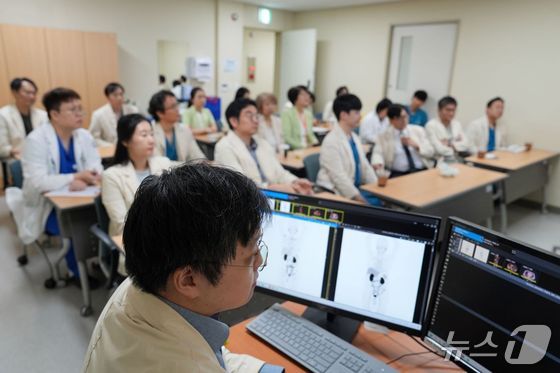
This collaborative approach allows for comprehensive discussions on the most suitable treatment and sequence, considering pathological and imaging findings, disease progression, previous treatments, and patient preferences. The close communication among various clinical departments throughout the treatment process – from assessing suitability to managing side effects and evaluating outcomes – is a rare practice in South Korean medical institutions.
Professor Oh Joo-hyun from the Department of Nuclear Medicine stated that reaching this 200-treatment milestone demonstrates our hospital’s expertise and capability in systematically executing the entire process of prostate cancer theranostics. It will continue to prioritize patient needs and maintain a truly personalized treatment approach through the multidisciplinary collaboration.
Professor Ha Yoo-shin, who heads the Urological Cancer Center and specializes in prostate cancer treatment and research, explained that metastatic castration-resistant prostate cancer, which progresses despite hormone therapy and chemotherapy, presents limited treatment options.
He emphasized that the ability to consider nuclear medicine treatment alongside surgery, drug therapy, and radiation therapy within our multidisciplinary framework is a significant advantage for patients. As the aging population leads to an increase in prostate cancer cases, it’s committed to providing optimal care based on each patient’s disease progression and treatment history.
Hospital Director Lee Ji-yeol highlighted that the hospital has established an on-site facility for producing diagnostic radioactive drugs in partnership with a domestic specialist company. This enables them to seamlessly integrate imaging diagnosis with treatment planning.
He added that leveraging this infrastructure and the multidisciplinary expertise, it aims to expand the participation in domestic and international theranostics clinical trials, ensuring more patients can benefit from radioactive ligand therapy.