

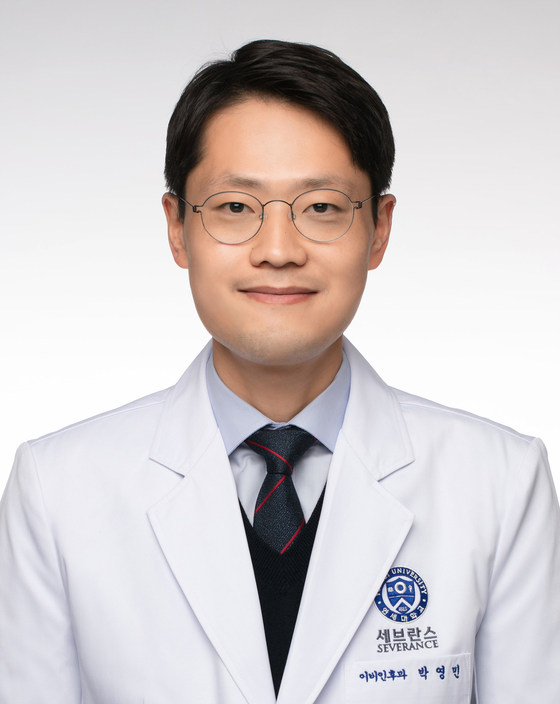
A groundbreaking discovery was announced by a team of South Korean researchers. They uncovered a key genetic pathway responsible for both distant metastasis and immunotherapy resistance in head and neck squamous cell carcinoma, a notoriously difficult cancer to treat. The team also proposed an innovative combination treatment strategy to combat these challenges.
Gangnam Severance Hospital reported that Dr. Park Young-min’s otolaryngology team, in collaboration with researchers from the University of Southern California (USC), identified the transcription factor ETS1 as a crucial element driving both metastasis and immune evasion in cancer cells. This breakthrough was achieved through single-cell transcriptome (scRNA-seq) analysis.
Head and neck squamous cell carcinoma, which affects the mouth, pharynx, larynx, and esophagus, strikes over 1 million new patients globally each year. Despite medical advances, many succumb to the disease due to metastasis to vital organs like the lungs and liver.
A particular challenge in treatment is intra-tumor heterogeneity, where cells within a single tumor show varied gene expressions, leading to poor responses to immunotherapy.
Through single-cell transcriptome analysis, the research team identified seven distinct gene expression programs contributing to the intra-tumor heterogeneity of head and neck squamous cell carcinoma.
This study is significant because it tracked the characteristics of cancer cells driving metastasis and immune evasion by analyzing gene expression at the individual cell level, revealing that not all cancer cells within a tumor behave identically.
Among these programs, the hybrid epithelial-mesenchymal transition (hEMT) program, which exhibits traits of both epithelial and mesenchymal cells, was found to be most closely linked to the metastatic potential of cancer cells.
Previous research has consistently shown that patients with high hEMT signaling face lower survival rates and a higher likelihood of lymph node metastasis.
The team proved that the transcription factor ETS1 is a key regulator of the hEMT program. ChIP-seq analysis revealed that ETS1 directly binds to 36-40 of the 50 hEMT genes, significantly enhancing the metastatic capability of cancer cells.
In animal trials, mice with cancer cells overexpressing ETS1 protein showed a 100% incidence of systemic metastasis to the lungs, liver, and kidneys, compared to only 11% in the control group (P=0.0004). Conversely, inhibiting ETS1 in cancer cells dramatically reduced the metastasis rate from 87.5% to 25% (P=0.04).
The group of mice with overexpressed ETS1 transcription factor in cancer cells showed a 100% (9/9) incidence of systemic metastasis to organs like the lungs, liver, and kidneys, while the control group had only an 11% (1/9) incidence. When ETS1 expression was suppressed (shETS1), the rate of distant metastasis plummeted from 87.5% (7/8) to 25% (2/8).
In a world-first, the research team also demonstrated that ETS1 drives not only metastasis but also immune evasion. They found that ETS1 directly activates the transcription of another transcription factor, STAT1, and the immune checkpoint molecule PD-L1. This process prevents T lymphocytes from infiltrating the tumor and creates an ‘immune-cold’ tumor microenvironment, making it difficult for immune cells to access.
Analysis of big data from 976 patients treated with immune checkpoint inhibitors further confirmed that tumors with high ETS1 activity showed significant treatment resistance.
To address this challenge, the team conducted an extensive drug screening of 4,687 compounds. Their findings revealed that cancer cells with high ETS1 expression were particularly vulnerable to the heat shock protein inhibitor HSP90 (such as alvespimycin, STA9090).
The researchers discovered that HSP90 inhibitors work by blocking the binding of hypoxia-inducible factor (HIF1α) to the ETS1 promoter, effectively suppressing ETS1 expression.
In a subsequent experiment, mice with normal immune systems were treated with a combination of HSP90 inhibitor and anti-PD-1 immunotherapy. This combination therapy resulted in significant delays in tumor growth and markedly extended survival periods compared to control groups (P<0.0001). Dr. Park explained that its research has revealed that the distant metastasis and immune evasion in head and neck squamous cell carcinoma are not separate phenomena, but rather part of a single malignant process orchestrated by the transcription factor ETS1. It believes that using ETS1 activity as a pre-screening biomarker for resistant patients and combining HSP90 inhibitors with immune checkpoint inhibitors could significantly improve survival rates for patients with hard-to-treat head and neck cancers. This groundbreaking study was published in Cancer Research (IF 22.6), a prestigious international journal issued by the American Association for Cancer Research (AACR).