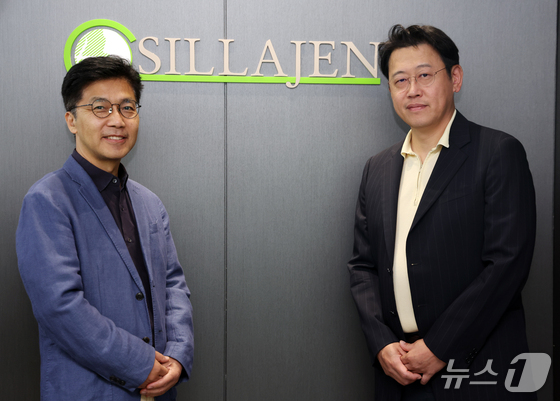
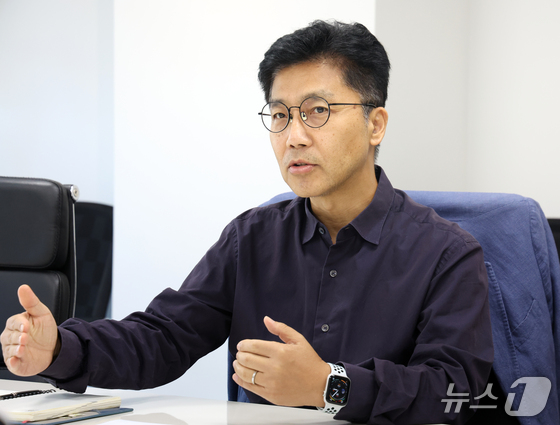
“Many people still remember Sillajen for its former image tied to Pexa-Vec. But since then, both the major shareholder and management have changed. We want to show through our results that, despite having the same name, we have become a new company.” Sillajen co-CEOs Han Sang-kyu and Park Sang-geun said this in a recent interview with News1, saying the company has entered a new stage of growth. Their plan is to build new cancer treatments and a new business structure based on their accumulated drug development experience and demonstrate the company’s competitiveness through tangible results. Under the co-CEO structure launched in March, Han oversees management and finance, while Park is responsible for research and development (R&D). The company is developing the clinical-stage cancer drug candidate BAL0891 and next-generation oncolytic virus platform SJ-600 as its current and future growth engines, respectively, while also establishing a stable revenue base through Woosung Pharmaceutical, which it acquired last year. “If BAL0891 represents the present, then the SJ-600 series represents the future,” Park said. “Both are in oncology, but they are different substances and technologies. Sillajen’s strength is that we are preparing for both the present and the future at the same time.”
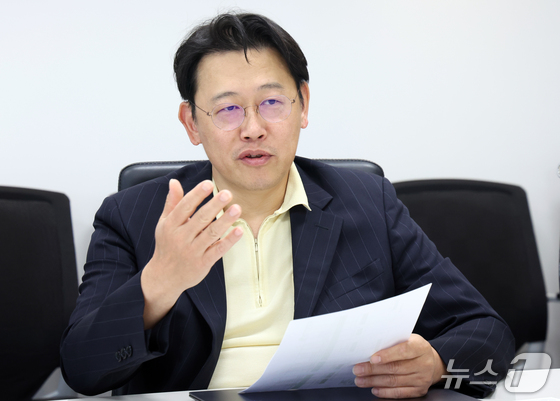
Sillajen’s leading pipeline is BAL0891. BAL0891 is an oncology drug candidate that simultaneously inhibits TTK (threonine tyrosine kinase) and PLK1 (polo-like kinase 1), two proteins involved in cancer cell division. By inhibiting both proteins at the same time, the drug is designed to disrupt the normal division of cancer cells. Sillajen acquired BAL0891 from Swiss pharmaceutical company Basilea in 2022. Clinical trials are currently underway in solid tumors and acute myeloid leukemia (AML), among other indications. The company is also accelerating efforts to license BAL0891 while advancing its clinical development. Rather than waiting until all clinical trials are completed before seeking a partner, Sillajen has been approaching global pharmaceutical companies from the development stage and providing relevant materials whenever new data become available. “We have already begun contacting potential partners and are continuing to provide updated data and materials at appropriate times as development progresses,” Park said. “By reducing risk through multiple Phase 1 subtrial designs and collecting more evidence, we have been able to make more reliable choices about the future development direction.” As clinical data accumulate, discussions with potential partners are becoming more specific. Previously, the company focused on explaining the potential of the early-stage drug based on its mechanism of action and preclinical results. Now, it can discuss the drug based on clinical results obtained from actual patients. Sillajen is also working with a global business development (BD) specialist. Alongside its own BD organization, the company is using an outside firm with experience identifying overseas partners to expand its contacts with potential partners. “A globally recognized agency in this field thoroughly reviewed BAL0891 and determined that it was a project worth working on together,” Han said. He added that the company signed a contract under which the agency would be compensated only if results such as a licensing deal were achieved, without a separate upfront advisory fee. The company said interest from potential partners is also becoming more concrete. New drug licensing deals often develop into negotiations after potential partners review detailed data on a candidate and exchange additional materials. BAL0891 is being evaluated for development potential not only in solid tumors but also in AML, a blood cancer. “Even before clinical trials began, researchers rated its potential in AML highly enough to request investigator-initiated trials first,” Park said. “There is potential across multiple cancer types, but we cannot develop every cancer indication simultaneously, so we need to focus and prioritize.” The two CEOs ruled out plans to raise additional funds from the market if more data are needed beyond the ongoing clinical trials to support a BAL0891 licensing deal. “Licensing is our top business strategy, but if a partner requests additional data, it is also possible to increase the value of BAL0891 before pursuing a deal,” Park said. “If we determine that it is better to increase the value through additional investment rather than license the asset at a low price, we have sufficient funds to make that investment,” Han added. “At this point, we do not feel a significant need to raise additional capital.”
Alongside drug development, Sillajen is also working to establish a stable business foundation. Its acquisition of Woosung Pharmaceutical last year is a prime example. After acquiring and merging Woosung Pharmaceutical, Sillajen reorganized it as its pharmaceutical business division. “The pharmaceutical business division generated more than $6 million in revenue last year, and we expect it to exceed $6.7 million this year,” Han said. “Regardless of how drug development progresses, we now have a solid cash cow.” The acquisition of Woosung Pharmaceutical also allowed the company to reorganize its business portfolio around drug development and pharmaceuticals. Sillajen said this has given it a business structure that allows it to focus more heavily on R&D. The pharmaceutical business division’s strength is its ability to make quick decisions based on a small organizational structure. According to Han, the pharmaceutical business has about eight employees but generates annual revenue approaching $6.7 million. “Because we are small, our decision-making speed is very fast,” Han said. “The market is not large enough to necessarily attract major pharmaceutical companies, but our strength is finding areas with consistent demand and quickly bringing products to market.” The establishment of a stable revenue source has also strengthened the foundation for focusing on drug development. Given the nature of biotech companies, which require long-term R&D investment, the company said it is meaningful to have secured a business that generates steady revenue and profits independently of drug development. For the time being, Sillajen plans to focus on increasing the value of its existing pipelines rather than acquiring additional clinical-stage drug candidates. Alongside BAL0891, the pipeline being developed as a future growth engine is the company’s proprietary oncolytic virus platform, SJ-600. The SJ-600 series is a platform designed to enable oncolytic viruses to reach cancer cells while evading attacks from the immune system in the bloodstream. The development goal is to effectively deliver oncolytic viruses to cancer cells through intravenous administration. “For now, we are not considering acquiring additional clinical-stage drug candidates,” Park said. “Development of the viral platform has progressed significantly, and we expect to be able to demonstrate results going forward.” Another feature of the SJ-600 series is that it is designed as a platform capable of generating multiple follow-on oncolytic virus candidates rather than being limited to a single drug candidate. Sillajen plans to pursue clinical development and licensing of BAL0891 while expanding its medium- to long-term pipeline through the SJ-600 series.

After switching to a co-CEO structure in March, Sillajen also changed its organizational structure. Han directly oversees management and finance, while Park is responsible for R&D, dividing responsibilities and reducing intermediate decision-making layers. Another feature is that the company did not appoint separate executives to replace the positions previously held by the two CEOs. By reducing organizational layers, the two CEOs can communicate more closely with working-level staff and make decisions on key issues more quickly. “What is more important than switching to a co-CEO structure is streamlining the organization,” Han said. “As the CEOs have moved closer to the field and day-to-day operations, decision-making and the organization’s speed of execution have improved.” The two CEOs believe rapid decision-making is particularly important in drug development and licensing. During clinical development, for example, the company must quickly determine development strategies and discuss licensing terms with global pharmaceutical companies in response to market changes. “The pace of change in the biotech sector is extremely fast,” Han said. “We need to decide quickly what to pursue and what to stop, and these areas have improved significantly this year.” Park also said, “I can now remain fully focused on the R&D work I was already doing while immediately discussing necessary matters with Han,” adding that “the amount of attention I need to devote to work outside R&D has also decreased.” The experience accumulated through years of drug development is also serving as the foundation for the company’s current pipelines. Sillajen said it is applying its experience from global clinical trials, interactions with regulatory authorities in various countries and research into oncolytic viruses to the development of BAL0891 and the SJ-600 series. “We have retained a great deal of know-how accumulated through the process of developing new drugs,” Park said. “Sillajen is a company that has actually experienced many stages of drug development.” The company’s accumulated clinical development experience is being applied to the global clinical development of BAL0891, while its expertise from researching oncolytic viruses is being applied to the SJ-600 series. “The know-how we have accumulated so far is having a positive impact on both pipelines,” Han said. “That experience is an invisible strength of the company.” Sillajen plans to demonstrate how the company has changed through the clinical development and licensing of BAL0891, the development of the SJ-600 series and the stable growth of Woosung Pharmaceutical. “We are carrying forward the good assets and know-how we have accumulated in the past while creating a new structure and vision for the company,” Han said. “We want to make it clear that we have become a new company, and the best way to do that is to show it through results.” “BAL0891 is a compound with a new mechanism of action (MOA), and the oncolytic virus is also a new modality,” Park said. “Rather than being a company that simply does what is already known, we want to become a company that redefines what is possible for patients.”