

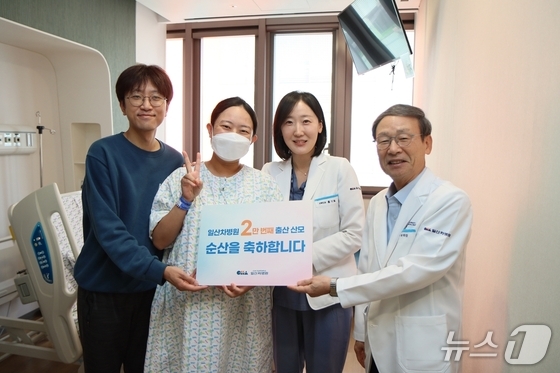
As South Korea’s shrinking birthrate puts pressure on maternity care infrastructure, Ilsan CHA Hospital, affiliated with CHA University, has reached a cumulative total of 20,000 deliveries. More than half of the births involved high-risk pregnancies, underscoring the hospital’s role as a regional medical institution specializing in the care of high-risk mothers and newborns.
Ilsan CHA Hospital announced on the 26th that it had reached the milestone on the 12th, about six years and nine months after its first delivery on Jan. 15, 2020. The hospital recorded its first 10,000 deliveries in January 2024 and added another 10,000 in approximately two years and nine months.
According to statistics from the Health Insurance Review and Assessment Service for last year, Ilsan CHA Hospital handled 52.1% of all deliveries in Goyang and 21.2% of deliveries in northern Gyeonggi Province. High-risk births accounted for 53.6% of its total deliveries, demonstrating its capacity to care for high-risk mothers and newborns.
The hospital operates a Maternal-Fetal Intensive Care Unit (MFICU) and a Neonatal Intensive Care Unit (NICU). Anesthesiology and obstetrics specialists are on site 24 hours a day, 365 days a year, providing anesthesia and pain management for labor and responding to emergencies involving gynecological conditions and severe bleeding.
The hospital has established a coordinated care system that spans the management of high-risk conditions during pregnancy, delivery and newborn treatment immediately after birth. Its NICU has received the highest, Grade 1 rating in three consecutive quality assessments, while specialists provide prompt intensive care for premature and low-birth-weight infants.
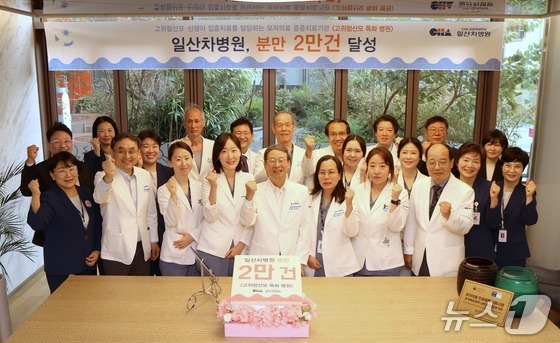
To mark the 20,000-delivery milestone, obstetrics professor Hong Gi-rim, who oversaw deliveries, and hospital director Song Jae-man presented baby-care products to a mother and her family. The hospital also held a commemorative event attended by medical staff and representatives from related departments to recognize the efforts of the maternity center’s doctors and employees.
Meanwhile, South Korea’s low birthrate and the growing number of areas with limited access to maternity services are increasing the burden on expectant mothers who must travel to give birth. High-risk pregnancies require specialized personnel and intensive care facilities to prepare for sudden emergencies. The importance of an integrated regional medical system connecting prenatal care, delivery and newborn treatment continues to grow.
Kim Ui-hyeok, director of the maternity center at Ilsan CHA Hospital, said, “We will continue to strengthen our expertise in high-risk pregnancies, childbirth and intensive neonatal care. We will also do our utmost to work closely with regional medical institutions to create a maternal and newborn care environment where mothers and babies can receive treatment with confidence.”