North Korea has been promoting various vacation spots nationwide as summer arrives, claiming its citizens are enjoying pleasant holidays. However, analysts still question the success of the Wonsan Kalma Coastal Tourist Area, which has drawn the most attention.
On August 3, Rodong Sinmun, the official newspaper of the Workers’ Party of Korea, published an article titled, Joyful Laughter Resonates from Cultural Retreats Established Under the Party’s Leadership, showcasing vacation spots across the country.
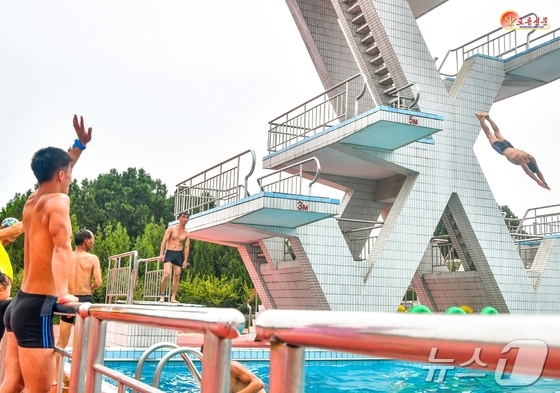
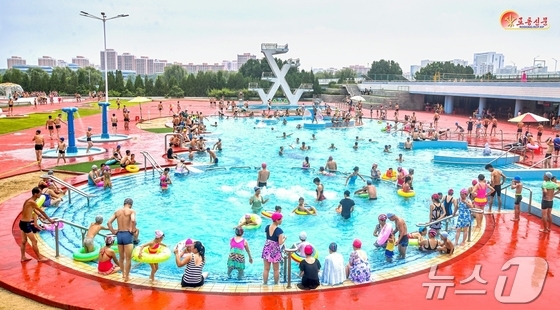
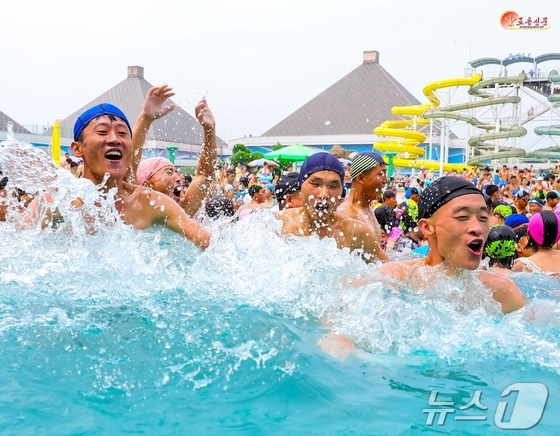
The article featured images of residents enjoying water slides at the Amnok River Park and Hamheung Water Park, as well as young people diving at the Rungna Water Park and splashing around in their swimming gear at the Munsu Water Park.
The newspaper reported that modern water parks and beaches throughout the country are bustling with countless visitors amid the sweltering heat.
It emphasized the party’s people-first policy, stating that its goal is to ensure that citizens and children live happily without worries, allowing their laughter and shouts of Long live the Workers’ Party to echo across the land.
The newspaper prominently featured the Wonsan Kalma Coastal Tourist Area, which opened last month. It praised the resort as a unique coastal tourist city, highlighting its ten-mile beach and the waves of the East Sea.
The Kalma area is a long-cherished project developed over ten years by Kim Jong Un, the Party’s General Secretary. Kim, along with his daughter Kim Ju Ae and First Lady Ri Sol-ju, attended the completion ceremony on June 24 and cut the ribbon. Since its official opening on July 1, North Korea has been heavily promoting it through state media.
While most tourists are still local residents, authorities appear to be planning to gradually attract Russian tourists. Reports indicate that 13 Russian group tourists visited the Kalma area after passing through Pyongyang last month.
High costs of around 2.8 million KRW (about 2,000 USD) raise doubts about the sustainability of Russian tourism. However, it remains uncertain whether these visitors will consistently return to North Korea. The Wall Street Journal (WSJ) reported on August 1 that Anastasia Samsonova, a Russian tourist who vacationed in the Kalma area, mentioned that the entire coast was empty, and it seemed as if they were the only guests at the resort .This situation appears to stem from North Korea’s still inadequate tourism infrastructure, combined with high costs and lengthy travel times. According to WSJ, a week-long tour package to the Kalma area costs about 2,000 USD, including 1,400 USD paid to North Korean authorities and an additional 35,000 RUB (about 440 USD) to Russian travel agencies.
Moreover, flying from Moscow or Saint Petersburg to Pyongyang takes around 15 hours, followed by a 10-hour train journey from Pyongyang to Wonsan, covering approximately 200 kilometers (about 124 miles).
The highly controlled nature of North Korea’s regime poses significant limitations on tourism for foreigners. Tourists face strict restrictions on their interactions with locals and must obtain permission from guides to take photos or videos. In February, North Korea abruptly halted tourism after negative reviews surfaced from Western tourists visiting an economic special zone, citing issues such as the need to obtain guide permission to use restrooms.
Meanwhile, WSJ reported that a second group of Russian tourists is scheduled to arrive at the Wonsan Kalma Coastal Tourist Area this week. It remains to be seen whether North Korea can sustain its tourism industry by addressing these limitations.