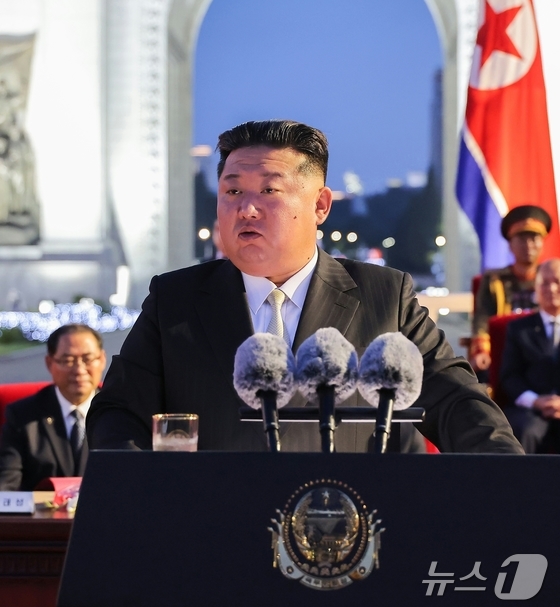
North Korean leader Kim Jong Un remains silent. President Lee Jae-myung clearly expressed his intention to pursue a North Korea policy based on peaceful coexistence in his Liberation Day address; however, North Korea has shown no significant response for four days. Concerns are mounting that North Korea might escalate tensions through military provocations as the joint U.S.-South Korea military exercises—which Pyongyang has warned against—commence on Monday.
As of today, major North Korean media outlets, including the Workers’ Party’s official newspaper Rodong Sinmun, have not covered President Lee’s address. Historically, North Korea has responded to South Korean presidents’ Liberation Day speeches within two days, though there have been instances where silence lasted up to 12 days.
In his address, President Lee did not unveil any groundbreaking or new proposals regarding North Korea. Instead, he emphasized the importance of rebuilding trust and restoring dialogue in inter-Korean relations. The President stated that he would continue proactive measures toward North Korea, expressing hope for a response from Pyongyang.
Notably, Lee signaled a willingness to proactively restore the September 19 military agreement, which was effectively abandoned during the Yoon Suk Yeol administration. Consequently, specific measures—such as halting military exercises near the border—are expected to be implemented soon.
However, given North Korea’s consistent stance of refusing dialogue with the South Korean government and the continuation of U.S.-South Korea joint exercises—labeled by Pyongyang as invasive war drills—for the next ten days, it seems unlikely that North Korea will exhibit any significant change in attitude immediately.
Experts acknowledge the significance of the declaration to restore the September 19 military agreement; however, they assess that President Lee’s address lacks proposals that would prompt a shift in North Korea’s strategy toward South Korea. With major events on the horizon for North Korea, such as the 80th anniversary of the Workers’ Party’s founding (October 10) and the 9th Workers’ Party Congress expected either late this year or early next year, analysts predict that Pyongyang is unlikely to respond swiftly to Seoul’s proposals.
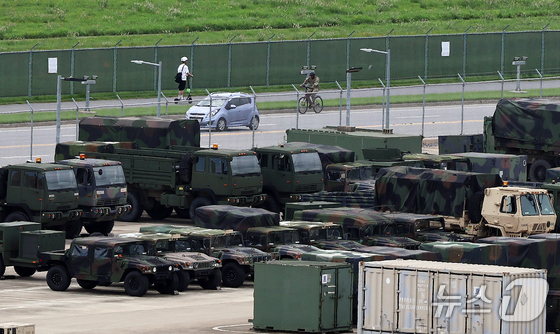
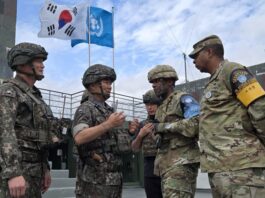
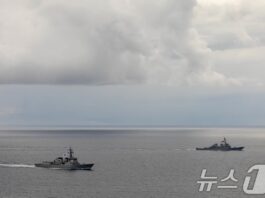
U.S. and South Korean military authorities are set to conduct the Ulchi Freedom Shield (UFS) 2025 exercise from today until August 28. UFS comprises a command post exercise (CPX) based on simulations and field training exercises (FTX). However, the schedule has been adjusted, with over 20 of this year’s 40 FTX events postponed to next month.
Military officials from both countries cited extreme heat, training safety concerns, and the need to maintain a balanced defense posture throughout the year as reasons for conducting the exercises in a dispersed manner. This decision also appears to be an effort to avoid provoking North Korea.
North Korea displayed a cold attitude in a statement by Kim Yo Jong, Kim’s sister, on August 14, declaring that the adjustment of the U.S.-South Korea joint exercises was not worthy of evaluation.
This stance is expected to persist for the next ten days. On August 11, North Korean Defense Minister No Kwang Chol indicated that Pyongyang would strictly exercise its sovereign rights to self-defense against any provocative actions, suggesting that military responses to the joint exercises would be carried out.
However, with a U.S.-South Korea summit scheduled for August 25, analysts suggest that North Korea will likely avoid high-intensity provocations, such as launching intercontinental ballistic missiles (ICBMs) or intermediate-range ballistic missiles (IRBMs), which could unnecessarily escalate tensions.
It is noteworthy that in his first Liberation Day speech since taking office, Kim refrained from criticizing South Korea or the U.S. or making any belligerent remarks. This can be interpreted as a focus on national interests, particularly in relation to ongoing international developments, while closely monitoring future global relations.
Hong Min, a senior researcher at the Korea Institute for National Unification, commented that while the U.S.-South Korea joint exercises have been postponed, their scale remains unchanged, so North Korea has no reason to react positively. Further noting that ultimately, it will likely result in a low-key response.
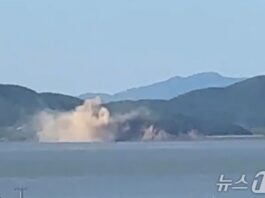
He further elaborated that rather than resorting to aggressive provocations like missile launches, North Korea is likely to manage the situation by focusing on artillery training exercises.