Analysts on Saturday suggested that North Korea is likely to prioritize the development of its healthcare sector as a key policy in its upcoming five-year plan, set to be announced during next year’s 9th Congress of the Workers’ Party.
In a report titled Roadmap for People’s Livelihood Policies Through Recent Trends in North Korea’s Emphasis on Healthcare, researcher Lim Soo Jin of the National Security Strategy Institute’s North-South Relations Research Office noted that the recent surge in healthcare-related reports in North Korean media likely signals a focus on strengthening medical infrastructure as a cornerstone of future domestic policy aimed at bridging the urban-rural divide.
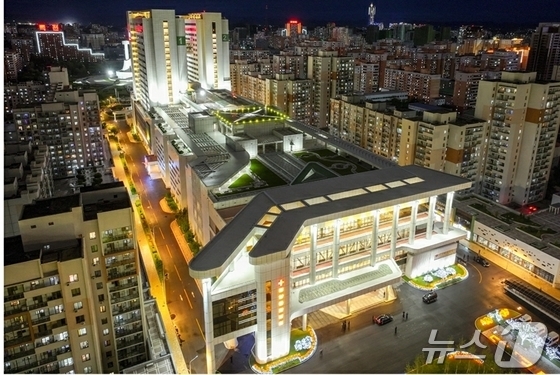
Lim tracked mentions of “Pyongyang General Hospital” in Rodong Sinmun since January 2021. She found that while the hospital was not mentioned at all in 2023, it had already been referenced 38 times as of October this year.
Earlier, leader Kim Jong Un declared February 2025 the Year of the Health Revolution and unveiled plans to construct modern medical facilities not only in Pyongyang but also across cities and counties nationwide to bolster the country’s healthcare infrastructure. This year, construction has been confirmed at three sites: Kangdong County Hospital, Pyongyang General Hospital, and Kusong City Hospital in North Pyeongan Province.
North Korea’s health revolution initiative is being pursued as part of the Local Development 20×10 Policy. Implemented last year, this policy initially focused on building local factories and rural housing, later expanding to include health facilities, multi-cultural centers, and grain management facilities as essential construction targets.
Lim highlighted that North Korea appears to be considering resuming cooperation with international health organizations beyond its existing ties with China and Russia.
Reports indicate that UNICEF and the World Health Organization (WHO) plan to deploy international health personnel to North Korea in November, marking the first such mission in about five years since the COVID-19 outbreak.
The Russian Embassy in North Korea recently announced that Russian Health Minister Mikhail Murashko visited Pyongyang and signed an agreement to expand medical cooperation with North Korean Health Minister Jong Mu Rim. Murashko reportedly toured the Pyongyang General Hospital and met with representatives from North Korean pharmaceutical companies.
Lim emphasised that enhancing the healthcare sector requires not only building modern hospitals but also upgrading medical equipment, pharmaceuticals, and improving personnel qualifications. She asserted that securing external sources for equipment and personnel is crucial for North Korea.
Lim interpreted Kim’s frequent visits to hospitals and construction sites this year as a strategic move to showcase the regime’s commitment to healthcare, both domestically and internationally, while signalling the direction of next year’s domestic policy. This approach, she noted, also serves to communicate North Korea’s need for external human and material resources.
In conclusion, Lim observed that North Korea appears poised to continue strengthening its tourism industry in the economic sector and healthcare in the realm of public welfare. Given North Korea’s current situation, she stressed that stable progress in both areas will likely depend on increased international cooperation.