The Donald Trump administration’s recent National Security Strategy (NSS), released last month, notably omitted any mention of North Korea. This has led some analysts to conclude that Washington is tacitly acknowledging North Korea’s status as a nuclear power.
On January 18, The Washington Post (WP) published an editorial titled, Trump’s Omission Is an Admission: North Korea Is a Nuclear Power, arguing that this exclusion was deliberate.
In stark contrast to the 2017 NSS, which referenced North Korea and Korean Peninsula denuclearization 17 times, the latest document completely excludes these terms. The NSS serves as the blueprint for the administration’s national security policy.
The WP editorial suggests that the Trump administration’s reluctance to address the issue publicly stems from the realization that denuclearization of the Korean Peninsula is no longer a viable option, effectively conceding North Korea’s status as a nuclear power.
China’s recent arms control white paper also raised eyebrows by omitting the goal of Korean Peninsula denuclearization, instead focusing solely on peace, stability, and prosperity in the region.
These developments have fueled speculation that both Washington and Beijing are implicitly accepting North Korea’s nuclear-armed status.
While the WP acknowledges that officially recognizing North Korea as a nuclear power would represent a seismic shift in U.S. foreign policy, it suggests that accepting this reality could pave the way for negotiations aimed at limiting North Korea’s nuclear arsenal and missile capabilities.
The editorial urges Washington to be transparent if it’s prepared to pivot from a denuclearization strategy to one focused on freezing and capping North Korea’s nuclear program. It emphasizes the importance of acknowledging the associated risks and coordinating closely with allies.
There are concerns that accepting North Korea’s nuclear status could erode South Korea and Japan’s confidence in the U.S. nuclear umbrella, potentially driving them to pursue their own nuclear deterrents.
The WP also stresses the need to secure concessions from North Korea in exchange for any policy shift, warning that maintaining silence on the issue is unsustainable.
According to the Stockholm International Peace Research Institute (SIPRI), North Korea is estimated to possess approximately 50 nuclear warheads and has secured enough fissile material to produce an additional 40.
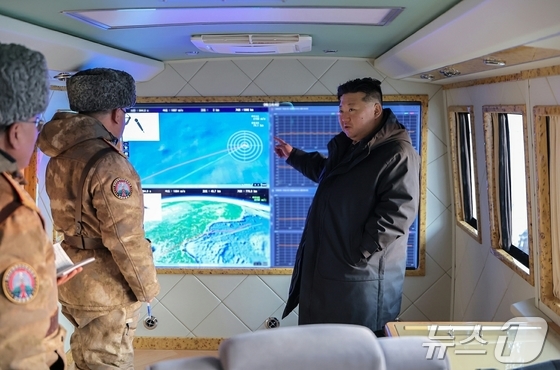
North Korea continues to enhance its nuclear capabilities. A report from the International Atomic Energy Agency (IAEA) last June indicated that North Korea’s Punggye-ri nuclear test site is prepared to support nuclear tests in the near future, a conclusion later corroborated by South Korean intelligence agencies in November.