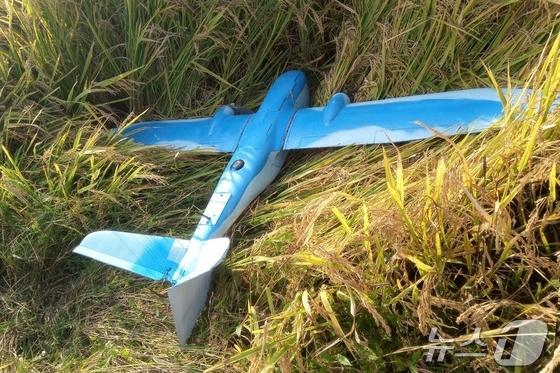
Recent focus has shifted to potential charges for civilian suspects who allegedly sent or manufactured drones that breached North Korean airspace.
News1 reported on Monday that a military-police joint investigation task force (TF), established on January 12, questioned a civilian man in his 30s, identified as A, on January 16. A is believed to be the drone’s manufacturer.
In a Channel A interview on January 16, another civilian man in his 30s, B, a senior to A from a private Seoul university, claimed he launched drones into North Korea on three separate occasions.
B justified his actions, stating that they flew the drone to measure radiation and heavy metal contamination at the uranium plant in North Korea’s Pyongsan County. It thought it was acceptable given the motive. B didn’t surveil the military or anything like that.
Given these drone incursions into North Korea, the suspects could potentially face general treason charges, similar to those against former President Yoon Suk Yeol, who allegedly sent drones to Pyongyang to provoke attacks on South Korea as a pretext for declaring a state of emergency.
Article 99 of the Criminal Code defines general treason as acts harming national military interests or aiding enemy nations militarily, punishable by life imprisonment or at least three years in prison.
Last November, a special prosecution team indicted former President Yoon, ex-Defense Minister Kim Yong-hyun, and former National Defense Security Command chief Lee In-hyung on general treason charges for allegedly undermining military interests.
Some legal experts argue that civilian suspects like B could face general treason charges, similar to former President Yoon, for unnecessarily escalating military tensions and potentially harming national security interests.
Government sources note that both A and B worked in the presidential spokesperson’s office during Yoon’s administration, raising questions about possible involvement in provoking North Korean military actions.
However, attorney Kim Jeong-won from Han-teut Law Firm cautions that proving general treason would be challenging without evidence of military facility surveillance, especially given B’s claim of environmental monitoring.
The investigation’s success may hinge on whether the TF can secure compelling evidence through searches and seizures.
The special prosecution team previously obtained notes from former commander Lee, dated October and November 2024, containing phrases like create unstable situations or seize opportunities and enemy must execute strategic military actions, which led to Yoon’s indictment.
Attorney Yang Tae-jeong from Gwangya Law Firm suggests that if political motives to incite military tension or conflict are proven, additional charges like conspiracy to commit foreign exchange crimes could apply.
Legal experts widely agree that launching drones into North Korea without government approval violates the Inter-Korean Exchange and Cooperation Act, which requires Unification Ministry authorization for cross-border transfers.
If the drones indeed crossed the Military Demarcation Line (MDL) from the border area, potential violations of aviation safety laws regarding restricted airspace may also apply, depending on reporting and drone specifications.
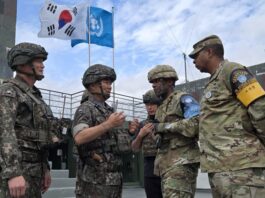
The military-police joint investigation TF stated it would thoroughly assess current laws, armistice agreements, and inter-Korean relations before determining appropriate actions regarding this incident.