The Lee Jae Myung administration is accelerating efforts to restore the September 19 inter-Korean military agreement. President Lee first expressed his intention to proactively and gradually restore the agreement during his Liberation Day address last year, emphasizing its importance in preventing accidental clashes and building military trust between the two Koreas. He has since consistently stressed the need for restoration at every opportunity.
In response to a recent incident involving civilian drones infiltrating North Korea, the government is considering reinstating the no-fly zone outlined in the September 19 agreement, which the Yoon Suk Yeol administration had fully suspended. However, some experts question the necessity and effectiveness of this restoration, citing North Korea’s past violations and the current low likelihood of cooperation.
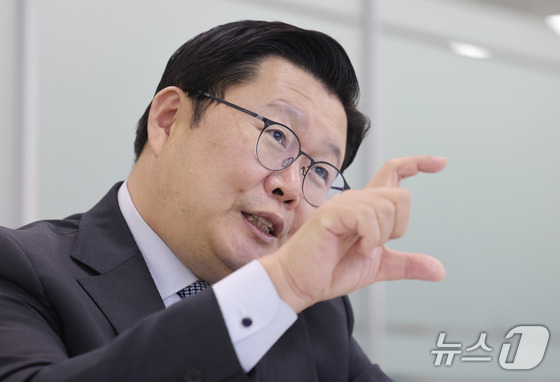
News1 recently interviewed retired Army Brigadier General Cho Yong-geun, former director of North Korean policy at the Ministry of National Defense, at their Seoul headquarters on Monday. Cho played a key role in designing the September 19 military agreement during the Moon Jae-in administration and later contributed to maintaining inter-Korean military agreements as Deputy Director and Director of North Korean Policy.
Cho warned that North Korea is likely to declare the military demarcation line (MDL) as its border at the upcoming 9th Party Congress, potentially nullifying the armistice agreement. He urged the South Korean government to proactively offer to restore the military agreement before this declaration.
This approach aims to assertively demand North Korea’s adherence to the armistice agreement and participation in mutual conflict management obligations, addressing the hostile two-state situation.
Cho believes the September 19 military agreement serves as the last line of defense for reducing and managing the risk of accidental military clashes within the framework of the armistice agreement between the two Koreas.
The following is a Q&A with Cho.
– What is the most significant implication of the September 19 military agreement?
▶ The 2018 September 19 agreement aimed to reinvigorate the fading significance of the armistice agreement. At the time, North Korea’s 2013 declaration nullifying the armistice agreement had increased instability in the 70-year-old armistice regime on the Korean Peninsula. In essence, the military agreement was necessary to maintain the standards and boundaries preventing military clashes in border areas between North and South Korea.
– Why do you specifically emphasize the need for swift restoration of the September 19 agreement before North Korea’s 9th Party Congress?
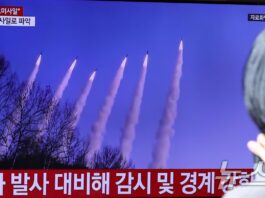
▶ Since declaring hostile two-state relations at the end of 2023, North Korea has been erasing the concepts of the existing military demarcation line (MDL) and demilitarized zone (DMZ) defined in the armistice agreement. Since April 2024, they’ve been laying mines and constructing fences in the MDL area, pushing their border concept. This has led to repeated MDL violations by North Korean troops, causing unnecessary tensions as our military responds with warning shots.
North Korea is likely to formally declare the MDL as its border at the 9th Party Congress. This would effectively erase the northern section of the DMZ (2 km, about 1.2 miles, north of the MDL). Such a move could escalate into another border dispute, similar to the Northern Limit Line (NLL) issue, and signals North Korea’s intent to view inter-Korean relations outside the armistice framework.
South Korean military must carefully consider how to perceive and respond to North Korea’s strategy. The September 19 agreement can serve as a crucial mechanism to manage accidental military clashes within the armistice framework.
Ideally, the government should have taken the initiative to offer the restoration of the military agreement before North Korea’s Party Congress. This proactive approach would have demanded North Korea’s compliance with the armistice agreement and participation in mutual conflict management obligations, even as they push their hostile two-state narrative. With the Party Congress approaching, it may have missed this opportunity.
Restoring the September 19 Military Agreement: A Strategy to Seize the Initiative Even Without North Korean Cooperation
– How do you respond to criticism that a unilateral restoration of the September 19 agreement would be ineffective without North Korean cooperation?
▶ The crucial issue isn’t North Korea’s response, but how it maintains the initiative in inter-Korean relations.
South Korean military’s North Korea policy must balance deterrence and peace power. Currently, deterrence efforts focus on strengthening the U.S.-South Korea alliance, including nuclear-powered submarines and wartime operational control transfer. While North Korea closely monitors these developments, it lacks a visible strategy to influence North Korea from a peace power perspective.
– Could you elaborate on the concept of peace power?
▶ The recent U.S. National Defense Strategy (NDS) emphasizes deterrence against China while also stressing the importance of enhancing communication with the People’s Liberation Army (PLA) and supporting strategic stability with Beijing. The U.S. aims for decent peace in its China policy, indicating a willingness to avoid extreme confrontations even in a competitive relationship.
Unfortunately, discussing peace power as a key aspect of North Korea policy seems taboo within South Korea’s military. Restoring the September 19 agreement isn’t about appeasing North Korea; it’s about confidently leading negotiations based on strong deterrence.
Most of the agreement can be implemented unilaterally, with only a few aspects, like joint remains recovery in the DMZ, requiring North Korean cooperation.
– How might North Korea react to a unilateral restoration?
▶ There are several noteworthy points. Firstly, North Korea has shown no intention of provocation or conflict while establishing the MDL as its border.
North Korea has notified the South through the United Nations Command before beginning work and has requested reduced warning shots from South Korean forces. They’ve also refrained from retaliating against South Korean military’s warning broadcasts or shots. This indicates North Korea is also trying to avoid military provocations and accidental clashes.
After the Lee administration took office, the military stopped using loudspeakers directed at North Korea, and North Korea reciprocated. This occurred without formal agreement, suggesting both sides can act when they perceive mutual benefit. North Korea may view reducing tensions as advantageous.
Restoring the September 19 Agreement: A Political Declaration With Minimal Impact on Military Readiness

– How do you address public concerns about the security implications of restoring the September 19 agreement?
▶ There’s significant misunderstanding on this issue. The agreement doesn’t reduce weapons but adjusts and reallocates combat power to minimize military risks. It’s a form of operational arms control, with most provisions being symbolic rather than significantly affecting readiness levels.
The agreement, made shortly after the Panmunjom Declaration, aimed to create effective guidelines without imposing significant burdens on either side. It essentially revived the armistice agreement’s clause calling for the cessation of all hostile acts and armed actions.
For example, the ground buffer zones mainly involve relocating artillery training sites and adjusting large-scale maneuvers, which don’t significantly impact our overall readiness.
The agreement doesn’t lower military readiness. If North Korea violates it, it can respond accordingly. The key is to declare the restoration and then manage its implementation effectively.
– Why is the government considering restoring only the no-fly zone while leaving other areas unchanged?
▶ Restoring the no-fly zone poses the least practical burden. The surveillance capabilities have been redistributed to other assets, including high-altitude reconnaissance aircraft and satellites, minimizing the impact on our overall capabilities.
The air force maintains overwhelming superiority over North Korea. Since 2018, we’ve acquired advanced reconnaissance assets like the Global Hawk RQ-4 and independent reconnaissance satellites, enabling 24/7 monitoring of North Korea.
However, it is believed that restoring only the no-fly zone may not send a sufficiently meaningful message to North Korea. A comprehensive restoration including maritime and land areas would have a more significant political impact.
– Could the September 19 agreement have prevented the recent drone incident if it had been maintained?
▶ While small civilian drones are challenging to detect, maintaining the agreement could have provided us with strategic advantages during the incident.
It could have confidently stated our compliance with the no-fly zone and demanded North Korea’s adherence, potentially putting them on the defensive.
Possibility of North Korea-U.S. Dialogue in April: Military Tension Reduction Essential for South Korea’s Mediating Role

– What are the key considerations in restoring the September 19 agreement?
▶ The situation has changed dramatically since 2018. North Korea will likely emphasize its hostile two-state policy at the upcoming Party Congress. However, it must always be prepared for sudden shifts, as it saw in 2018 when tensions quickly gave way to summits.
With potential U.S.-North Korea dialogue on the horizon, South Korea’s role could become crucial. Reducing military tensions is an essential step in effectively fulfilling this role.
– What should guide North Korea policy following the agreement’s restoration?
▶ The primary principle is preventing war. The focus has shifted from pushing back North Korea’s artillery to preventing nuclear launches.
It must balance deterrence with peace power. As North Korea alters the DMZ, it needs policies to utilize remaining areas for peaceful inter-Korean exchanges and cooperation.
The military is uniquely positioned to execute both deterrence and peace power strategies. However, it needs to develop more professionals within the military who understand and can implement this balanced approach.
Ultimately, restoring the September 19 agreement is about maintaining stability and creating opportunities for dialogue, all while preserving our strong deterrence posture.