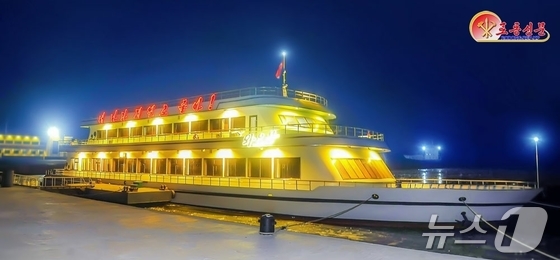
North Korea recently unveiled a new cruise ship named Wawubong on the Taedong River, capable of accommodating over 100 passengers and hosting onboard weddings.
The Workers’ Party’s official newspaper, Rodong Sinmun, reported this news on page 6 of its February 7 issue. Built in Nampo City, the Wawubong boasts a wedding hall, a banquet room for more than 100 guests, large electronic displays, state-of-the-art sound and lighting systems, and heating facilities.
The newspaper stated that Wawubong recently completed its trial run, and Nampo City officials are ramping up efforts to transform the cruise ship into a unique attraction that will enhance the public’s enjoyment.
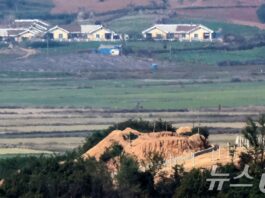
The front page of the same issue highlighted groundbreaking ceremonies for local development projects in various regions. These include Panmunjom near the demilitarized zone (DMZ), Songhwa County in the western breadbasket region, and Musan County and Daenan District, known for iron ore production and large-scale machinery manufacturing. These areas will soon see new infrastructure aimed at improving residents’ quality of life, such as light industry factories and hospitals.
Page 2 covered the conferment of national academic titles to intellectuals who made significant contributions in science and technology on February 6. The ceremony, attended by Deputy Prime Minister Jeon Seung-guk, saw six individuals receiving professorships and 67 being awarded doctoral degrees.
The third page reported on the ongoing 2.16 Commemorative Ice Sculpture Festival in Samjiyon City. This event celebrates the birthday of Kim Jong Il on February 16 (Day of the Shining Star). The newspaper noted the growing enthusiasm of attendees paying tribute to the late leader.
Page 4 detailed how trade union organizations delivered agricultural machinery, including tractors, to the Yeongang Farm in Kaepung District ahead of the 9th Party Congress. Farm officials and workers reportedly expressed gratitude to the Party and committed to adopting advanced farming methods to accelerate rural mechanization.
The fifth page announced the implementation of a new educational curriculum for elementary and secondary education starting this academic year. The elective curriculum will be divided into five areas: humanities, sciences, arts, physical education, and technology. Elementary and middle school students will receive a unified general education, while high school students will pursue specialized studies based on their individual aptitudes.