

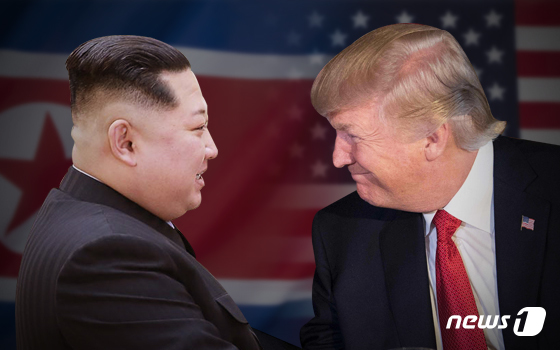
The Donald Trump administration confirmed on February 6 that it has approved sanctions exemptions for 17 humanitarian aid projects to North Korea that had been pending at the United Nations (UN) Security Council’s North Korea Sanctions Committee (1718 Committee).
Multiple government sources report that during his current visit to the U.S., South Korean Foreign Minister Cho Hyun proposed this action, leading the U.S. to move forward with the long-stalled sanctions exemptions within the 1718 Committee.
The approved humanitarian aid projects comprise five initiatives from South Korean local governments and non-governmental organizations (NGOs), eight from international organizations such as United Nations International Children’s Emergency Fund (UNICEF), the World Health Organization (WHO), and the Food and Agriculture Organization (FAO), and four from private organizations in other countries, including the U.S.
These projects are not new but rather extensions of existing initiatives that had previously received sanctions exemptions. This round of approvals primarily extends the duration of those existing exemptions.
The projects focus exclusively on humanitarian areas such as health, clean water, sanitation, and nutrition support for vulnerable populations. Individual project budgets are reportedly in the hundreds of thousands of dollars. The South Korean projects also involve extensions of existing initiatives led by Gyeonggi Province and South Korean NGOs.
This decision resulted from unanimous agreement among Security Council member states and resolves humanitarian aid projects that had been on hold for about nine months due to procedural reasons since early last year.
However, the actual implementation of these projects depends on North Korea’s acceptance, and observers suggest that the situation should be closely monitored.
A South Korean Foreign Ministry official stated that the government has consistently maintained that humanitarian support for North Korea should continue regardless of the political climate. It has worked diligently to ensure that humanitarian aid can be smoothly delivered to North Korea, and it hopes this action will elicit a positive response from Pyongyang.
The 1718 Committee, established under UN Security Council Resolution 1718 in response to North Korea’s first nuclear test in 2006, oversees the enforcement of sanctions against North Korea.
The committee can exempt humanitarian aid organizations from sanctions when necessary and has made institutional adjustments, including issuing guidelines to expedite related procedures in 2018.
However, the U.S. has shown a cautious attitude during the sanctions exemption approval process, citing concerns that humanitarian supplies could be diverted to support the regime, contrary to their intended purpose.
In this context, the U.S.’s recent approval of sanctions exemptions can be interpreted as a conciliatory gesture towards North Korea in the humanitarian sector, potentially aimed at improving U.S.-North Korea relations.
Analysts suggest that this action, taken just ahead of President Trump’s scheduled visit to China in April, could give momentum to the envisioned Peacemaker-Facilitator strategy.
Prior to this announcement, a senior government official told reporters in Washington on February 5 that new developments regarding North Korean issues were expected in the coming days, describing the anticipated progress as not grand, but rather a gesture that could serve as a starting point.