Expert analysis suggests that North Korea’s self-reliance policy has intensified corruption among officials, posing a significant threat to the stability of Kim Jong Un’s regime. The upcoming 9th Congress of the Workers’ Party is expected to prioritize addressing the issue of lax discipline among officials.
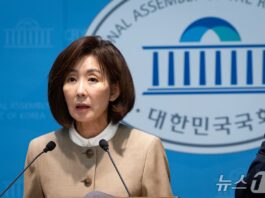
On Thursday, the Institute for Unification Studies, a state-run research organization, released a comprehensive report titled, Crisis and Response in North Korea’s Social System, examining the political, social, economic, and military changes in North Korea over the past five years. The researchers highlighted that since North Korea adopted self-reliance as its core economic strategy in response to prolonged international sanctions at the 8th Party Congress in 2021, corruption among officials has become far more pervasive.
Previously, most North Korean officials, except for a select few in high-ranking positions, relied on informal resources from foreign trade and smuggling to sustain their livelihoods. As these resources became scarce, the forced mobilization and exploitation of local residents intensified significantly.
Concurrently, since 2021, as Kim entered his tenth year in power and initiated numerous construction projects to showcase his achievements, lower-level officials have been burdened with greater responsibilities. This has led to increased dissatisfaction and a surge in corrupt practices.
The researchers emphasized that the erosion of ideology and discipline among officials has emerged as a critical systemic issue in North Korean society. They noted that this theme is vividly portrayed in the recently aired drama The New Spring of the White Crane, which garnered attention on Korean Central Television last year.
According to the researchers, the drama explicitly depicts rural officials engaging in corruption through violence, land grade manipulation, and grain embezzlement, while also showcasing the grievances of farmers. The realistic portrayal of local conditions, which North Korea typically strives to conceal, is interpreted as a powerful message to both officials and citizens, acknowledging problematic realities and the urgent need for solutions.
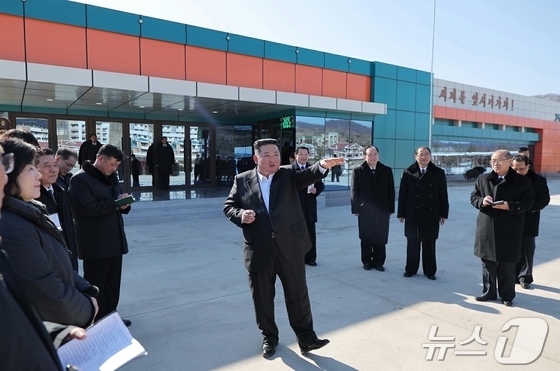
Recently, Kim has taken the unusual step of publicly reprimanding officials, focusing on re-establishing discipline within their ranks. Since instructing disciplinary actions against local officials involved in misconduct, such as engaging in drunken hospitality, during an expanded meeting of the Party’s Secretariat last January, he has consistently criticized lax discipline and bureaucratism within the Party.
In January of this year, at the completion ceremony of the Ryongseong Machinery Joint Venture, he blamed the construction delay on irresponsible and incompetent officials, even dismissing Deputy Prime Minister Yang Seung-ho on the spot.
Given this climate, the researchers anticipate that North Korea will likely take further steps to reinforce discipline among officials during the 9th Party Congress scheduled for later this month. Specifically, they expect a focus on strengthening Party discipline and rooting out factors that undermine it, such as corruption, while also enhancing the Party’s governing power based on public sentiment through initiatives known as disciplinary construction and work style improvement.