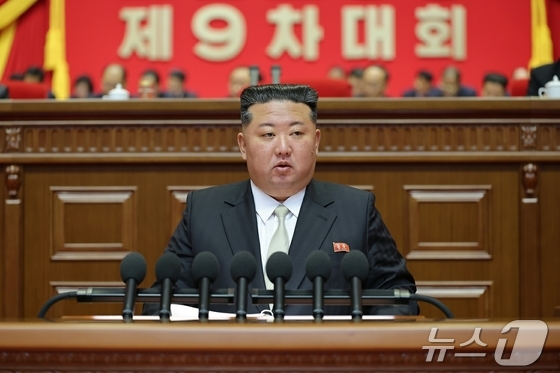
Kim Jong Un emphasized the critical role of economic policy in North Korea’s development over the next five years during his concluding remarks at the 9th Party Congress.
Notably, he refrained from addressing the direction of inter-Korean or North Korea-U.S. relations in both the previous summary report and the conclusion. This suggests a strategy of maintaining strategic ambiguity while focusing on internal achievements, rather than hastily defining an external policy amid global instability.
On Tuesday, the party’s official newspaper, Rodong Sinmun, reported on the fifth day of the congress. In his direct address, Kim characterized the upcoming five-year period as both a stabilization phase and a gradual qualitative development phase for North Korea’s economy.
He stressed that, like the past five years, the next five-year struggle would rely entirely on North Korea’s self-reliant capabilities and the strength of its people. Kim emphasized that economic progress must stem from internal resources and labor, not external negotiations or compromises. This statement implies that North Korea won’t seek to resolve its economic challenges through dialogue with South Korea and the U.S. involving its nuclear arsenal.
Kim also called for a wake-up call among officials and citizens regarding the lackluster implementation of the Local Development 20X10 Policy, a key economic initiative.
Despite the nationwide construction of modern factories and infrastructure, he lambasted some officials for their extreme negligence and irresponsibility in operations and management. Kim urged local leaders and residents to break free from outdated thinking and conservatism, pushing for continuous innovation and creativity.
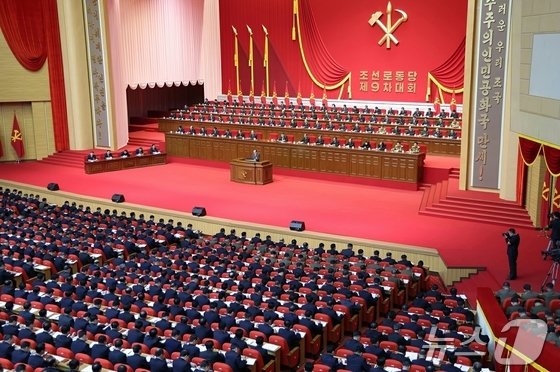
Kim devoted the majority of his concluding remarks to domestic matters, particularly economic policy. Throughout the five-day congress, which included opening statements, summary reports, discussions, and conclusions, he notably avoided any mention of policies concerning inter-Korean or North Korea-U.S. relations.
Experts suggest that North Korea is deliberately refraining from messaging aimed at South Korea and the U.S., given the ongoing Ukraine conflict, strengthened North Korea-Russia ties, U.S. efforts to oust Venezuela’s president, and potential strikes against Iran.
Analysts believe this approach stems from North Korea’s relatively successful economic initiatives over the past five years and its bolstered diplomatic position through cooperation with Russia. The regime likely sees hasty outreach to the U.S. and South Korea as potentially undermining its negotiating power.
Kim declared that no challenge or situational change could impede North Korea’s progress, emphasizing a focus on domestic affairs to bolster national strength, regardless of international developments.
Professor Lim Eul-chul from Kyungnam University’s Institute for Far Eastern Studies noted that Kim’s invocation of the three revolutions (ideological, technological, and cultural) from Kim Il Sung’s era demonstrates confidence in the regime’s ability to endure for 10-20 years without external aid.
Lim added that this stance allows North Korea strategic flexibility to adjust its foreign policy as circumstances evolve.
However, as the party congress continues with ongoing sectoral discussions, there’s still potential for a comprehensive resolution containing external policy statements to be announced.
Rodong Sinmun reported that North Korea is currently holding discussions across various sectors, including foreign affairs, industry, agriculture, light industry, culture, construction, military, defense, legal matters, and party work. The final congress resolution is expected after these discussions conclude.