

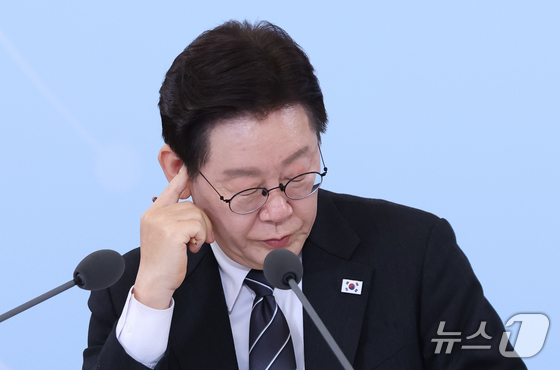
On Tuesday, President Lee Jae Myung addressed concerns about the U.S. military’s relocation of some air defense weapons to the Middle East. He assured that this move does not significantly impact South Korea’s deterrence strategy against North Korea.
The President’s statement came in response to U.S. media reports about the movement of some Terminal High Altitude Area Defense (THAAD) systems from South Korea to the Middle East, which had raised questions about potential defense vulnerabilities.
During the 9th Cabinet meeting at the Blue House, President Lee acknowledged the ongoing discussions, stating that there’s been some controversy surrounding the recent relocation of certain air defense systems, including those from Ford.
He elaborated that while they’ve always expected U.S. forces in South Korea to fully contribute to the peninsula’s safety and peace, it must recognize that it can’t always dictate their operational decisions. They’ve expressed the concerns about the relocation of these defense assets, but we must also understand the realities of the alliance.
President Lee emphasized South Korea’s robust defense capabilities. He pointed out that the military spending ranks among the highest globally. In fact, the annual defense budget is about 1.4 times North Korea’s entire gross domestic product (GDP). International assessments place the military strength at fifth in the world, far surpassing North Korea’s conventional forces.
The President continued that while North Korea’s nuclear program is a unique challenge, the conventional military superiority is undeniable. Given the high morale and dedication of the troops, there’s no reason for alarm regarding the national defense.
Lee stressed the importance of self-reliance in national security, stating that it must take full responsibility for the own defense. Overreliance on others can lead to vulnerabilities, so it must always be prepared for worst-case scenarios.
This statement follows a Washington Post report on Monday, which cited two U.S. government officials confirming the movement of some THAAD systems from South Korea to the Middle East.
The report also mentioned that the U.S. military is reallocating Patriot interceptors from the Indo-Pacific region to counter potential Iranian drone and missile threats.
The Blue House moved to quell any rising concerns. Chief Spokesperson Kang Yu-jung reassured reporters that the military’s deterrent capabilities ensure a robust defense posture. There’s absolutely no cause for anxiety or unease about the national security.