

The North Korean equivalent of a general election, the Supreme People’s Assembly (analogous to the U.S. Congress), is set to hold its delegate elections in just two days on Friday. This election for the 15th term delegates will feature multiple candidates competing in primaries within each electoral district. The final candidates will then face a yes or no vote to determine who gets elected.
This marks the first Supreme People’s Assembly delegate election under the revised electoral law, which was established during the 27th plenary session of the 14th Standing Committee of the Supreme People’s Assembly in August 2023. North Korea previously held elections for local people’s assembly delegates (similar to state and local councils) under this revised law in November 2023.
Single Candidate Finalized After Nomination and Review, Followed by Yes-or-No Vote
In the previous 14th term, North Korea elected 687 delegates to the Supreme People’s Assembly, indicating the country has 687 electoral districts.
Initially, the Standing Committee of the Supreme People’s Assembly will establish the Election Commission, which functions similarly to the U.S. Federal Election Commission, overseeing various aspects of the election, including finalizing the voter registration list.
Candidates can be directly recommended by voters or proposed by political parties or social organizations. Those who pass the qualification review by the electoral assembly will become the final candidates.
Candidates are divided into two categories. Verified individuals, such as party officials, are classified as fixed indicator targets and receive single candidate nominations. Workers and farmers are classified as selection indicator targets and will have two candidates nominated. Competition between high-ranking officials and farmers does not occur, as fixed and selection indicator targets cannot be simultaneously recommended from the same area.
The recommended candidates will be selected by an electoral assembly of about 300 individuals, including party and administrative officials from various institutions and key community members. They will vote based on criteria such as loyalty to the party and leader, revolutionary zeal, and unconditional execution of party directives, ultimately electing one candidate.
Both fixed and selection indicator targets must receive a majority of votes. If a fixed indicator target fails to achieve a majority, another candidate must be nominated. In cases where two selection indicator targets receive the same number of votes, instead of a re-vote, the electoral assembly will select additional members to conduct a supplementary vote.
Previously, North Korea held elections by registering only one candidate chosen by the central and local parties, conducting a simple yes or no vote. The recent legal amendments introducing a primary system appear to be an attempt to project an image of a more conventional state.
However, given North Korea’s closed nature, it’s challenging to assess the transparency of these elections. Many experts believe that this primary system is largely symbolic, with authorities still effectively designating candidates.
Once a candidate becomes a final nominee, they can participate in campaign events, including meetings with voters known as reunion meetings. The electoral law mandates that delegate candidates spend 1-2 days in their electoral district after registration to understand local conditions and conduct these meetings, introducing themselves and affirming their commitment.
The party’s official newspaper, Rodong Sinmun, reported on Thursday that the registration of delegate candidates for the 15th Supreme People’s Assembly election has concluded. It added that reunion meetings between registered candidates and voters are taking place in various formats, including discussions.
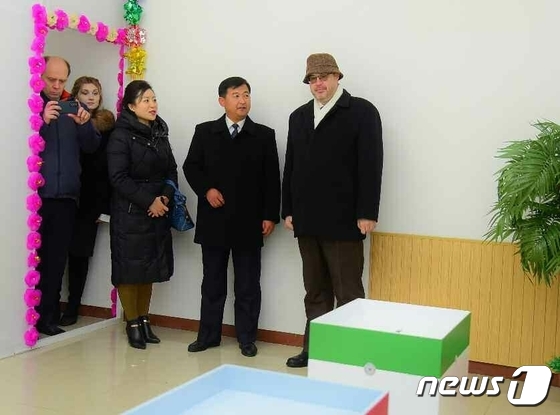
Voting booths must be prepared three days before the election. These booths will contain two ballot boxes of different colors labeled yes and no. Given the uncertainty about privacy in these rooms, many consider it a de facto public vote.
Critics argue that these elections fall short of true democratic processes and serve merely as a formality to implement party decisions.
According to electoral law, North Korea should announce the date of the Supreme People’s Assembly elections 60 days in advance. However, this time, they revealed the date just 12 days prior. Additionally, the voter registration list should be made public 15 days before the election, and candidate registration should close seven days before. These processes appear to have been delayed, with only partial information reported through state media.
Kim In-tae, a senior researcher at the National Security Strategy Institute, stated that this can be seen as a violation of the law, suggesting that the election date may have been announced after candidates were already selected. This implies that the election process may be designed to rubber-stamp party-designated individuals.
Senior researcher Kim added that since the electoral assembly members are not randomly selected citizens but prominent figures from the region, North Korea’s revised electoral method cannot be considered truly democratic.
Through the upcoming Supreme People’s Assembly delegate elections this month, North Korea aims to grant delegate status to key officials elected at last month’s 9th Workers’ Party Congress. This aligns the operational cycles of the party and the Supreme People’s Assembly to enhance the unity of state governance. After the elections, Kim Jong Un, who also serves as the General Secretary of the Workers’ Party, is expected to be reappointed as the Chairman of the State Affairs Commission and make personnel decisions regarding state organizations.