The joint U.S.-South Korea military exercise Freedom Shield (FS) is currently underway, but the atmosphere surrounding this year’s drills is markedly different from previous years. Both nations are keeping a low profile about the exercise, and North Korea is showing unusual restraint in its responses. Analysts suggest this shift may be due to the redeployment of U.S. assets from South Korea to the Middle East and changes in North Korea’s military strategy, as reported on Thursday.
The FS exercise, running from March 9 to 19, aims to enhance interoperability and readiness between U.S. and South Korean forces against a potential North Korean invasion. It includes 22 field training exercises (FTX).
This year’s field training component has been significantly reduced, with less than half the number of exercises compared to last year’s 51. Military officials explain this as part of a strategy to distribute training throughout the year rather than concentrating it during the joint exercise period. As a result, this year’s Freedom Shield seems designed to maintain a lower profile from the outset.
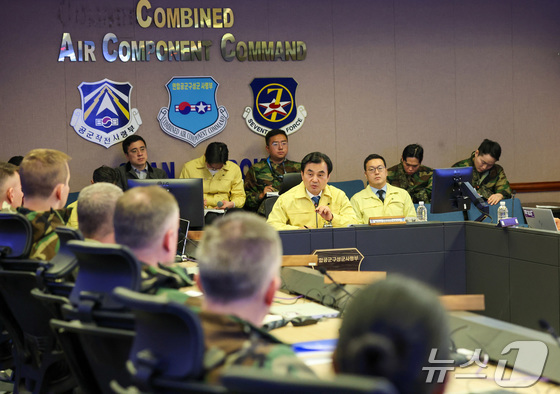
The South Korean Ministry of National Defense and Joint Chiefs of Staff (JCS) are not prominently featuring this joint exercise in their messaging to North Korea or for domestic security promotion. While Defense Minister Ahn Kyu-back and JCS Chairman Jin Young-seung visited training sites, their public statements focused primarily on preparations for the transfer of wartime operational control.
Minister Ahn emphasized the goal of completing the verification of Initial Operational Capability (IOC) for the Future Combined Forces Command by 2026, while Chairman Jin framed the exercise as an opportunity to prepare for the transfer of wartime operational control and verify combined operational plans.
This low-key approach is believed to be influenced by developments in the Middle East. Recent reports indicate that some U.S. air defense assets in South Korea, including Patriot systems and Terminal High Altitude Area Defense (THAAD), have been redeployed to the Middle East, a fact tacitly acknowledged by the South Korean government.
President Lee Jae Myung addressed this issue during a Cabinet meeting on Tuesday, stating that while it opposes the withdrawal of some U.S. air defense assets, it must recognize that it cannot entirely dictate their deployment decisions.
Despite the ongoing FS exercise, some analysts suggest that the U.S. military’s focus may be shifting more towards supporting active operations in the Middle East rather than maintaining the status quo on the Korean Peninsula.
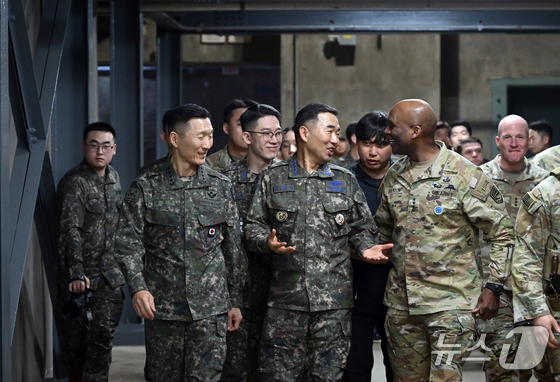
This interpretation gained traction following reports about U.S. Forces Korea Commander and Combined Forces Command Commander Gen. Xavier Brunson’s movements. It was noted that Gen. Brunson did not enter the Combined Forces Command’s wartime command post, CP Tango, until Tuesday afternoon, the second day of the exercise.
U.S. Forces Korea responded to these reports, stating that 21st-century military leadership is defined by connectivity and command presence, not just physical location. However, the fact that the commander’s whereabouts became a topic of discussion indicates that this year’s joint exercise carries a different tone compared to previous years.
An unscheduled meeting between Minister Ahn and Gen. Brunson at the Ministry of National Defense in Seoul on the eve of the exercise has also raised eyebrows. While the Ministry stated that details of the high-level conversation are classified, speculation suggests that the discussion may have focused more on U.S. support in the Middle East and asset management rather than the joint exercise itself.
Some observers believe that the South Korean government may prefer the current low-key approach to the FS exercise, considering North Korea’s sensitivities. A high-profile exercise could potentially provoke North Korea into more aggressive military actions. Given the complex security dynamics in the region, including U.S.-China tensions and the situation in the Middle East, Seoul appears keen to avoid unnecessary escalations. The government is also mindful of potentially restoring the September 19 inter-Korean military agreement, necessitating careful management of the situation.
North Korea’s response to the exercise has been relatively muted. Kim Yo-jong, deputy director of the Workers’ Party of Korea, issued a statement warning of terrible consequences, while Supreme Leader Kim Jong Un observed a test launch of a strategic cruise missile from the 5,000-ton destroyer Choe Hyon-ho, claiming advancements in the country’s nuclear capabilities.
However, North Korea has refrained from more provocative actions such as ballistic missile launches. The cruise missile test does not violate the United Nations (UN) Security Council sanctions, suggesting a measured response from Pyongyang. Some analysts view this missile launch as part of North Korea’s planned military modernization rather than a direct response to the exercise. Kim Jong Un’s detailed comments on the destroyer’s armaments and future shipbuilding plans support this interpretation.
A South Korean military official stated that the FS exercise is proceeding as planned. The reduced external attention may be due to other factors. He emphasized that the U.S.-South Korea alliance maintains a strong combined defense posture, and our deterrence against North Korea remains robust.