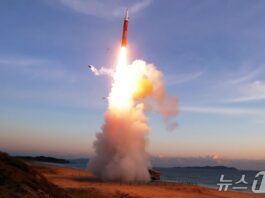
North Korea has reportedly completed maintenance on its new submarine, the Hero Kim Kun Ok, at the Sinpo area. Intelligence suggests they may be gearing up for a test launch of submarine-launched ballistic missiles (SLBMs).
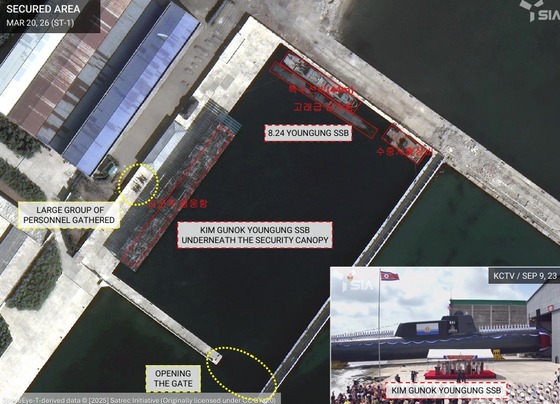
According to a report released on Monday by SI Analytics (SIA), a South Korea based satellite imagery analysis firm, artificial intelligence (AI) examination of satellite photos taken on March 20 and 26 revealed significant vehicle activity around the underwater training facility and dry dock in North Korea’s largest submarine base in South Hamgyong Province. These areas are typically used for submarine testing and training.
Of particular interest, the security shroud previously covering the Hero Kim Kun Ok has been removed. The 8-24 Hero Ship, known for its previous SLBM test launches, was observed relocating to a nearby position. Satellite imagery also captured a large gathering of personnel on the deck and open access points to the facility.
SIA analysts believe these activities likely indicate preparations for weapons testing and sea trials. Given that the Hero Kim Kun Ok has no prior operational or testing history, experts speculate it may be ready for full-scale sea trials following over two years of maintenance and outfitting.
The next steps could involve the installation of a vertical launch system (VLS). North Korea might then conduct comparative technical data analysis at sea between the new submarine and the battle-tested 8-24 Hero Ship, potentially culminating in test launches of ballistic or cruise missiles.
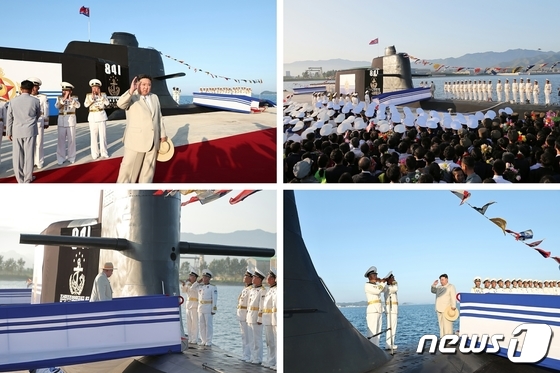
Should these test launches occur, defense experts anticipate that North Korea will aim to demonstrate a multi-faceted nuclear delivery capability, encompassing submarines, surface vessels, and land-based platforms.
In a separate but related development, unusual activities potentially linked to the construction of strategic nuclear-powered submarines have been observed in the area. Satellite imagery shows a large cargo ship hull being repaired by crane and subsequently moved to an indoor construction facility.
This intact relocation of a ship’s hull deviates from North Korea’s standard practice of dismantling vessels for material recycling, raising suspicions about the possible construction of a specialized naval asset.
SIA analysts noted that while the absence of dedicated submarine rescue ships in North Korea’s fleet suggests this could be related to building support vessels, it can’t rule out simple material repurposing. Further intelligence gathering is required for a definitive assessment.
The report concludes by highlighting that the concentration of personnel observed could indicate a high-level inspection. SIA recommends continued close monitoring of the situation, particularly for any signs of impending missile tests.