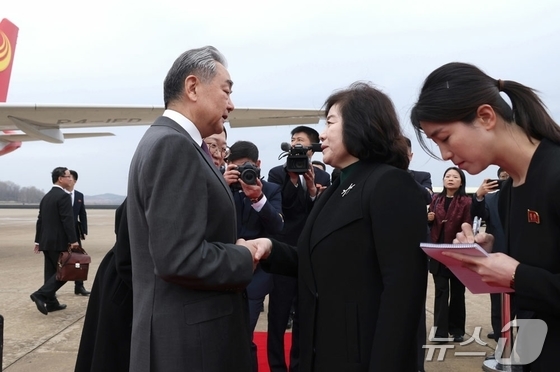
The recent North Korea-China foreign ministers’ meeting, facilitated by Wang Yi’s visit to North Korea after a seven-year hiatus, has revealed subtle differences in how the two nations are approaching their diplomatic relations.
While Beijing has been eager to highlight the strengthening of ties and widely publicize the meeting’s outcomes, Pyongyang has responded with notably restrained coverage. Analysts suggest that although both sides emphasize improving relations, their strategic assessments of the current geopolitical landscape differ significantly, as observed on April 10.
North Korea’s Calculated Diplomacy: Closer to Russia, Cautious with China
China’s state-run Xinhua News Agency reported that the foreign ministers’ meeting yielded important agreements on overall, strategic, and directional issues in bilateral relations, indicating substantive diplomatic discussions. Wang underscored the robustness of Sino-North Korean ties, employing phrases such as next stage of development, new phase, and new chapter of friendly exchanges.
Wang further emphasized that this year marks the 65th anniversary of the China-North Korea Friendship Cooperation Treaty. Over the past six and a half decades, despite shifting international and regional dynamics, China and North Korea have remained steadfast as good neighbors, friends, and comrades. It has consistently supported each other, working to maintain regional and global peace while fostering mutual development. He expressed China’s readiness to co-host commemorative events for the treaty’s 65th anniversary with North Korea.
This suggests that both nations are likely to organize various exchanges and commemorative events to mark the 65th anniversary of the 1961 North Korea-China Friendship Treaty. Xinhua reports that North Korea and China plan to expand civilian and cultural exchanges this year, potentially enhancing the climate for improved relations.
In contrast, North Korea’s ruling party newspaper, Rodong Sinmun, reported more modestly that Foreign Minister Choe Son-hui stated that the relationship between our two countries is developing vigorously at a new high level. The paper noticeably refrained from using the grandiose diplomatic rhetoric employed by Xinhua and avoided detailing specific outcomes or future plans from the meeting.
Interestingly, while Xinhua’s report included North Korea’s support for China’s stance on issues like Taiwan, Tibet, and Xinjiang, Rodong Sinmun omitted such references. This disparity underscores China’s apparent greater emphasis on the meeting’s significance.
Analysts interpret this discrepancy as reflective of North Korea’s evolving foreign strategy, which now prioritizes its alliance with Russia over its traditional blood alliance with China. Additionally, with the upcoming U.S.-China summit next month, North Korea may be wary of deepening ties with China to avoid a scenario where both Beijing and Washington simultaneously press for dialogue. This caution aligns with Pyongyang’s current reluctance to engage in rapid dialogue with the U.S.
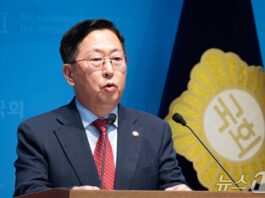
Professor Lee Sang-man from Kyungnam University’s Institute for East Asian Studies observed that North Korea’s noticeably decreased dependence on China following its strengthened ties with Russia explains the divergent approaches to this foreign ministers’ meeting. While not outright rejecting its relationship with China, North Korea appears to be avoiding excessive closeness. Consequently, China seems intent on emphasizing strategic communication to counterbalance Russia’s growing influence over North Korea.
Anticipation Builds for Potential Wang Yi-Kim Jong Un Meeting
However, some analysts caution against overinterpreting North Korea’s restrained messaging, suggesting it may be a strategic communication tactic rather than a sign of neglect towards China. A meeting between Wang and Kim Jong Un could potentially yield more substantive and meaningful statements from North Korea.
Given that China is preparing for a summit with the U.S. next month, where Korean Peninsula issues are expected to feature prominently, this meeting may have been orchestrated to align positions on regional matters through high-level strategic communication between Pyongyang and Beijing.
For China, maintaining influence over Korean Peninsula issues is a crucial diplomatic objective ahead of its summit with the U.S. This context underscores Beijing’s growing need to demonstrate its stable management of North Korea-China relations.
As North Korea pursues its vision of a new multipolar system, it is expected to engage in ongoing high-level communication with China and Russia. This approach aims to signal to the U.S. that the threshold for dialogue remains high, reinforcing Pyongyang’s position in the complex geopolitical landscape.