North Korea’s state-run newspaper Rodong Sinmun prominently featured the meeting between Kim Jong Un, General Secretary of the Workers’ Party, and Chinese Foreign Minister Wang Yi on its front page, emphasizing the strategic alignment of North Korea-China relations. The paper highlighted local development initiatives, agricultural production expansion, and scientific achievements to showcase regime accomplishments and reinforce internal unity.
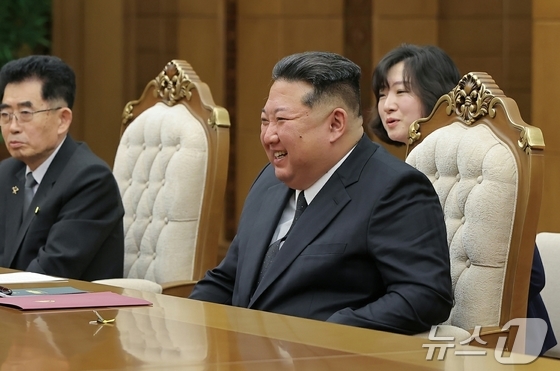
Rodong Sinmun reported on April 11 that Kim met with Wang, who visited North Korea on April 10.
The article stated that Kim reaffirmed his commitment to prioritizing North Korea-China friendship and reiterated support for the One China principle. Wang conveyed greetings from President Xi Jinping, and both sides exchanged views on regional and international matters, stressing the importance of strengthening strategic cooperation.
The front page also detailed how party committees in North Hwanghae Province, North Hamgyong Province, and Kaesong City are actively promoting propaganda campaigns and construction projects to implement party congress decisions and boost agricultural production.
The paper highlighted the deployment of focused propaganda teams to key industrial sites and rural areas to encourage increased production and patriotism. It also emphasized efforts to strengthen organizational and political work aimed at enhancing local infrastructure and agricultural productivity. In the coal industry, the Kim Kwang Chol Youth Shock Brigade at the Ryongdeung Coal Mine was praised for surpassing its annual tunneling plan ahead of schedule, showcasing the loyalty and patriotic fervor of young miners.
The second page reported on Wang’s delegation visiting the Chinese People’s Volunteer Army cemetery in Kangdong County before departing Pyongyang. The article detailed the ceremony, including national anthems, moments of silence, and flower-laying, underscoring the historical significance of the North Korea-China alliance.
The third page focused on enhancing grassroots party organizations. It reported on efforts by the Chongrim County farm’s primary party committee to boost worker productivity by improving party cell secretaries’ political and practical skills. The article emphasized the importance of party officials being well-versed in statistics, citing the Jikdong Gypsum Mine as an example of how combining scientific analysis with public creativity significantly increased production. It also highlighted achievements in cement production.
The fourth page covered the Pyongyang International Tourism Souvenir and Health Products Exhibition at the Pyongyang Science and Technology Hall, featuring North Korean, Russian, and Chinese companies showcasing various products and scientific achievements. It also reported on the 79th expanded meeting of the National Sports Guidance Committee, which reviewed first-quarter sports activities and discussed future development plans.
The fifth page highlighted agricultural sector achievements, focusing on the Ilhyang Farm in Kyongsong County. The farm converted low-yield land into rice paddies and improved soil quality, significantly increasing grain production to over 8 tons per hectare. The paper emphasized scientific farming methods and innovative worker approaches as key factors in this production increase.
The sixth page reported on the February 16 Science and Technology Prize awards from the previous year, underscoring the regime’s focus on scientific and technological advancement. It praised research achievements in various fields, including metamaterials, modular construction, cement production improvements, and desalination technology, for their contributions to the national economy and quality of life. The page also included international coverage quoting a Russian Foreign Ministry spokesperson criticizing Japan and Ukraine, along with commentary denouncing Japan’s historical revisionism, reinforcing anti-Japanese and anti-Western narratives.
This edition of Rodong Sinmun not only emphasized diplomatic solidarity through high-level North Korea-China contacts but also aimed to bolster regime unity and showcase achievements following the party congress. It prominently featured local development initiatives, agricultural production increases, and scientific and technological innovations to reinforce these messages.